
 Available in US
Content
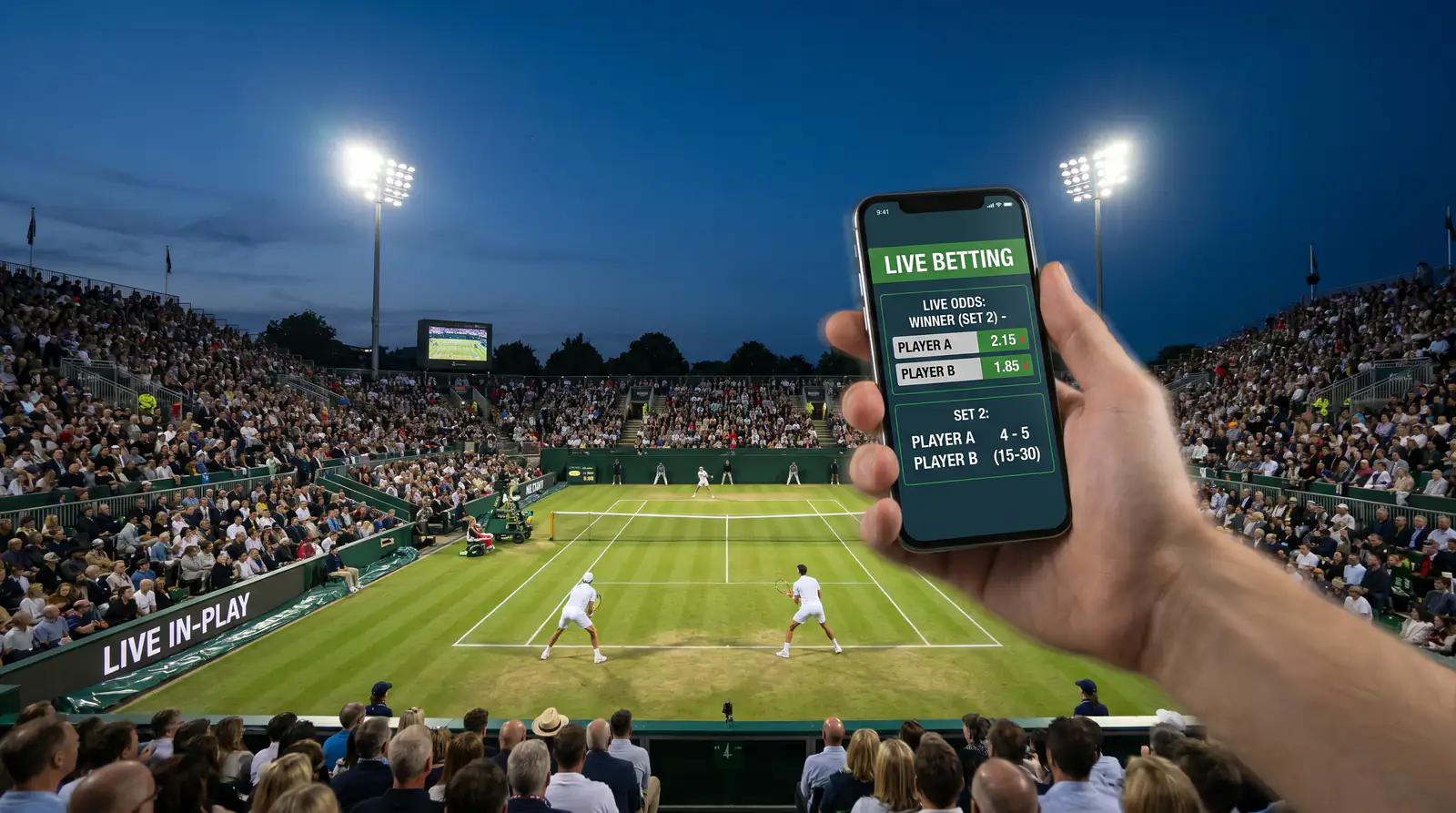
Why tennis is built for in-play
Here’s a figure that stopped me in my tracks the first time I saw it: at one of the largest betting groups, around 90% of all tennis bets are placed in-play, live, while the match is happening. Not before. During. That number tells you everything about how tennis betting actually works now, and it explains why anyone still treating Wimbledon as a pre-match-only event is playing a game everyone else stopped playing years ago.
Tennis is, structurally, the perfect sport to bet live. It never stops moving, it pauses constantly to let you think, and the scoreline lurches in clean, discrete jumps that the market has to reprice every few minutes. A football match might offer one or two genuine in-play moments an hour. A tennis match offers a fresh decision point on practically every game. For a fortnight, Wimbledon turns this into a near-continuous live market, fourteen days of matches running back to back across the show courts and the outside lawns.
This guide is about trading that movement, not predicting the winner before a ball is struck. Live betting is a different muscle from pre-match. It’s faster, it’s more reactive, and it punishes hesitation and rewards discipline in roughly equal measure. We’ll cover why the structure of tennis makes it tradeable, which in-play markets are worth your attention, the momentum signals that genuinely move prices, and the two things that quietly destroy most live bettors: latency and the cash-out button. Get those right and Wimbledon becomes the most engaging betting fortnight of the year. Get them wrong and it becomes an expensive blur.
The structure that makes live tennis tradeable
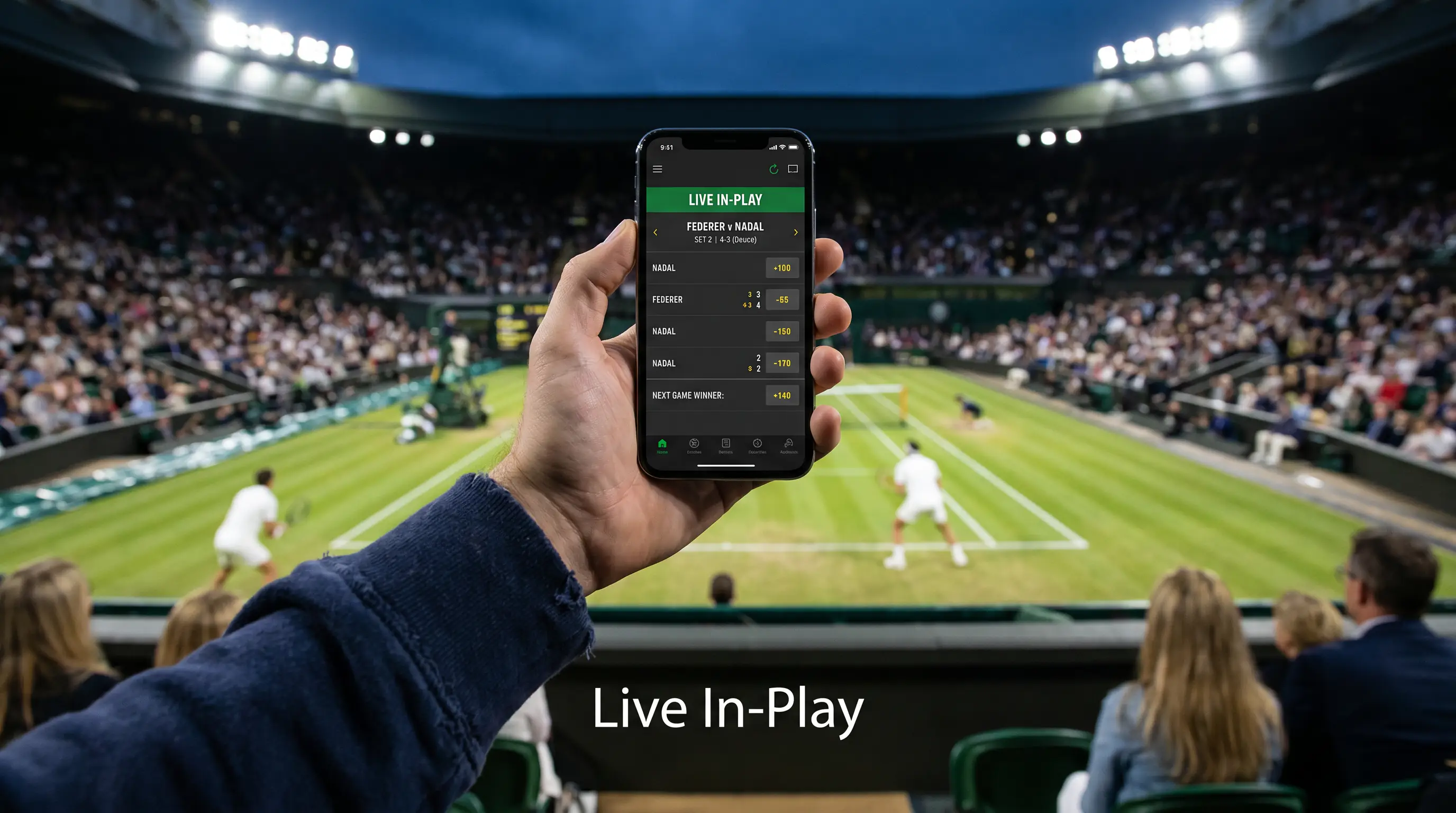
Football frustrates live bettors because the scoreboard barely moves. You can watch forty-five minutes of a match and the price changes glacially, because nothing has resolved. Tennis is the opposite, and the reason is the scoring system, which is essentially a nested set of mini-contests, each one resolving in minutes and forcing the market to react.
Think about the structure. A point ends in seconds. A game ends in a couple of minutes. A set ends in twenty or thirty. Each of these is a resolved event that changes the state of the match, and every change forces the book to reprice. Win a game and your price shortens. Drop serve and it lengthens. Break back and it swings again. The market is in constant motion because the match is constantly producing results, and that motion is what you trade. There’s always a fresh number to take a view on, which is precisely why live betting dominates the sport.
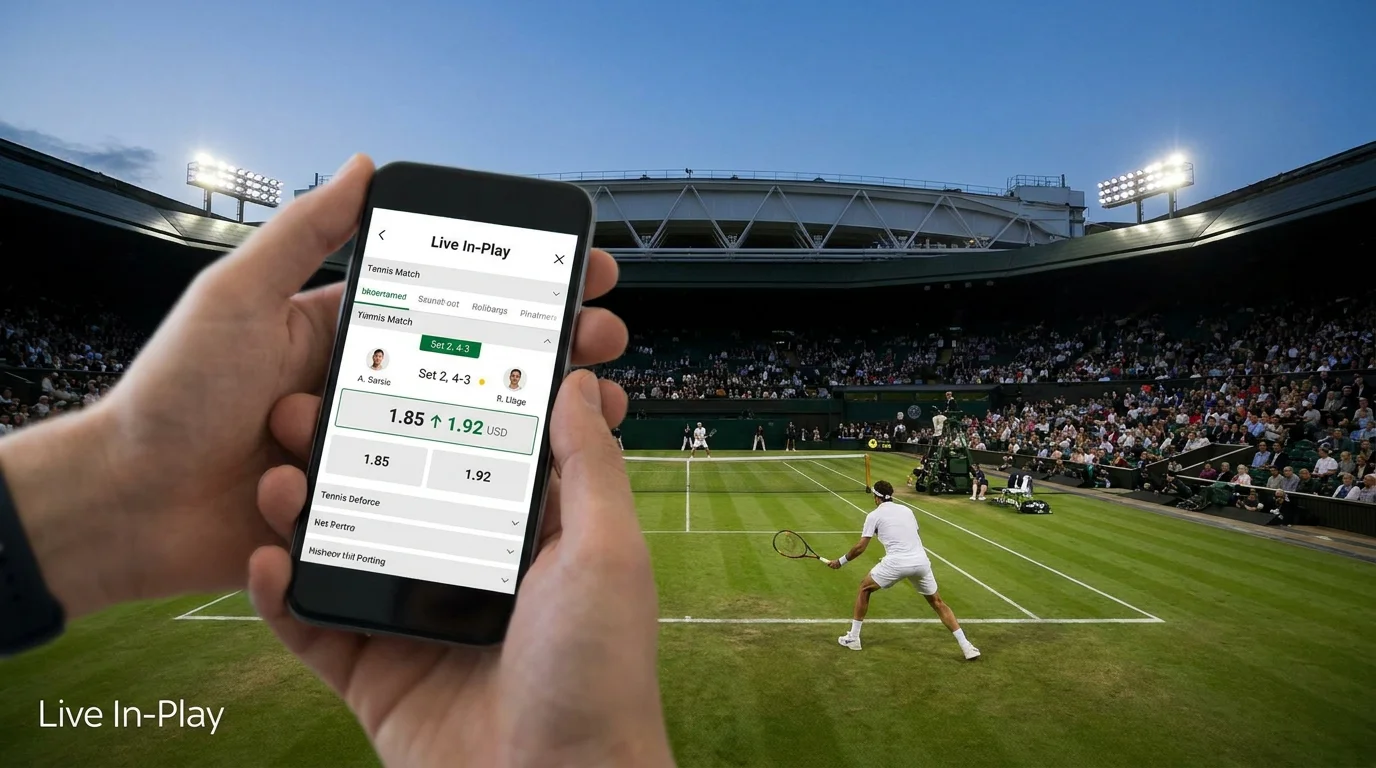
The scale confirms the structure. Live and in-play betting made up over 62% of the online sports betting market in 2025, and tennis sits right at the heart of that shift, because no other major sport offers such a relentless drip of repricing moments. Tennis is also projected to be the fastest-growing betting sport, with forecast annual growth running close to 14% over the coming years, and the engine of that growth is exactly this in-play suitability, multiplied across the fourteen continuous days that a Grand Slam like Wimbledon provides. The sport is growing because it’s built for the way people bet now, and Wimbledon is the showcase.
What this means practically is that you should never feel you’ve “missed” a Wimbledon match by not betting it pre-match. The live market is where most of the action and most of the opportunity now lives. A match you didn’t have an opinion on at 11am might, by the second set, present a clear trading situation, a price that’s overreacted to a momentary wobble, an underdog who’s found their range, a favourite who’s quietly tightening up. Pre-match betting is a single snapshot. Live betting is the whole film, and the film is where the interesting decisions are.
The main in-play markets
The first time I bet live, I had no idea which market to use, so I kept hammering the match-winner price and wondering why my edge felt so thin. The match winner is available in-play, of course, but it’s the bluntest tool in the live kit, and the sharper opportunities sit in markets built specifically for the rhythm of a live match.
The live match winner is the obvious starting point: the same bet as pre-match, but the price now reflects the current state of play. Its value is in the swings. When a favourite drops the first set, their live price lengthens dramatically, and if you believe the surface and their serve will reassert in the longer format, that lengthened price can be excellent value. You’re betting on a comeback the market has temporarily overpriced against.
Next-game and next-point markets sit at the opposite extreme, hyper-granular bets on the immediate future. They’re seductive and dangerous in equal measure, because they resolve so fast that they encourage rapid, emotional betting. I use them sparingly and only when I have a genuine read, such as a server who’s just steadied after a wobble and is heavily likely to hold the next game. As a steady stream of bets, they’ll grind you down through the margin. As an occasional, considered strike, they have their place.
Set-betting and total-games markets remain live throughout, and they’re often where the real value hides because they update less twitchily than the headline price. If a match is heading for a tie-break and you’ve judged the server will edge it, the live set market can offer a cleaner bet than trying to call the next point. Live handicaps, where the games margin adjusts as the match progresses, let you back a player to close a gap or extend a lead, and on grass, where margins compress, these can move sharply on a single break.
My rule for choosing a live market is to match the market to the read. If my view is about the match outcome, I use the live match winner. If it’s about how a specific set will play out, I use set or total-games markets. If it’s a precise, immediate read on a single game, and only then, I’ll touch the next-game market. The mistake beginners make is using one market for every view. The markets are tools, and a live match offers you a full toolbox.
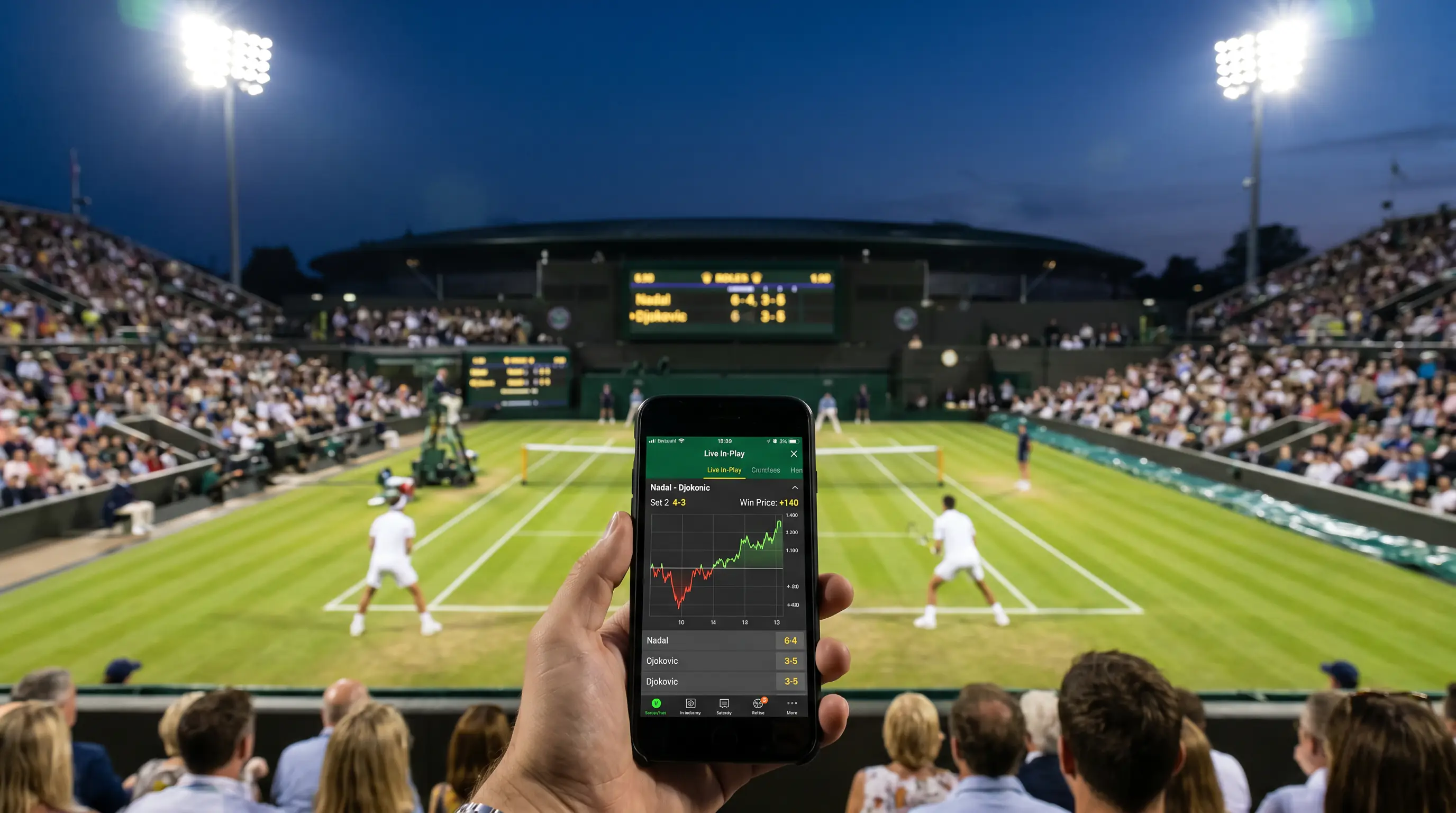
There’s a category I’d nudge you toward specifically on grass: the live total-games and tie-break markets. Because the surface produces so many holds and so many tie-breaks, these markets are unusually predictable once you’ve read the serve battle. If both players are holding comfortably midway through a set, the probability of a tie-break climbs, and a live tie-break market that hasn’t fully caught up offers a clean bet rooted in the structure of the surface rather than a guess about momentum. I find these consistently more rewarding than the headline price, because they reward surface knowledge over reaction speed, and surface knowledge is something you can actually build, whereas reaction speed you’ll always lose to the professionals.
Momentum signals worth watching
Momentum in tennis is real, but it’s also the single most misread concept in live betting. Everyone can see when a player is “on a roll.” The trouble is that by the time momentum is obvious to you, it’s obvious to the market too, and the price has already moved. The edge isn’t in spotting momentum. It’s in spotting momentum before the price fully reflects it, or in recognising when apparent momentum is about to break.
The signals I actually watch are mostly about serve, because on grass the serve is the spine of everything. On fast surfaces, top players win over 70% of points on their own serve, which means a player’s hold of serve is the baseline state and a break is the genuine event. So the signal that matters most is pressure on serve: a player suddenly facing break points, double-faulting under tension, dropping first-serve percentage. Those are the cracks that precede a swing, and they often appear a game or two before the scoreboard catches up. A favourite quietly serving worse, even while still winning games, is a favourite the live price hasn’t yet downgraded.
The flip signal is the steadying server. A player who’s been wobbling and then holds to love, suddenly landing first serves and dictating again, is reasserting the surface advantage. If the market overreacted to their wobble and lengthened their price, the steadying is your cue that the overreaction is about to correct. You’re trading the gap between the panic the market priced in and the recovery the player is showing.
Beware the false signal, though, and there are many. A player winning a flurry of points on the opponent’s double faults isn’t necessarily building momentum, they’re benefiting from errors that may stop. A break of serve immediately followed by a tense service game often gets broken straight back, the so-called immediate re-break, because the pressure of consolidating a break is its own trap. Reading momentum well means distinguishing genuine shifts, rooted in how a player is actually striking the ball, from noise, the random clusters that any match produces and that mean nothing for the next game.
The honest truth after nine years of this: most perceived momentum is noise, and the bettors who do well in-play are the ones who bet the rare genuine shift and ignore the constant fake ones. Patience is the live bettor’s real weapon. The market gives you a hundred moments that feel significant and a handful that actually are, and the whole skill is in the discrimination.
Let me give you a concrete way to tell signal from noise, because it’s the difference between a live edge and a slow leak. Genuine momentum shows up in the quality of ball-striking and the pattern of who’s creating pressure, not just in the recent points won. If a player has started returning deeper, taking time away from the server, and is forcing break points through their own aggression rather than the opponent’s errors, that’s a shift with roots, and it tends to persist. If a player has won the last six points because the opponent sprayed three forehands and double-faulted twice, that’s a cluster of errors that has no reason to continue, and the market that lengthens the erring player’s price is handing you value on the correction. Ask, every time: is this player winning because of what they’re doing, or because of what their opponent is failing to do? The first is momentum. The second is noise dressed as momentum.
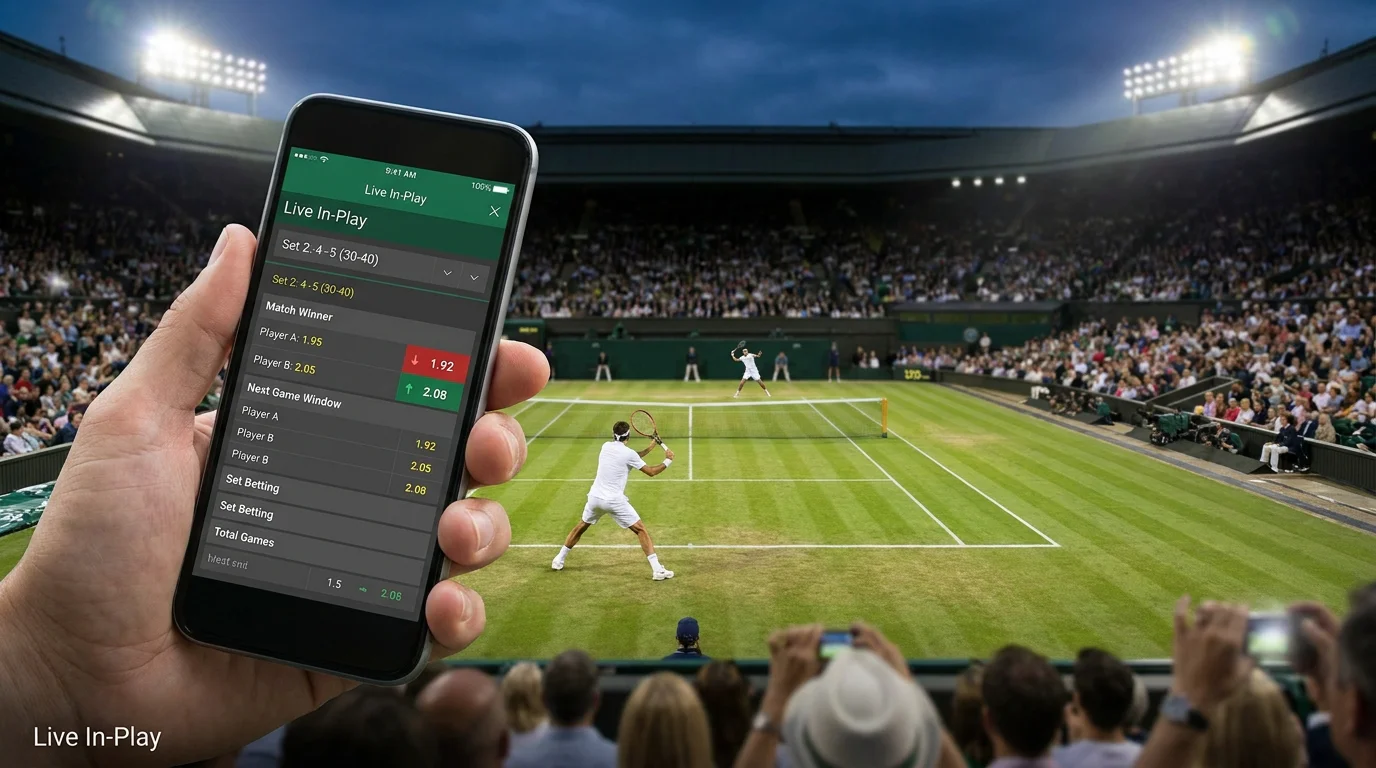
The grass surface adds its own wrinkle to all of this. Because breaks are so rare on grass, a single break of serve carries enormous weight, far more than it would on clay where breaks come and go. That means the market reprices a grass break aggressively, sometimes too aggressively, and the immediate re-break I mentioned is more common than people expect, because the pressure of serving out a break on a surface where holding is the norm is its own kind of tension. When a player breaks on grass and then steps up to a tense service game, I’m often more interested in backing the re-break than in chasing the new favourite, precisely because the market has overreacted to a single, fragile break.
Data feeds, latency and why prices move
Let me tell you about the most expensive lesson in live betting, the one that has nothing to do with reading the match and everything to do with the wires. The price you see on your screen is not showing you the present. It’s showing you the recent past, and the gap between what’s happening on court and what your screen knows is where naive live bettors get quietly slaughtered.
Here’s the mechanics. The match is converted into data at the court, that data travels through the feed infrastructure to the bookmaker, the bookmaker reprices, and the new price travels to your screen. Every step takes time. Meanwhile, the television broadcast you’re watching has its own delay, often several seconds behind the live action. So you might be watching a point that, as far as the betting market is concerned, finished moments ago. If you try to bet on what you “see” happening, you may be betting on a result the market has already absorbed and priced. The screen always lags the court.
This isn’t a flaw you can outrun, it’s the structure of the system, and the data infrastructure behind it is industrial in scale. The consolidation of point-by-point betting feeds reached a milestone when one major data company acquired a rival’s portfolio of rights for £225 million, building a single pipeline that delivers granular, near-real-time match data to bookmakers across the world. The professionals trading these markets are plugged into the fastest available data, often court-side feeds far quicker than any broadcast, and they reprice before a TV viewer has even seen the point. With electronic line-calling now standardised across the men’s tour, the underlying data is cleaner and faster than ever, which sharpens the prices and shrinks the window for anyone relying on a delayed broadcast.
What does this mean for you, a bettor with a TV and a phone, not a court-side terminal? It means you cannot win by trying to react faster than the market to a point you’ve just watched. You’ll always be last in that queue. Your edge has to come from judgement, not speed: a view on how the match will develop over the next few games, not a reflex on the point that just finished. Bet the trajectory, not the moment. The moment is already priced; the trajectory is where your reading of the surface and the players still counts.
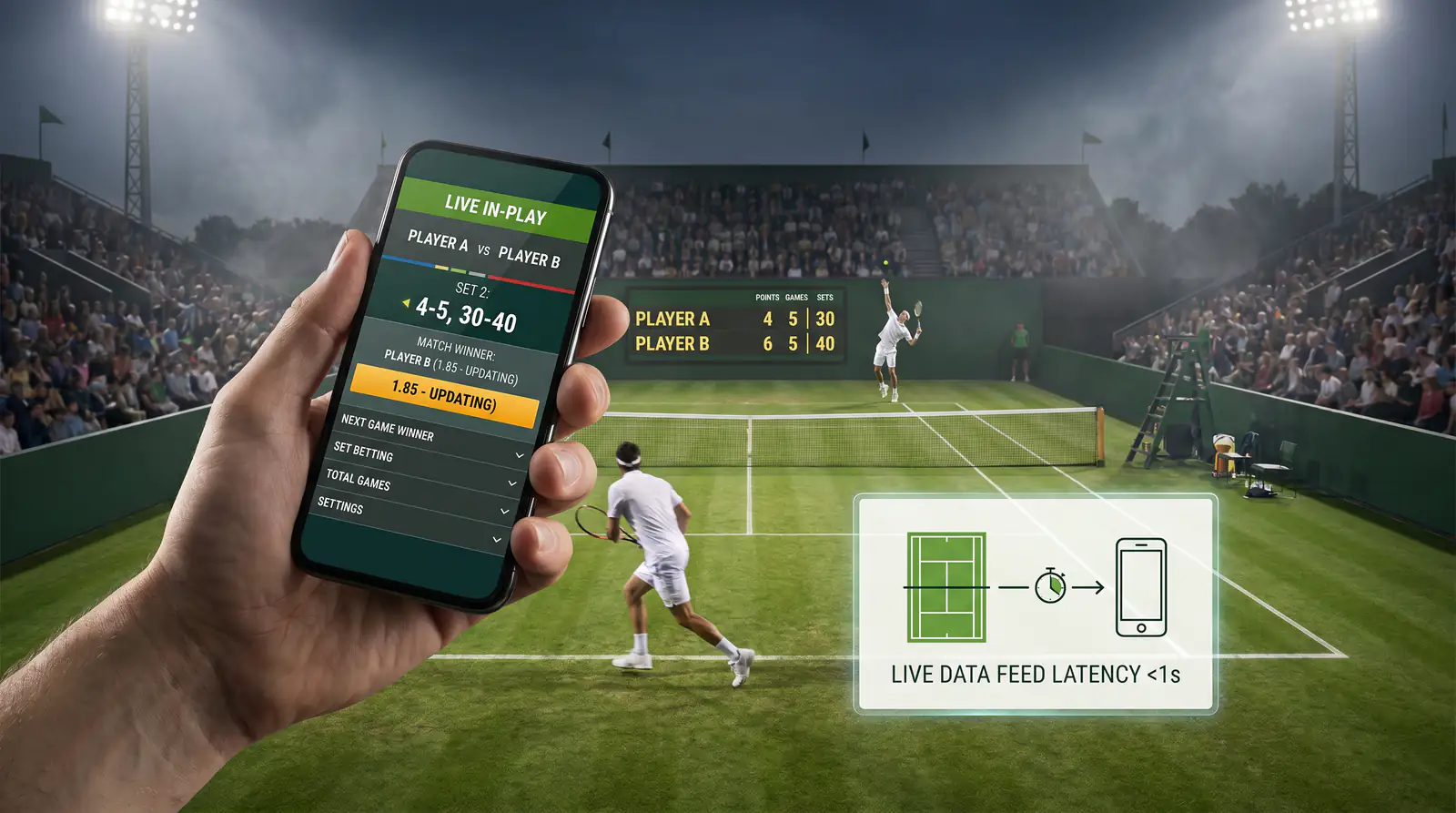
One more piece of context that keeps the live market honest. The huge volumes flowing through in-play tennis attract scrutiny, and rising alert numbers shouldn’t be misread as rising danger. As one integrity chief has put it, the growth in alert volumes “should not be read as a direct indicator of increased integrity risk,” but rather reflects better detection and a bigger, more closely watched market. For you, that scrutiny is reassurance: the high-volume live markets on the show courts are the most watched and most efficiently priced, which means they’re hard to beat but also the cleanest place to bet. The thin, lightly watched markets are where both soft prices and genuine risk tend to live. That tension between price and safety runs right through the question of how clean the sport is, which is the subject of the Wimbledon betting integrity guide.
Cash out and in-play discipline
The cash-out button is the most profitable feature bookmakers ever invented, and the profit is theirs, not yours. I want to be clear-eyed about this because cash out is dressed up as a tool for your benefit, a way to “lock in” a win or “cut” a loss, when in truth it’s a way for the book to take a second margin out of the same bet.
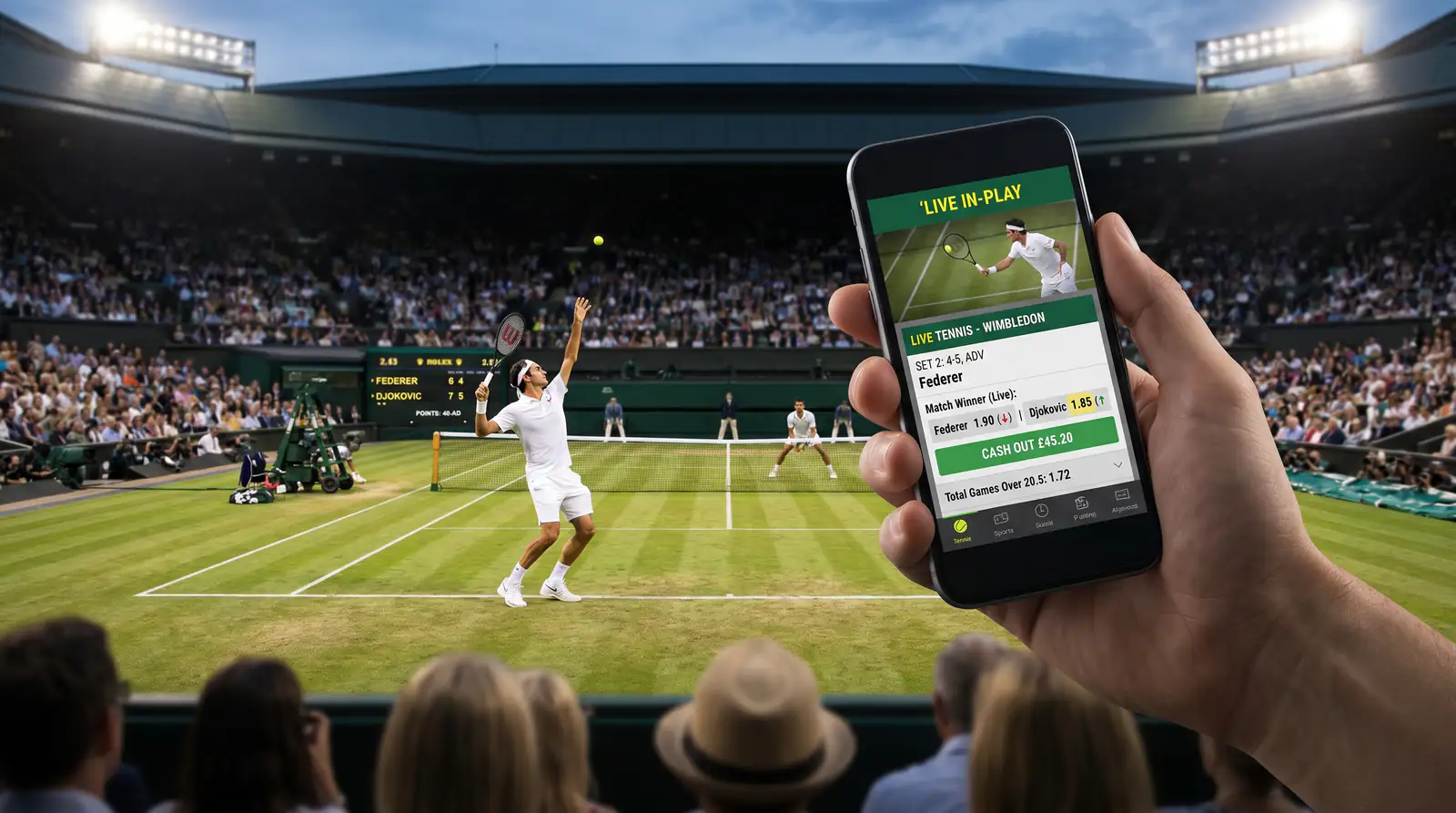
Here’s how it works under the bonnet. When you cash out, the book offers to buy back your bet at a price it calculates, and that price includes a margin in the book’s favour, just like the original odds did. So you’re paying the overround twice: once when you placed the bet, and again when you cash it out. The convenience is real, but it isn’t free, and over time, habitual cashing out bleeds value out of even a winning betting strategy. The button exists because, on average, it makes the book money. That alone should make you suspicious of how often you reach for it.
Does that mean never cash out? No, and the rational uses are worth naming. If your circumstances have changed and you genuinely can’t watch the match resolve, taking a certain return can beat the stress of an unwatched gamble. If new information has appeared, an injury, a player visibly struggling, that the cash-out price hasn’t fully absorbed, cashing out can be a sound judgement call. And if a bet has run far better than you expected and locking in a guaranteed profit lets you sleep, the peace of mind has a value the maths doesn’t capture. Those are real reasons. “It feels safer” is not one of them.
The discipline that holds all of in-play betting together is the same one that holds cash out in check: decide your plan before the emotion arrives. The live market is engineered to provoke reaction, the swinging prices, the flashing cash-out offers, the next-point markets begging you to chase. The bettor who wins is the one who’s decided in advance what they’re betting, why, and when they’d get out, and then sticks to it while the market tries to shake them loose. Short paragraphs and fast prices make live betting feel urgent. The urgency is the product. Your edge is refusing to bet at the market’s tempo and instead betting at your own.
When in a match is the best moment to place a live bet?
The strongest moments are when the market has overreacted to something temporary, such as a favourite dropping the first set on grass when their serve is likely to reassert over a longer match, or a player steadying after a wobble that the price still reflects. The worst moments are reflexive bets on a point you’ve just watched on a delayed broadcast, because the market has already priced it.
Why does the live price lag what I see on TV?
Because both have delays, and they’re different. The match is converted to data court-side, travels to the bookmaker, gets repriced and then reaches your screen, while your TV broadcast carries its own separate delay of several seconds. The result is that the betting market often knows a point’s outcome before you see it on television, so betting on what you’ve just watched means betting on old information.
Is cashing out usually worth it on a winning live bet?
Usually not, on the maths. Cash out includes a margin in the bookmaker’s favour, so you pay the overround a second time, and habitual cashing out erodes value even from winning strategies. It can be rational when your situation has changed, when new information hasn’t been priced in, or when locking in a large unexpected profit genuinely matters to you, but ‘it feels safer’ is the trap the feature is built on.
