
 Available in US
Content

Two ways to back the same player
A friend texted me on the Friday before the 2025 Championships asking a question I get every single year: “I fancy the favourite — do I back him to win the whole thing, or just take him match by match?” It sounds like one decision. It is actually two completely different bets that happen to share a name on your betslip.
When you back a player outright, you are buying a fortnight of risk in a single click. You hand over your stake before a ball is struck, and it sits frozen until your man either lifts the trophy or goes home. Match betting is the opposite temperament entirely: you commit to one player, for one afternoon, and by tea-time you know whether you won. Same player, same belief, two wildly different relationships with your money.

I have run both approaches across more Wimbledons than I care to admit, and the honest answer to my friend’s question is that “which pays better” is the wrong frame. They pay differently, they fail differently, and the smart play is knowing which one suits the player, the draw and your own patience. Let me walk you through how each is actually built.
How outright futures pricing works
The first time I cashed an outright ticket, I had backed a player at 12.00 a week before the tournament and watched the price collapse to 4.00 by the quarter-finals. I felt like a genius. I was not — I had simply bought early, when the bookmaker’s uncertainty was at its widest. That is the whole engine of outright pricing.
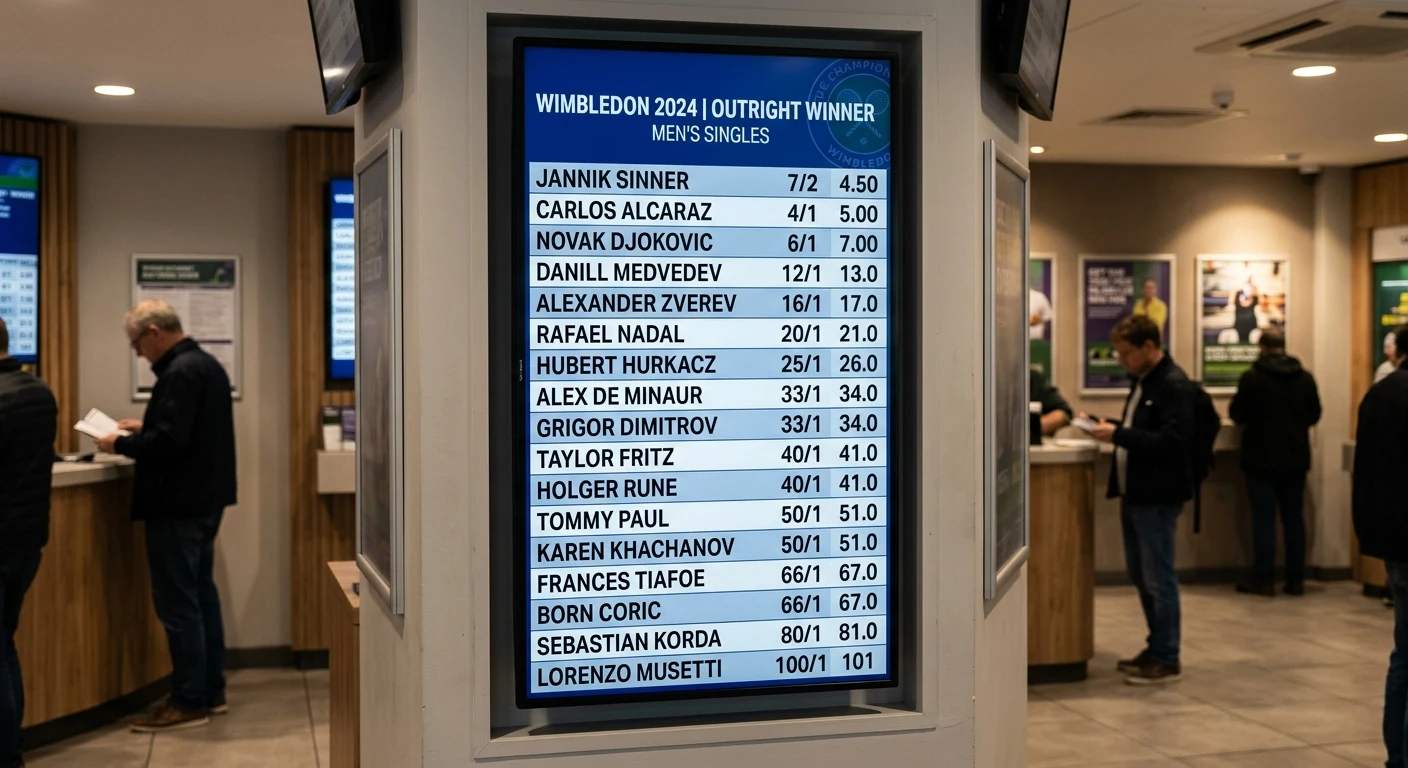
An outright, also called a futures bet or an ante-post bet in British parlance, is a wager on who wins the entire title. The bookmaker has to price every player in the draw against every other player, then bake in their margin across the whole field. Because there are 128 names in each singles draw, those prices carry enormous uncertainty at the start, and uncertainty is where value lives. A grass specialist seeded outside the top eight will often be priced as if the surface does not flatter him, and that gap is your opening.
The catch is that an outright ties your stake up for the duration. Back someone on the first Monday and your money is unavailable until they are eliminated — potentially the second Sunday. You are paid handsomely for that patience because you are taking on the risk of injury, a brutal draw, a five-set epic in the fourth round, and form simply evaporating. The reward reflects the difficulty: lifting the trophy is worth a great deal to the players too, with the 2025 singles champions each taking home a record £3 million, so the field is ferociously motivated and upsets are common.

The other thing worth understanding is who is actually setting these prices. Outright markets on a Grand Slam are heavily traded and tightly watched, and higher liquidity tends to mean sharper prices. Mature, well-monitored markets are good at finding the right number quickly, which is exactly why the early window — before the sharp money has done its work — is where a recreational bettor can still find a genuine edge.
How single-match betting compares
Match betting is the bet I reach for when I am confident about a player but nervous about the tournament. You are pricing a single contest: this player, this opponent, this best-of-three or best-of-five, settled the same day.
The mechanics are cleaner. Two players, two prices, the bookmaker’s margin split between them. There is no two-week exposure, no draw to navigate, no fitness gamble beyond the ninety minutes to four hours in front of you. If your read on a grass-court matchup is good, you can express it match after match, compounding small edges instead of staking everything on one improbable run to the title.
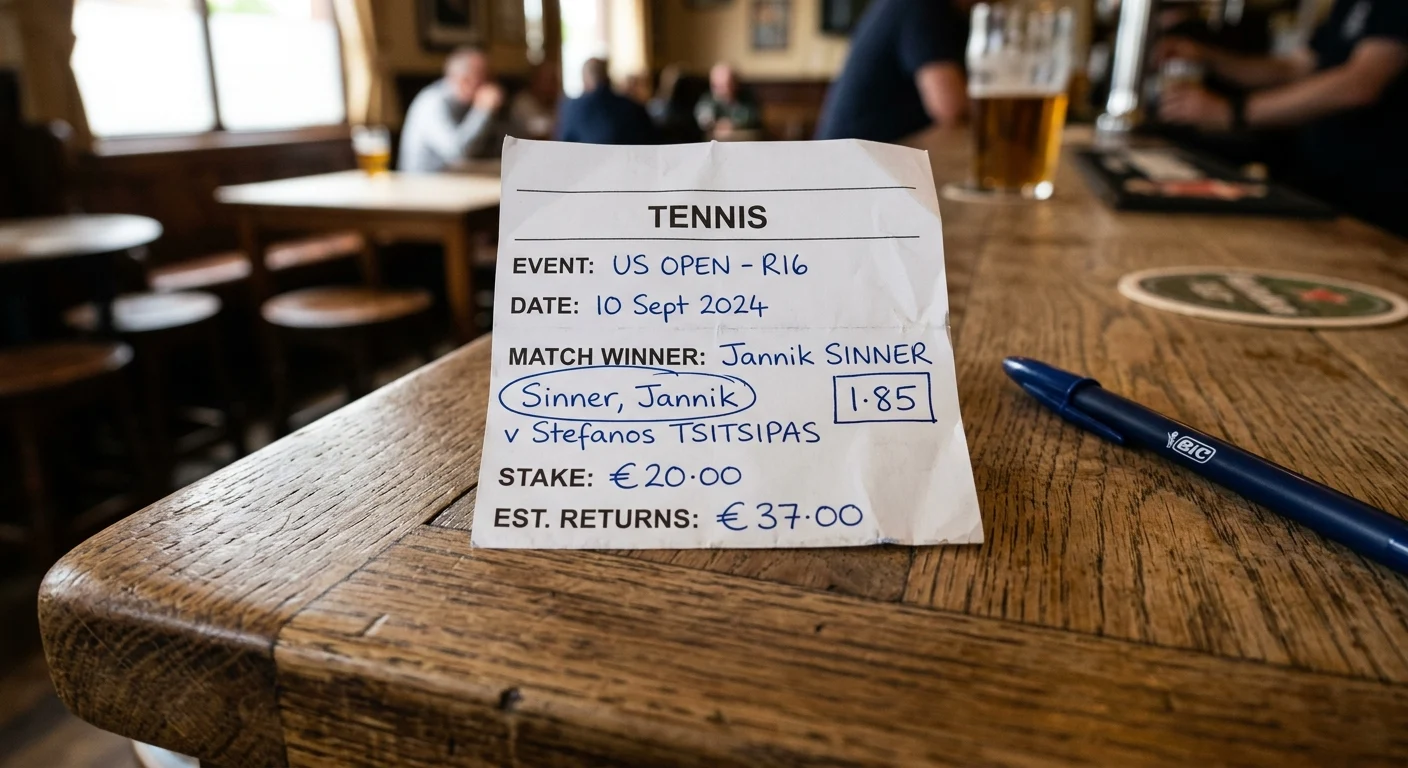
What you give up is the explosive payout. Backing a 6.00 outright that comes in returns six times your stake; backing the same player to win seven individual matches at short prices returns far less, because each round he is the favourite and priced accordingly. Match betting trades the dream of one big number for the steadiness of many small decisions — and for most bettors, most of the time, steadiness is the more profitable temperament.
Where each finds value
I keep a simple rule taped to the side of my monitor every July: outright for the surface, match for the matchup. Here is what that means in practice.

Outright value hides in players whose game is built for grass but whose ranking does not reflect it. Wimbledon’s prize fund — £53.55 million across the 2025 Championships, up seven percent on the year before — pulls in the deepest field in tennis, and that depth means the bookmakers cannot price every grass specialist perfectly before the draw settles. A big server seeded fifteenth on a fast lawn is frequently better value to win the title outright than his price suggests, because the market is anchored to his hard-court and clay results.
Match value, by contrast, lives in specific clashes. A returner who struggles against left-handed serves, a clay-courter dragged onto grass in week one, a seed coming off a draining five-setter — these are single-match edges that an outright price simply cannot capture, because the outright is an average across an unknown path. When you have read one matchup better than the market, take the match. When you have read the surface better than the market, take the outright. The two are not rivals; they are tools for different jobs, and the bettors who profit are the ones who stop asking which is better and start asking which fits.
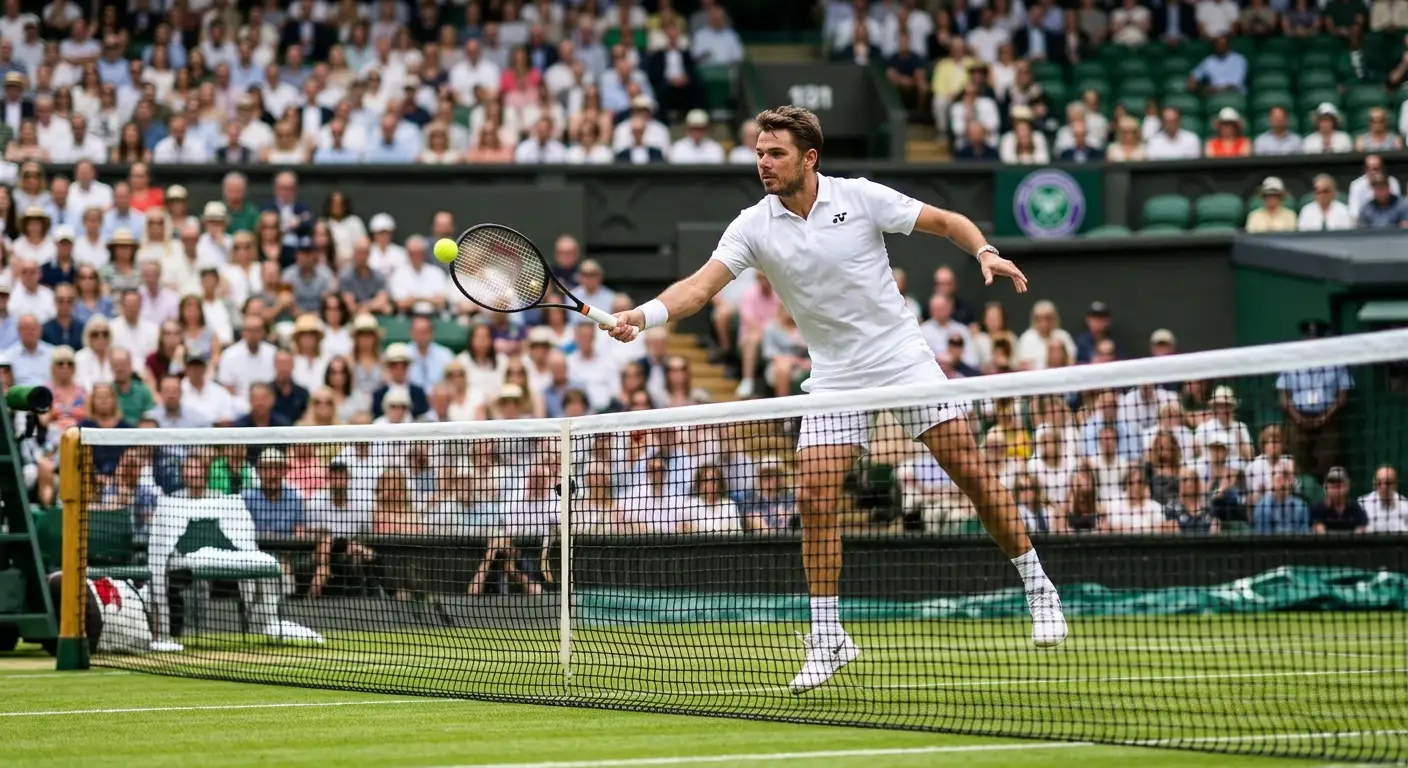
If you want the middle ground between a single match and the full title, there is a third structure worth knowing — the place market. I have written a full breakdown of each-way betting on a Wimbledon outright for exactly that reason.
Can I back an outright winner after the tournament starts?
Yes. Bookmakers keep the outright market open throughout the fortnight, and the prices shift round by round as players are eliminated. Backing in-tournament means less uncertainty and shorter odds, so you sacrifice the early value in exchange for more information about form and the draw.
Does an outright bet tie up my stake for two weeks?
It does. Once you place an ante-post outright, that stake is committed until your player is either knocked out or wins the title. Match betting, by contrast, settles the same day, so if cash flow matters to you across the fortnight, match betting keeps your bankroll far more flexible.
