
 Available in US
Why Wimbledon is the sharpest betting fortnight of the year
The first time I traded a full Wimbledon fortnight start to finish, I burned through two weeks of caffeine and a good chunk of my patience by the quarter-finals. Not because I was losing. Because the tournament never sits still. Other Grand Slams give you a rhythm you can switch off from. Wimbledon is the one major where, for fourteen straight days, there is always a live price moving somewhere on a grass court, and the surface is busy rewriting the rules of every match while you watch.
That is the thing most guides miss. They treat Wimbledon as just another big tennis tournament with a famous lawn attached. It is not. It is the single most distinctive betting environment in the sport, and the reasons are baked into the grass itself. The ball skids low and fast, points end in a handful of shots, and the player holding serve becomes almost untouchable for long stretches. A break of serve at Wimbledon is worth more than a break anywhere else, because there are so few of them. If you bet the way you would bet a clay-court grind, the grass will quietly take your money.
There is also a scale to this event that you feel in the markets. Wimbledon 2025 pulled in 548,770 spectators through the gates, a record turnout and up roughly four per cent on the year before, and the online audience ran into tens of millions of streams on top of that. When that many eyes land on a fortnight of tennis, the betting volume follows, and the prices get sharper by the day. Soft early lines get corrected fast.
And tennis is not standing still as a betting product either. It is the fastest-growing sport for online wagering on current projections, tracking a compound annual growth rate near 14 per cent through 2031, and the engine behind that growth is exactly the kind of event Wimbledon is: a two-week Grand Slam with continuous, point-by-point in-play markets. So this is not a niche curiosity. It is a sport pulling serious money toward it, and a tournament that concentrates that money into a single fortnight on the most unusual surface in the game.
I have spent nine years betting and analysing grass-court tennis specifically, and what follows is the guide I wish someone had handed me before that first exhausting fortnight. It covers every market you can play, how to read the prices, why the surface should reshape your thinking, how to trade the matches live, where the value actually hides, and a side of tennis betting almost nobody talks about honestly: how clean the market really is, and how to keep your own betting healthy across two long weeks.
The grass-court edge in five lines
- Grass turns serve into the central fact of every match: top servers hold around 86 per cent of the time, so breaks are rare and the favourite-underdog gap narrows over individual sets.
- Most of the action is live: in-play wagering now takes over 62 per cent of the online market, and tennis is built for it.
- Read prices as probabilities plus a margin, and only bet when your estimate beats the implied chance.
- Stake one to four per cent of your bankroll per bet and set deposit limits before the fortnight starts.
- Tennis carries real integrity risk, with around a quarter of 2025 alerts, but it sits at the lower tiers, so Grand Slams stay among the safest to bet.
The Wimbledon betting landscape in 2026
Ask most punters what Wimbledon "is" and they will tell you about strawberries and white kit. Ask a bookmaker and they will tell you about a commercial machine that puts more money on the table every year, which is exactly why the betting lines behave the way they do. The prize money tells the story cleanly: the 2025 Championships paid out a total of 53.55 million pounds, a seven per cent jump on the previous year, and the singles champions each walked away with a record three million.
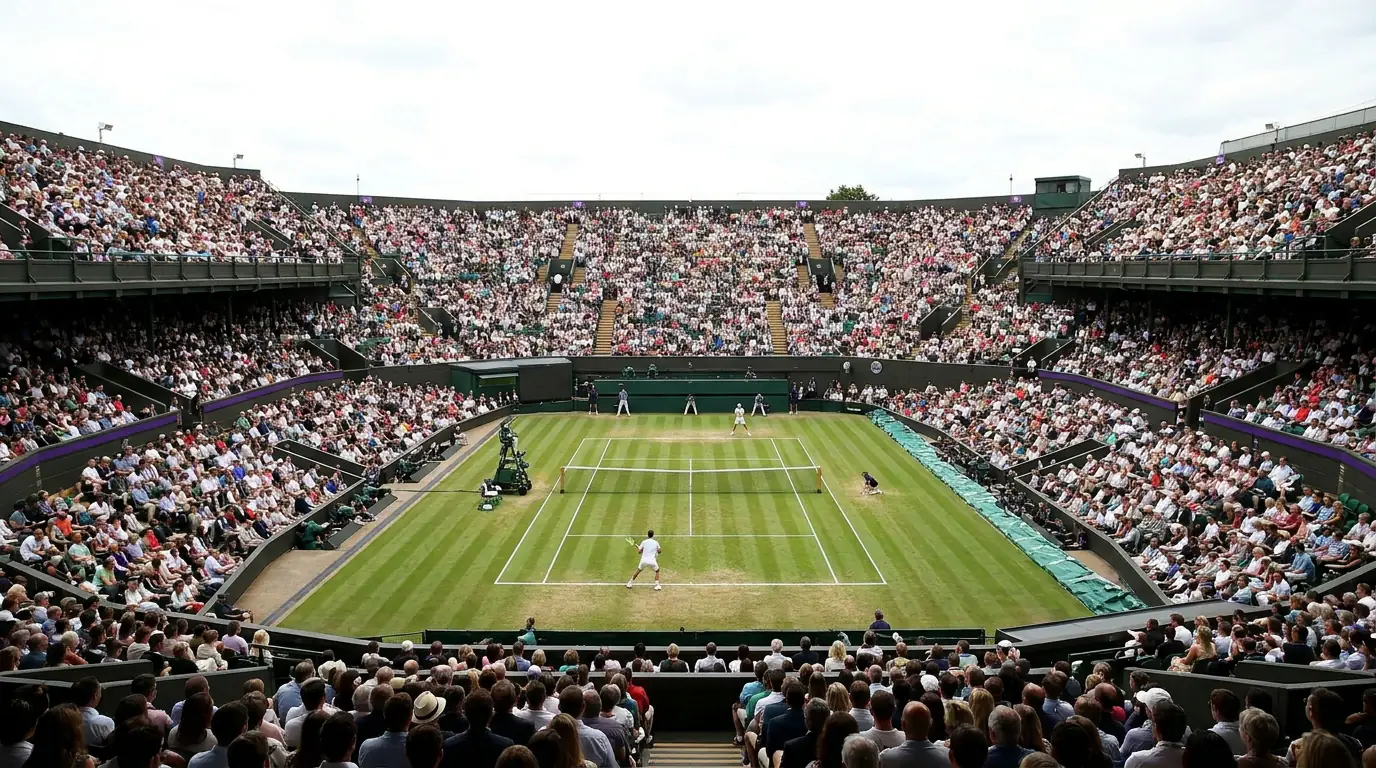
That growth matters to you as a bettor for a reason that is not obvious at first. When the rewards climb this steeply, player motivation in the early rounds firms up, prize structures get scrutinised, and the whole event carries a weight of seriousness that filters into how reliably the favourites perform. A first-round exit at Wimbledon was worth 66,000 pounds in 2025. That is life-changing money for a journeyman, and it means even the players you have never heard of are turning up to compete, not to collect a cheque and leave.
Surface
Grass, the fastest of the four Grand Slam surfaces, played at the All England Club in SW19.
Format
128-player singles draws, seven rounds, best-of-five for men and best-of-three for women.
Duration
A continuous fortnight, fourteen days of live tennis and uninterrupted in-play markets.
2025 prize fund
53.55 million pounds total, three million to each singles champion.
The commercial backdrop is worth understanding because it explains why the data feeding your live prices is so good. Wimbledon's media income for 2025 came in around 253 million dollars, and the broadcast deals behind that are enormous. The ESPN contract that runs from 2024 to 2035 is valued at roughly 95 million dollars a year, the largest media deal the tournament has, while the BBC pays in the region of 44 million pounds annually through 2027. Money on that scale buys cameras on every court, ball-tracking on every point, and a feed that bookmakers price off in real time.
Sponsorship pulls in the same direction. The 2025 Championships were carried across more than 220 territories worldwide and supported by seventeen sponsors worth a combined 124 million dollars a year, with Barclays the largest at around 20 million pounds. The practical takeaway is simple: this is one of the most heavily covered, heavily monetised sporting events on earth, and that coverage is precisely what makes the betting markets so liquid and so quick to correct.
A liquid market is a double-edged sword. Deep liquidity and constant data mean the prices are efficient, so genuine mispricings get hammered flat within minutes. That makes Wimbledon a poor place to bet lazily and an excellent place to bet sharply. The edge is not in spotting the obvious. It is in understanding the surface and the markets better than the casual money that floods in for a famous fortnight.
So the landscape you are stepping into is not a sleepy country tournament. It is a fast, professional, richly funded event where everyone is trying, the data is excellent, and the money is heavy. That sets the table for everything else in this guide. Before you can find an edge, you need to understand how big the pond you are fishing in actually is, which is where we turn next.
How big tennis betting really is
Here is a number that surprised me when I first dug into it: more than one in five sports bettors say tennis is their preferred sport to bet on. A 2023 survey put that figure at 21.1 per cent, which puts tennis far above its share of general sports fandom. People do not love watching tennis more than football. They love betting it more, and once you understand why, you understand where Wimbledon sits in the wider picture.

The reason is structural. Tennis is built from hundreds of discrete, scorable moments, and that makes it the perfect raw material for live betting, which is now the dominant form of online wagering. In 2025, in-play betting took 62.35 per cent of the online sports betting market. The action is no longer mostly about picking a winner before kick-off. It is about trading the event as it unfolds, and no sport unfolds in more bettable increments than tennis.
Tennis is the fastest grower
On current projections tennis carries a compound annual growth rate near 13.83 per cent through 2031, the quickest of any sport, driven by Grand Slams with their fortnight of continuous in-play.
Live betting rules
In-play wagering claimed 62.35 per cent of the online sports betting market in 2025, and tennis is among its biggest beneficiaries.
Football still leads overall
Football held 35.27 per cent of the online betting market in 2025, with Europe alone generating 50.17 per cent of revenue, so tennis is the challenger, not the king.
Bettors choose tennis
21.1 per cent of sports bettors named tennis as their preferred betting sport, a share well ahead of its place in casual viewership.
Football is still the biggest beast in the room, holding 35.27 per cent of the online market in 2025, with Europe generating just over half of all revenue. But football is mature and slow-growing. Tennis is the sport bookmakers are investing in, because its growth curve is steeper and its product fits the live-betting era like a glove. When you bet on Wimbledon, you are not playing a backwater. You are playing one of the marquee events in the single fastest-expanding corner of the betting world.
That investment shows up in the depth of the markets you will find during the Championships. Every match, even on the outside courts in the first week, comes with a full menu of pre-match and in-play options because the operators know the demand is there. The flip side is that all this attention sharpens the prices. You are not the only one who has noticed tennis is a goldmine for live trading. The whole industry has, and the lines reflect it.
None of this means there is no money to be made. It means the money is made by understanding the product better than the field, not by turning up and backing a famous name. That edge starts with knowing the markets cold, so let us walk through the ones that matter.
The core Wimbledon betting markets
A reader once told me he had "bet on Wimbledon" and lost, and when I asked what he had backed, he could not really say. He had clicked a name, a number changed, the match ended, his money was gone. That is not betting. That is donating. "Betting on Wimbledon" is not one thing, it is a family of markets, and each one answers a different question about the match.
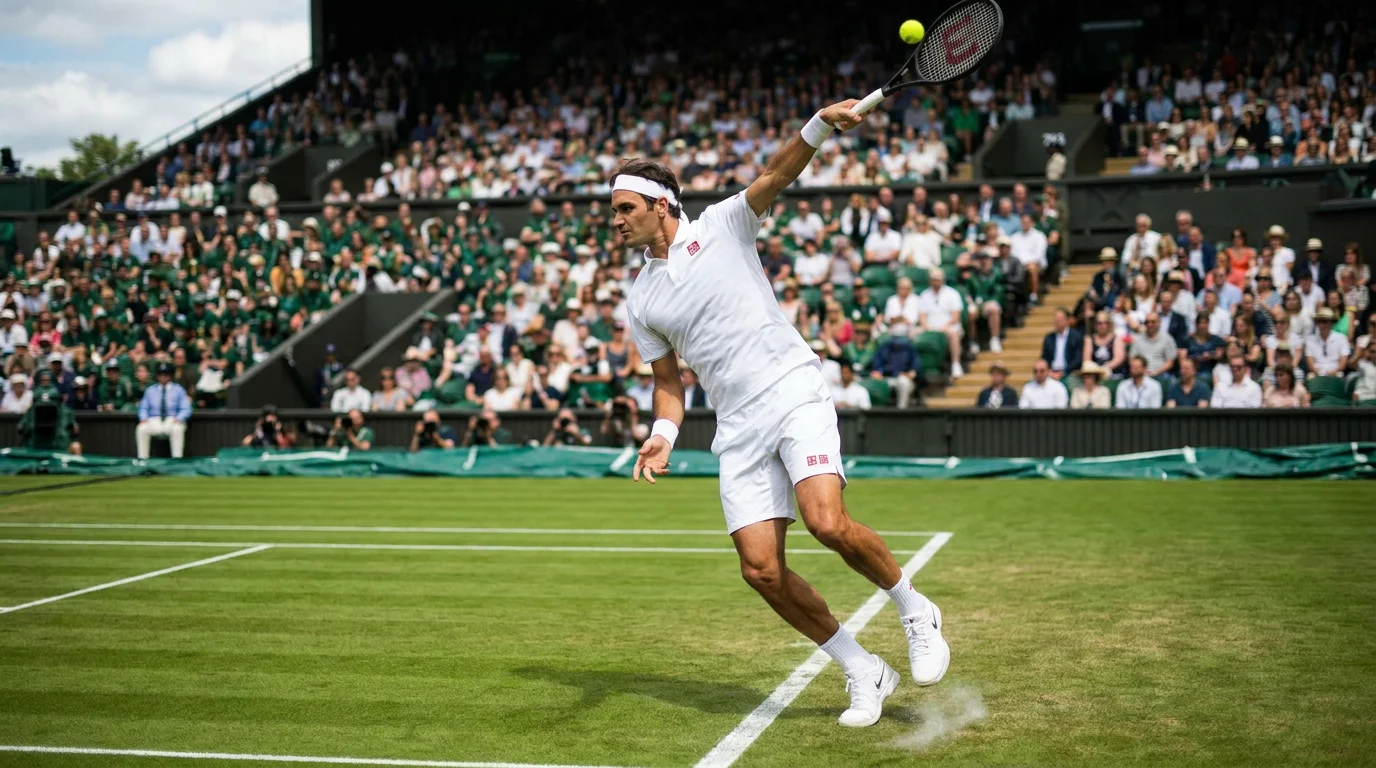
Roughly 90 per cent of tennis bets placed across the major operator brands now go on as in-play wagers, which tells you most of the action has moved away from the simple pre-match winner pick. But you cannot trade live intelligently until you understand the building blocks, so here is the core menu before we go deeper on the three that matter most.
Match winner
The simplest market: who wins the match. Also called moneyline. Your foundation.
Outright
Backing a player to win the whole tournament, priced as futures from before the draw.
Set betting
Predicting the exact set score, such as 3-1 or 2-0.
Handicap and totals
Betting the margin in games, or the over/under on total games played.
To reach the final
Stage markets that pay if your player reaches a named round.
Bet builder
Combining multiple outcomes from one match into a single priced bet.
I will cover the mechanics of placing each of these step by step in the dedicated walkthrough on how to bet on Wimbledon across every market. For the pillar, let me give you the three that form the spine of almost every betting card, and the way I think about each.
Match winner: the moneyline
The match winner market is where everyone starts, and where most people stay too long. You are simply backing one player to win. On grass, where favourites convert their serve so reliably, the strong favourite is often priced very short, and the temptation is to think a short price is a safe price. It is not. It is a low-return price, and stacking short favourites is one of the fastest ways to bleed a bankroll.
Reading a moneyline price
Suppose a player is offered at decimal 1.40 to win a match. That converts to fractional 2/5 and to American minus-250. The implied probability is roughly 71 per cent, meaning the bookmaker is saying this player wins about seven times in ten. A ten-pound stake returns fourteen pounds in total, a four-pound profit.
The skill is not in clicking the favourite. It is in deciding whether 71 per cent is too generous or too mean for what the surface and the matchup actually suggest. That judgement is the whole game.
Outright and futures
An outright bet backs a player to win the entire tournament, and it is priced as a future, often months before the first ball. The appeal is obvious: long odds and a single ticket riding through the whole fortnight. The catch is that your stake is locked up for two weeks, and the field is enormous. When the singles champion is collecting three million pounds, the bookmakers price the contenders accordingly, and value at the very top of the market is thin.
Where outrights earn their keep is one rung down, on the players the public underrates because they do not headline a Slam. A grass specialist drawn into a kind section of the bracket can be a far better outright than the favourite. The art is in spotting the player whose price reflects reputation rather than realistic chances on this particular surface.
Set betting and correct score
Set betting asks you to predict the exact set score, while correct score in tennis refers to the same idea of nailing how the sets fall. On grass this market has a particular flavour, because the surface produces both quick straight-sets blowouts when a big server is on song and sudden tie-break lotteries when two servers cancel each other out. Predicting a 3-0 on a dominant favourite often pays barely more than the moneyline, while a 3-1 or a 2-1 against the grain can offer real value.
The reason I rate set betting on grass is that the surface narrows the range of plausible outcomes. Breaks are rare, so matches tend to follow recognisable shapes, and a shape you can predict is a shape you can price. It rewards watching the surface rather than the names, which is the running theme of everything that follows.
Reading the odds: decimal, fractional, American
I still remember the moment odds stopped being intimidating to me. A friend asked why a player priced at 2.00 and a player priced at evens were "different," and I realised they were not, they were the same number wearing two outfits. Decimal, fractional and American odds are three ways of writing one fact, and once you see that, the wall comes down.

Decimal odds tell you the total return per unit staked, including your stake back. A price of 2.50 returns two pounds fifty for every pound, so a profit of one pound fifty. Fractional odds, still the traditional way UK bookmakers display prices, tell you profit only: 6/4 means four staked returns six profit, which is the same as decimal 2.50. American odds, common from US-facing books, use a plus or minus against a base of 100. The translations are mechanical once you have done a few.
One price, three formats
Decimal 3.00 equals fractional 2/1 equals American plus-200. A ten-pound stake at any of these returns thirty pounds in total, a twenty-pound profit. Decimal 1.50 equals fractional 1/2 equals American minus-200, returning fifteen pounds on a ten-pound stake.
The number that actually matters is hidden inside the price: the implied probability. To get it from a decimal price, divide one by the odds. A price of 4.00 implies a 25 per cent chance. A price of 1.25 implies 80 per cent. This is the single most useful calculation in betting, because it converts a price into the bookmaker's stated opinion, which you can then agree or disagree with.
Implied probability — the chance of an outcome that a given price represents, found by dividing one by the decimal odds and reading the result as a percentage.
There is a catch, and it is the catch that separates winning bettors from losing ones. If you add up the implied probabilities of every outcome in a market, they total more than 100 per cent. That extra slice is the bookmaker's margin, and it means the price is never a clean probability. It is a probability plus a built-in cut. Pulling the margin back out to find the true price is where the real analysis lives, and I take that apart in full in the dedicated guide to reading Wimbledon tennis odds, probability and margin.
For now, hold onto the core idea. A price is not a fact about the player. It is a claim, wrapped in a margin, that you are free to challenge. Everything else in betting is the business of deciding when that claim is wrong.
Why the grass changes everything
If I could tattoo one number onto every new grass-court bettor it would be this: on grass, the top servers hold serve around 86 per cent of the time, while on clay the average hold rate can drop to roughly 51.7 per cent. Read that again. The same player who wins barely half his service games on the dirt becomes almost unbreakable on the lawn. That single asymmetry is the engine behind every smart Wimbledon bet.
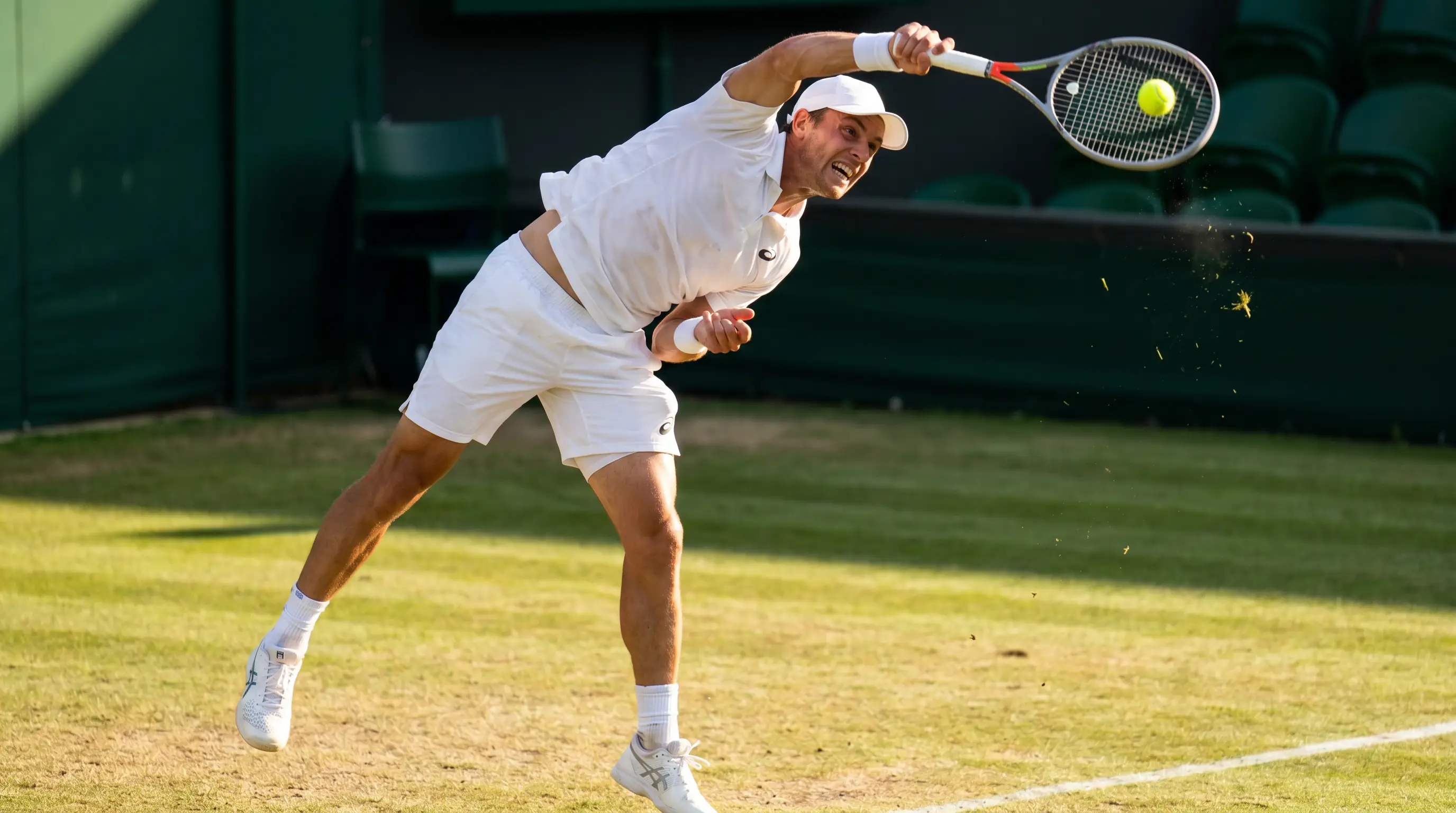
When holds are that dominant, matches change character completely. Breaks of serve become precious and rare, so a single break can decide a set, and a single bad service game can decide a match. The favourite-underdog gap narrows, because the underdog only needs to nick one break and protect his own serve to steal a set. This is why "back the favourite, it is grass" is dangerously incomplete advice. Grass makes upsets in individual sets more likely, not less, even as it makes the big server harder to beat over a full match.
The mistake I see most often is treating serve dominance as a reason to pile onto favourites. The truth is the opposite as often as not. High hold rates compress the margins, which is why set betting, handicaps and tie-break markets frequently offer better value on grass than the raw match winner. The surface does not just favour servers. It reshapes which markets are worth playing.
On the fastest surfaces, grass and quick hard courts, the elite players typically win over 70 per cent of the points on their own serve, and the gap between a great server and an ordinary one widens dramatically. The clearest illustration I know is the contrast in career ace rates: Ivo Karlovic landed aces on around 18 per cent of his serves on grass, against roughly seven per cent for Rafael Nadal. Same sport, wildly different weapon, and on grass that weapon is decisive in a way it never is on clay.
The serve is so dominant on grass that a player can win a set without ever facing a break point, then lose the match in a tie-break lottery where a single mini-break settles everything. It is the surface where the scoreline can look comfortable and the result can still be a coin flip.
The good news is that the data to exploit this is better than it has ever been. In 2025 the ATP completed its full rollout of Hawk-Eye electronic line calling across every tour event, adding standardised ball-tracking data to the existing serve and return numbers. You now have access to the kind of granular serve metrics that used to be the preserve of professional analysts, which means the edge is there for anyone willing to read it.
That edge does not come from knowing grass favours servers. Everyone knows that. It comes from quantifying it: which player's hold rate actually travels to grass, whose first-serve percentage holds up under pressure, who has the return game to manufacture the rare break. I build that into a full framework in the grass-court betting strategy guide, where the metrics turn into actual bets. The principle to carry forward is that grass-court ability and overall ranking are two different things, and the prices reward the bettor who can tell them apart.
In-play betting at Wimbledon
The single most addictive button in betting is the in-play one, and Wimbledon is where it gets the most dangerous workout. With around 90 per cent of tennis bets in the major brands placed live, and in-play now taking over 62 per cent of the whole online market, the reality is that pre-match betting is the warm-up act. The main event is trading the match as it breathes.
Tennis is built for this. Every point is a scorable moment, every game shifts the price, and the momentum swings are violent enough to create constant opportunity. A player goes a break up and his price collapses, then gets broken straight back and the value rushes the other way. Over a fourteen-day Grand Slam, that is an unbroken supply of moments where the live price overreacts to the last point and underreacts to the bigger pattern. Reading which is which is the whole skill.
Do
- Watch the match you are trading, never bet blind off the numbers alone.
- Wait for the market to overreact to a single break before backing the recovery.
- Respect the serve: a break down is rarely as fatal on grass as the price suggests.
- Decide your exit before you enter the trade.
Don't
- Chase a losing position by doubling the next point.
- Bet into the price you see on screen without accounting for the delay behind it.
- Mistake a single dramatic point for a genuine shift in the match.
- Treat cash out as free money, it carries the margin too.
The trap is speed. The live price moves faster than your judgement, and the delay between what you see on television and what the book has already priced means you are often betting on old information. The casual money pours in on the obvious swing, which is exactly when the value has already gone. The disciplined trader sits on his hands through the noise and acts only when the market has misread the surface.
In-play tennis is a genuine craft, with its own signals, its own risks around data latency, and its own discipline around cashing out. I take all of it apart in the dedicated guide to live Wimbledon betting and trading momentum in-play. The headline for the pillar is this: if you are going to bet Wimbledon seriously, most of your action will happen live, so treat in-play as the main skill to develop, not a side feature to dabble in.
Finding value and protecting your bankroll
Every losing bettor I have ever talked to had the same blind spot. They thought betting was about picking winners. It is not. It is about finding prices that are wrong, which is a completely different game. You can pick the winner of a match and still lose money over a season if you keep taking bad prices, and you can back losers more often than winners and still profit if your prices are right.
That idea has a name: value. A value bet is one where the true probability of an outcome is higher than the price implies. If you genuinely believe a player has a 50 per cent chance and you can back him at decimal 2.20, you have a value bet, because 2.20 implies only about 45 per cent. Over enough bets, taking prices above their fair value is the only thing that makes money. Everything else is decoration.
Value bet — a wager where your estimate of the true probability exceeds the probability implied by the odds, giving the bet a positive expected return over time.
Spotting value step by step
Step one: estimate the true chance. Say your analysis of the serve data makes a grass specialist a 55 per cent favourite in a match.
Step two: find the fair price. One divided by 0.55 is about 1.82, so 1.82 is the break-even price.
Step three: compare to the market. If a bookmaker offers 2.00, the price implies only 50 per cent, below your 55 per cent estimate, so there is value. If the best price is 1.70, the market is shorter than fair and you pass.
The discipline that protects all of this is bankroll management, and it is the least glamorous, most important habit in betting. The rule I live by, and the one I would push hardest on any new bettor, is to stake a fixed small fraction of your total bankroll per bet, somewhere between one and four per cent. A unit that size means a cold run cannot wipe you out, and a hot streak does not tempt you into recklessness. Across a fourteen-day tournament with dozens of betting opportunities, protecting the bankroll is what keeps you in the game long enough for your edge to show.
Before you place any Wimbledon bet
- Have I estimated the true probability before looking at the price?
- Does the available price beat my fair-value estimate?
- Does the grass surface support or undermine my read on this matchup?
- Is the player fit, in form, and a genuine grass-court threat?
- Is this stake within my one to four per cent unit?
If a bet fails any line of that checklist, I do not place it. That sounds rigid, and it is, deliberately. The market is fast and efficient, the casual money is heavy, and the only way to beat that environment is to be more disciplined than the field. Value finds the edge. Bankroll management keeps you alive to use it. Neither works without the other.
Integrity: how clean is tennis betting?
Nobody likes talking about this part, which is exactly why I always do. Tennis has a structural integrity problem that no other major team-light sport shares, and ignoring it does not make your bets safer, it just makes you a softer target. Here is the uncomfortable headline: in 2025, tennis accounted for 74 suspicious-betting alerts, around a quarter of all alerts across every sport, with football's 110 making up the largest share. Between them, the two sports produced over 61 per cent of all suspicious cases that year.
The reason tennis punches so far above its weight is simple and a little chilling. It is an individual sport. As Karen Moorhouse, who runs the International Tennis Integrity Agency, has put it, you only need to influence one person to arrange something. There is no team to carry an unwilling player, no goalkeeper and ten outfielders to coordinate. One athlete, one decision, and a match can be bent. That structural vulnerability is baked into the format, and it concentrates the risk at the lower tiers where the money is thin and the temptation is high.
The good news for Wimbledon bettors specifically is that the alerts cluster overwhelmingly at the bottom of the sport, the Challenger and ITF events where prize money is small and scrutiny is light. Grand Slams sit at the opposite end. The eyes, the money and the monitoring are all heaviest at events like Wimbledon, which makes the showpiece tournaments among the safest tennis you can bet.
The monitoring behind these numbers has become genuinely formidable. The International Betting Integrity Association recorded 300 alerts in 2025, a 29 per cent rise on the 232 of the year before, with tennis again the largest single contributor after football. Separately, Sportradar tracked more than a million events across 70 sports in 2025 and flagged 1,116 suspicious matches, which means over 99.5 per cent of everything they watched showed no sign of trouble at all. Of those flagged, tennis produced 78, a rise on the year, while football dominated with 618.
Now, a rise in alerts is easy to misread, and the people who run these systems are careful to push back on the obvious interpretation. The IBIA's chief executive Khalid Ali has been blunt that the 2025 data reflects a familiar risk picture, with football and tennis continuing to generate the largest share of suspicious activity. The trend is real, but it is not new, and a fortnight at the All England Club is not where it lives.
Crucial distinction: an alert is not a verdict. The ITIA is explicit that unusual betting patterns can arise for many reasons besides a fixed match, including mispriced odds, informed money, and a player's form or fatigue. A flag is a prompt to investigate, not proof that anything was wrong. Treat it as a smoke detector, not a conviction.
What this means for you in practice is encouraging. Bet the big stages, where integrity scrutiny is highest, and be far more cautious about the obscure early-tier matches that sometimes appear on the same betting menus during Wimbledon week. The full picture, including how monitoring actually works, what triggers an alert, and how flags become sanctions, is laid out in the guide to Wimbledon betting integrity and how clean the market is. The short version: tennis carries a real risk, the risk sits at the bottom of the sport, and Wimbledon is about as clean as betting gets.
Betting responsibly in the UK
A two-week tournament is uniquely good at separating people from their money, and not only through bad bets. The danger of Wimbledon is the relentlessness of it. Fourteen days of continuous live markets means fourteen days of chances to chase a loss, to bet because you are bored, to keep clicking long after you stopped thinking clearly. The fortnight that makes the betting so rich is the same fortnight that makes it so easy to overdo.
The scale of betting in this country is worth seeing plainly. In 2024, 48 per cent of British adults had gambled in the previous four weeks, falling to 28 per cent once you strip out people who only play the lottery. Online betting is firmly mainstream: British online gross gambling yield rose seven per cent year on year to 1.45 billion pounds in the first quarter of 2025, with an average of 13.5 million active accounts a month. This is not a fringe activity. It is something a large share of the adult population does routinely.
Among younger adults the numbers climb sharply. Research in 2025 found that almost a quarter of UK adults, 24 per cent, bet on sport online every month, a figure that rises to 52 per cent among 25 to 34 year olds. If you are in that bracket, you are betting alongside half your peers, which is all the more reason to have a system rather than a habit.
Set your limits before the tournament starts, not in the heat of a third-set tie-break. Decide a deposit cap for the fortnight and a maximum daily exposure, and use the deposit limits, time-outs and self-exclusion tools that every licensed Great Britain operator is required to offer. The time to build the fence is before you are standing at the edge, not after.
The regulator has been reshaping how it even understands this behaviour. Laura Carter, who heads research at the Gambling Commission, has described the new survey approach as giving greater flexibility and reach than ever before, which matters because better data drives better protections. The framework around UK betting exists for your benefit, and the safer-gambling tools are there to be used, not ignored as small print.
None of this is moralising. I bet, I enjoy it, and I have done so for nine years without it taking over my life, precisely because I treat the limits as part of the strategy rather than an inconvenience. The bettors who last are the ones who decide in advance what they are willing to lose and then honour that decision when the markets are screaming at them to do otherwise. Across a fortnight this long, that discipline is not optional. It is the whole point.
Wimbledon betting questions, answered
How does a beginner start betting on Wimbledon?
Start with one market and learn it properly rather than spreading yourself across six you half understand. The match winner, or moneyline, is the natural foundation: you back a player to win the match, and you learn to read the price as a probability. Once that feels comfortable, add set betting and handicaps. Set a unit of one to four per cent of your bankroll from day one, and treat the first few days of the tournament as a chance to watch how grass-court matches actually behave before committing real stakes to the bigger rounds.
Which bet types are available on Wimbledon?
The core menu runs from the simple to the exotic. Match winner is the baseline. Outright backs a player to win the whole tournament. Set betting and correct score predict how the sets fall. Game handicaps and total games bet the margin and the length of the match. Stage markets like to reach the final pay if a player reaches a named round, and bet builders let you combine outcomes from a single match. On grass, the serve-dominated markets such as totals and handicaps often carry more value than the headline winner price.
How do you read tennis odds and implied probability?
Odds come in three formats that say the same thing. Decimal shows your total return per unit staked, fractional shows profit only, and American uses a base of 100. To turn any decimal price into a probability, divide one by the odds: a price of 4.00 implies 25 per cent, a price of 1.25 implies 80 per cent. The vital catch is that the implied probabilities across a market add up to more than 100 per cent, and that surplus is the bookmaker's margin. The price is always a probability with a cut built in.
Why does the grass surface matter for betting?
Because it changes the maths of every match. On grass the top servers hold serve around 86 per cent of the time, against roughly 51.7 per cent on clay for average holders, so breaks of serve become rare and precious. That compresses the gap between favourite and underdog over individual sets, makes tie-breaks more frequent, and rewards big servers disproportionately. The practical consequence is that you should bet the better grass-court player, not the better player overall, and you should look hard at set betting, handicaps and serve props where the surface effect is strongest.
Is it legal to bet on Wimbledon in the UK?
Yes. Betting on Wimbledon is fully legal in Great Britain through operators licensed by the Gambling Commission, which regulates the market and sets the rules every licensed book must follow. The legal minimum age is 18. Licensed operators are required to offer safer-gambling tools such as deposit limits and self-exclusion, and the regulator publishes regular data on participation and the health of the market. As long as you bet with a Gambling Commission licensed operator, you are betting within the law.
What is a value bet and what are no-vig odds?
A value bet is one where your estimate of the true probability beats the probability the price implies. If you rate a player a 55 per cent chance and the price implies only 50 per cent, that gap is your edge. No-vig odds are the prices you get after stripping out the bookmaker's margin, leaving the market's honest estimate of probability. Because the headline price always carries a margin, calculating the no-vig fair price is how sharp bettors judge whether a market is offering genuine value or just a dressed-up version of the bookmaker's cut.
How much suspicious activity does tennis betting actually see?
More than its size would suggest, but concentrated in a way that protects major events. In 2025 tennis produced 74 suspicious-betting alerts, around a quarter of all alerts across every sport, with football the only larger contributor. The reason is structural: as the ITIA notes, an unusual betting pattern can arise for many reasons beyond a fixed match, including mispriced odds, informed money and player form or fatigue, so an alert is a prompt to investigate rather than proof of wrongdoing. The alerts cluster heavily at the lower tiers, which makes Grand Slams like Wimbledon among the safest tennis to bet.
Your edge for the fortnight ahead
We have covered a lot of ground, from the commercial machine behind the Championships to the precise hold-rate maths that should reshape your bets. Here is how it fits together when the first ball is struck.
Your edge at Wimbledon does not come from any single trick. It comes from the combination: understanding that this is a fast, richly funded, heavily monitored event where the lines are sharp and the casual money is heavy; knowing that the grass turns serve dominance into the central fact of every match; reading prices as claims you can challenge rather than truths you must accept; treating in-play as the main skill because that is where most of the action now lives; and protecting your bankroll with the discipline that keeps you in the game long enough for your reads to pay off.
The bettors who lose at Wimbledon back famous names at short prices and chase the swings live. The bettors who win read the surface, hunt for value the field has missed, and stake like they intend to be doing this for years rather than for a single dramatic fortnight. I have spent nine years on the second path, and the grass has taught me one thing above all: at Wimbledon you are never betting on the better player, you are betting on the better grass-court player, at the right price, with money you can afford to lose. Read the grass, find the edge, and the fortnight will reward you for it.
