
 Available in US
Content
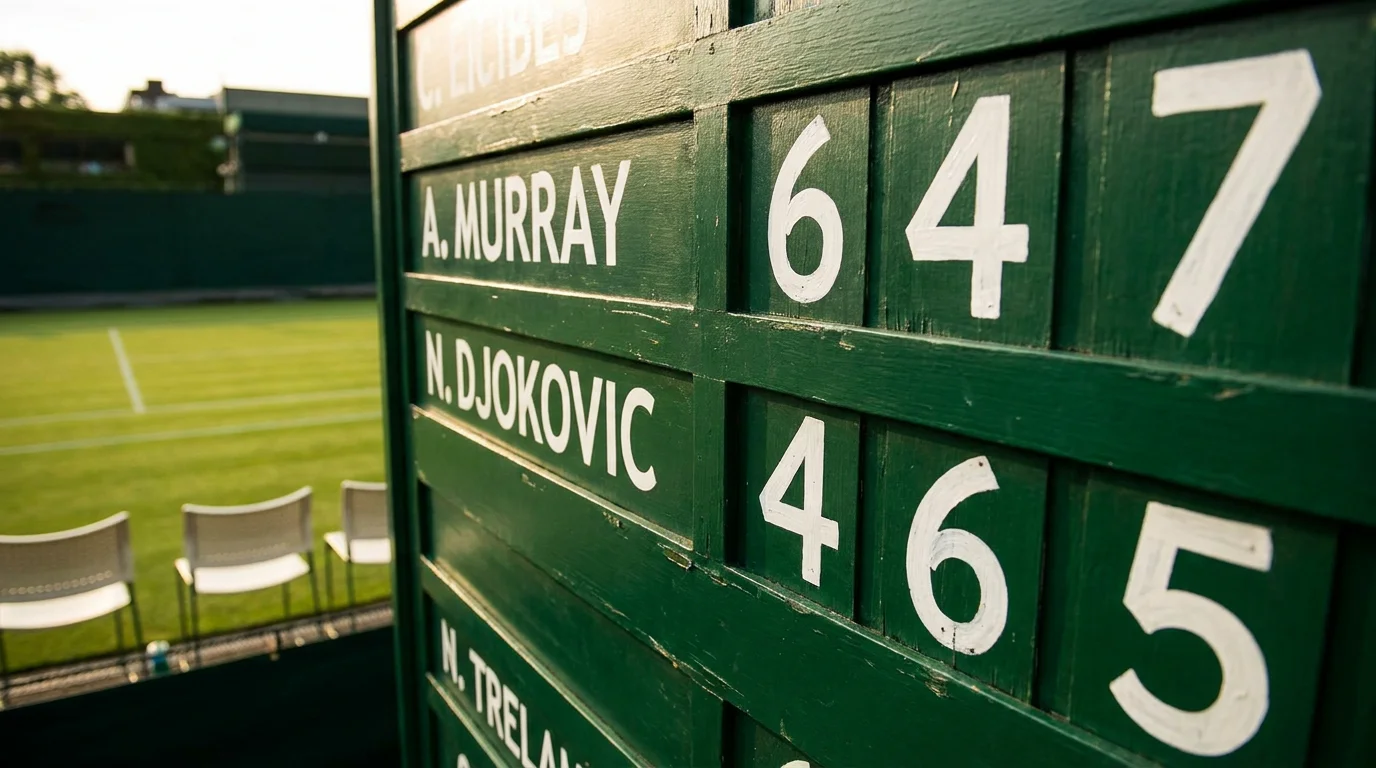
Betting on how the sets fall
The first time a set bet saved my afternoon, my chosen player had been broken in the opening game and I would have lost a straight match-winner bet at the first hurdle. But I had backed him to win in three sets, not two, and that little bit of breathing room turned a near-miss into a winning ticket. That is the appeal of set betting: it lets you be roughly right about the result while being precise about the shape.
Set betting means wagering on the exact set score of a match — 2-0, 2-1 in the women’s draw; 3-0, 3-1, 3-2 in the men’s. You are not just picking the winner. You are predicting how comfortably, or how narrowly, they get there. It sits one step more specific than the match-winner market and one step less mad than correct score, and on grass it can be a genuinely sharp tool.
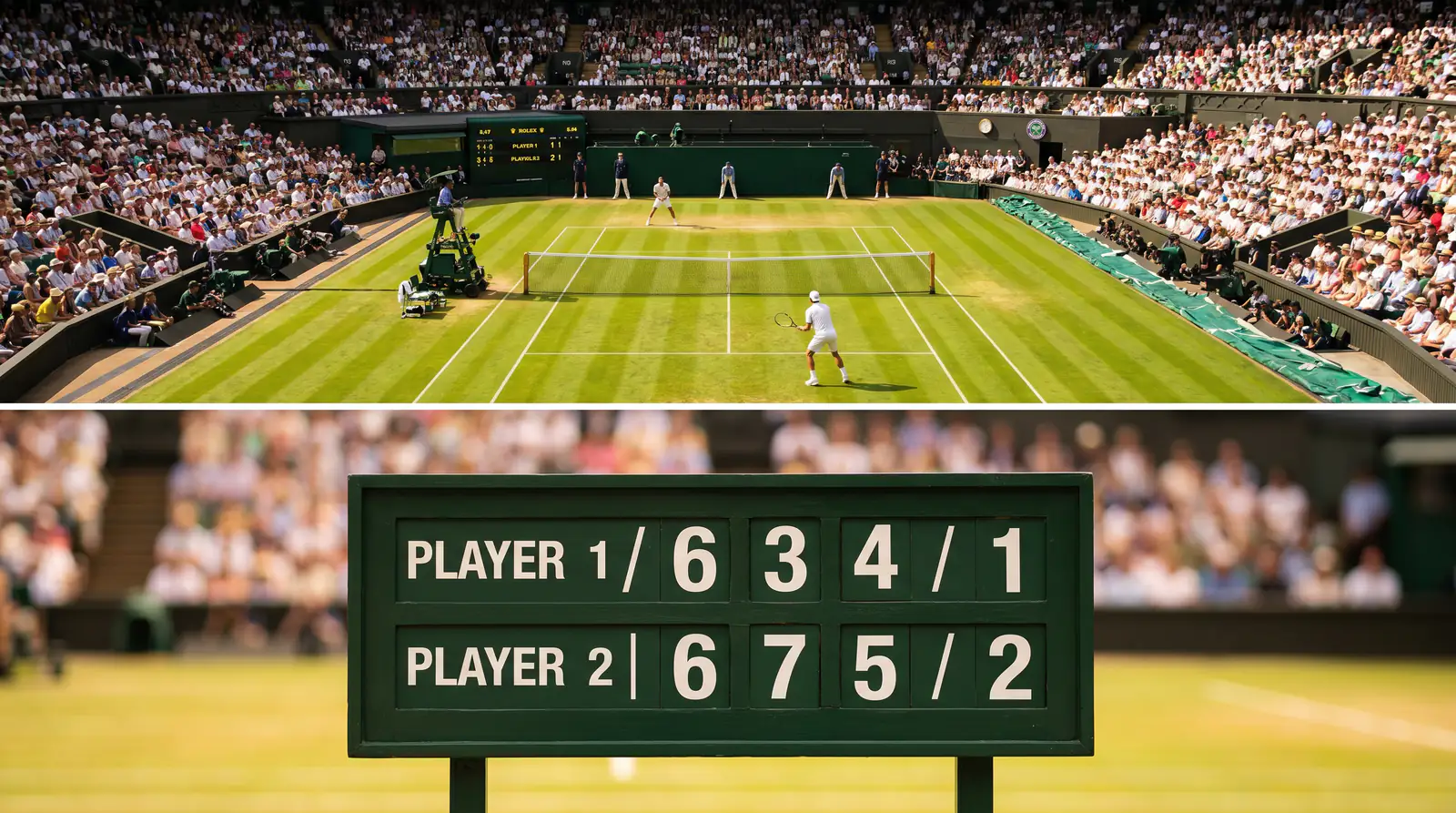
The reason it works at Wimbledon is the surface. Grass produces a particular distribution of scorelines, and once you understand that distribution, set betting stops being a guess and starts being an edge. A clay court rewards the grinder who can drag a match into long, attritional sets; grass rewards the server who keeps things short and sharp, and that difference shows up directly in how the sets fall. Learn to read it and you can predict the rough shape of a match before the players have hit a ball.
The correct-set-score market
Set betting is best understood as a menu of every possible final scoreline, each with its own price. The bookmaker prices “Player A to win 3-1” separately from “Player A to win 3-0,” and the difference between those prices is the bookmaker’s read on how the match will unfold.
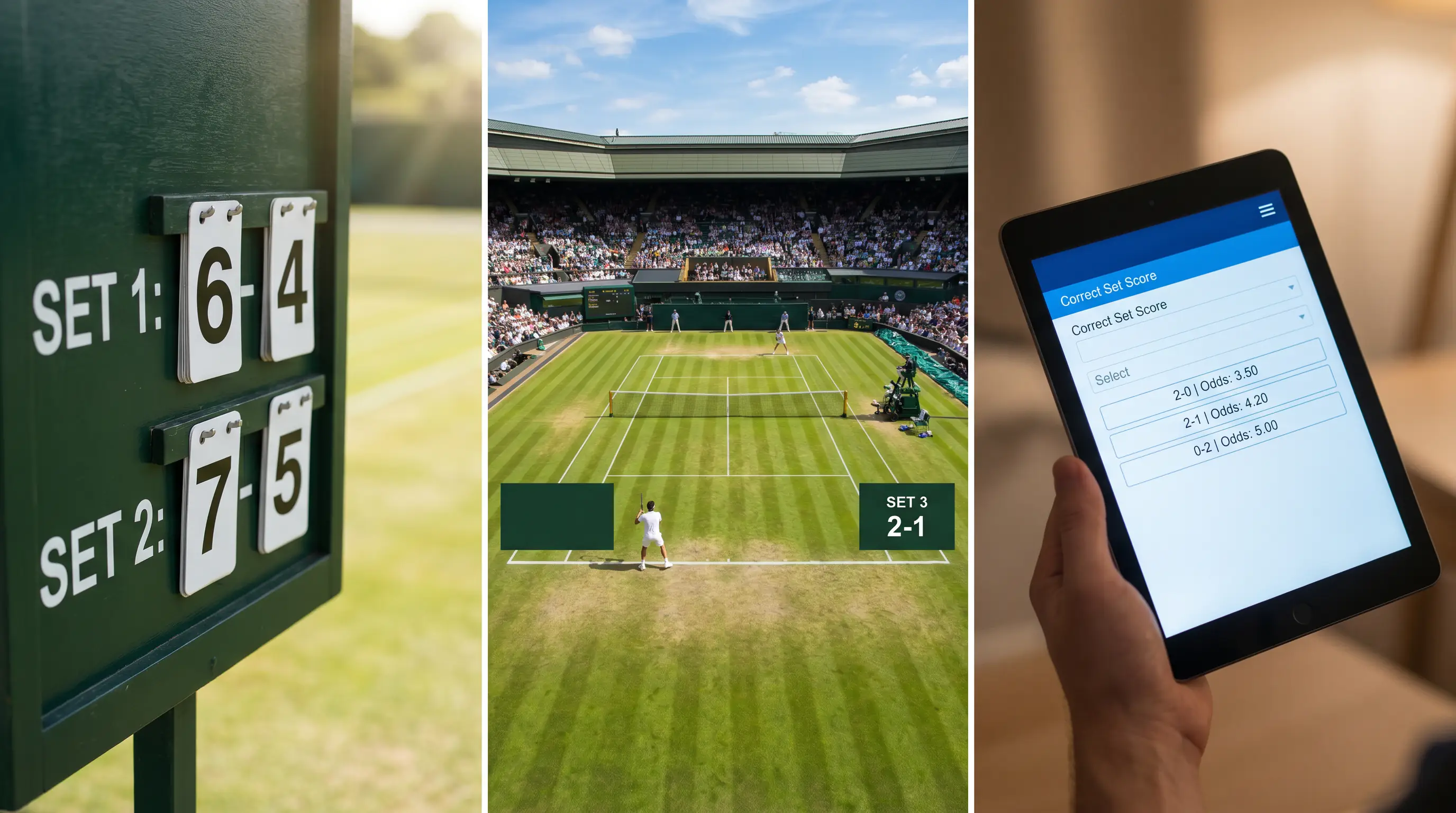
In the women’s best-of-three draw the menu is short: a winner can only triumph 2-0 or 2-1, giving four total outcomes once you count both players. In the men’s best-of-five draw it gets richer — 3-0, 3-1 or 3-2 for either man, six outcomes in all. More outcomes mean longer prices and more room to find value, which is part of why I do more set betting in the men’s draw than the women’s.

The crucial thing to grasp is that set betting is not the same as correct score in the way casual bettors sometimes assume. Set betting cares only about the final tally of sets won, not the games within them. A 3-0 win could be 6-0 6-0 6-0 or three tense tie-breaks; the set bet pays the same either way. That distinction matters, because it means your job is purely to predict competitiveness, not to nail the games. It is a more forgiving market than its precision suggests, and that forgiveness is exactly what makes it usable as a regular tool rather than an occasional dart.
Why some scorelines pay more
Here is where the grass earns its keep. On a fast surface where top players hold serve roughly 86 percent of the time, sets are often decided by a single break or a tie-break, and that shapes which scorelines are likely and which pay out big.
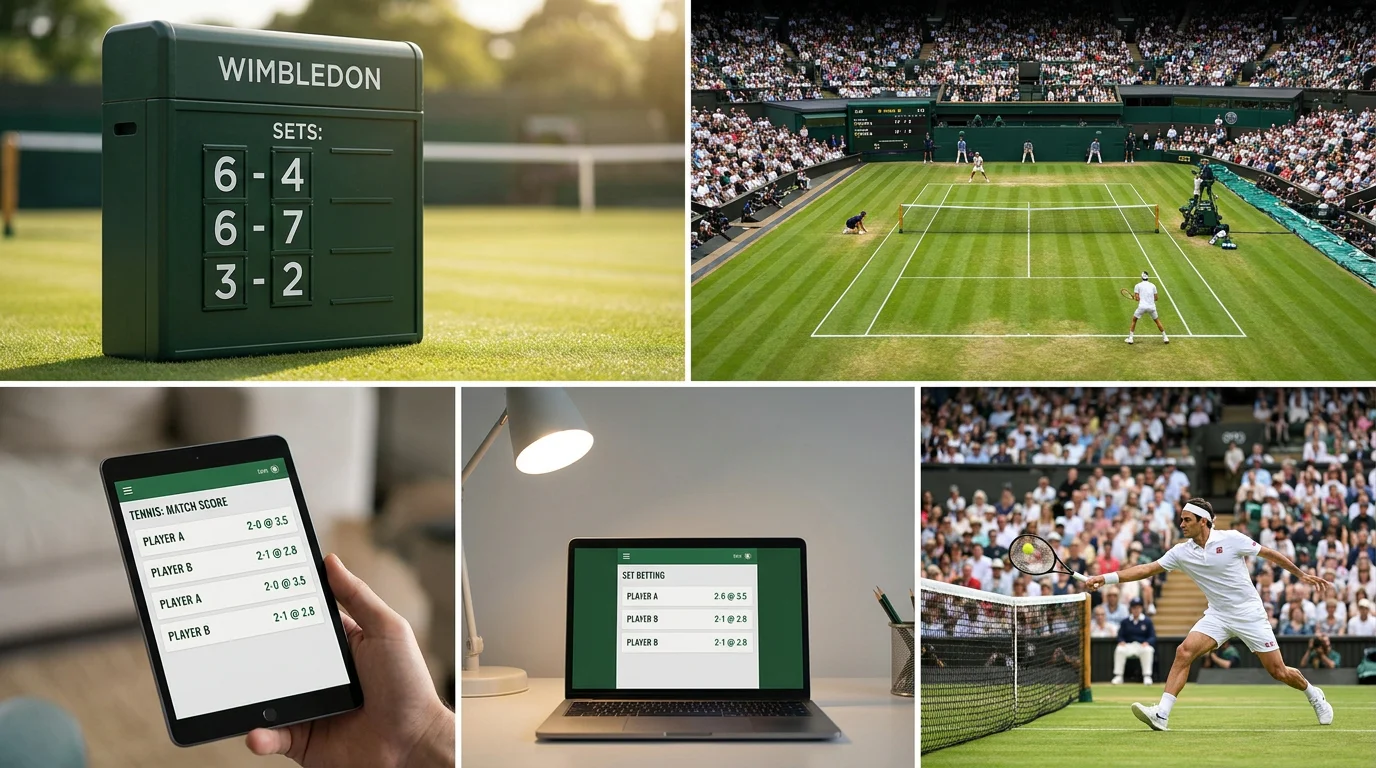
When serve dominates, matches between closely matched players tend to be tight — lots of holds, a break here or there, frequent tie-breaks. That pushes probability towards the “drop one set” scorelines: a 3-1 or 3-2 in the men’s, a 2-1 in the women’s, because the trailing player can ride their own serve to nick a set even while losing. Those scorelines therefore pay less when they are likely. The contrast with slower surfaces is stark — where top servers hold around 86 percent of the time on grass, the average hold rate on clay can sink towards 51.7 percent, and that gap is exactly why clay throws up lopsided scorelines that grass rarely does. Conversely, a clean straight-sets sweep against a competent server is harder than it looks on grass, which is why a 3-0 or 2-0 price on anyone other than an overwhelming favourite can be surprisingly generous. The serve-heavy nature of the lawn makes the “comfortable but not crushing” results the bread and butter of the surface.
I price it in my head like this: on grass, expect the underdog to steal a set more often than logic suggests, because his serve gives him a floor. So I lean towards the “win but drop a set” scorelines when two decent servers meet, and I save the straight-sets bets for genuine mismatches.
When set betting beats moneyline
Set betting earns its place in two situations, and recognising them is most of the skill. The first is when a favourite is priced so short on the match-winner that there is no value left — backing them to win in straight sets lifts the return to something worth taking, provided you genuinely expect a comfortable win. The second is the opposite: when you fancy an underdog to be competitive but not to win, backing the favourite to drop a set on the way to victory pays handsomely and only needs you to be right about competitiveness, not the eventual winner.
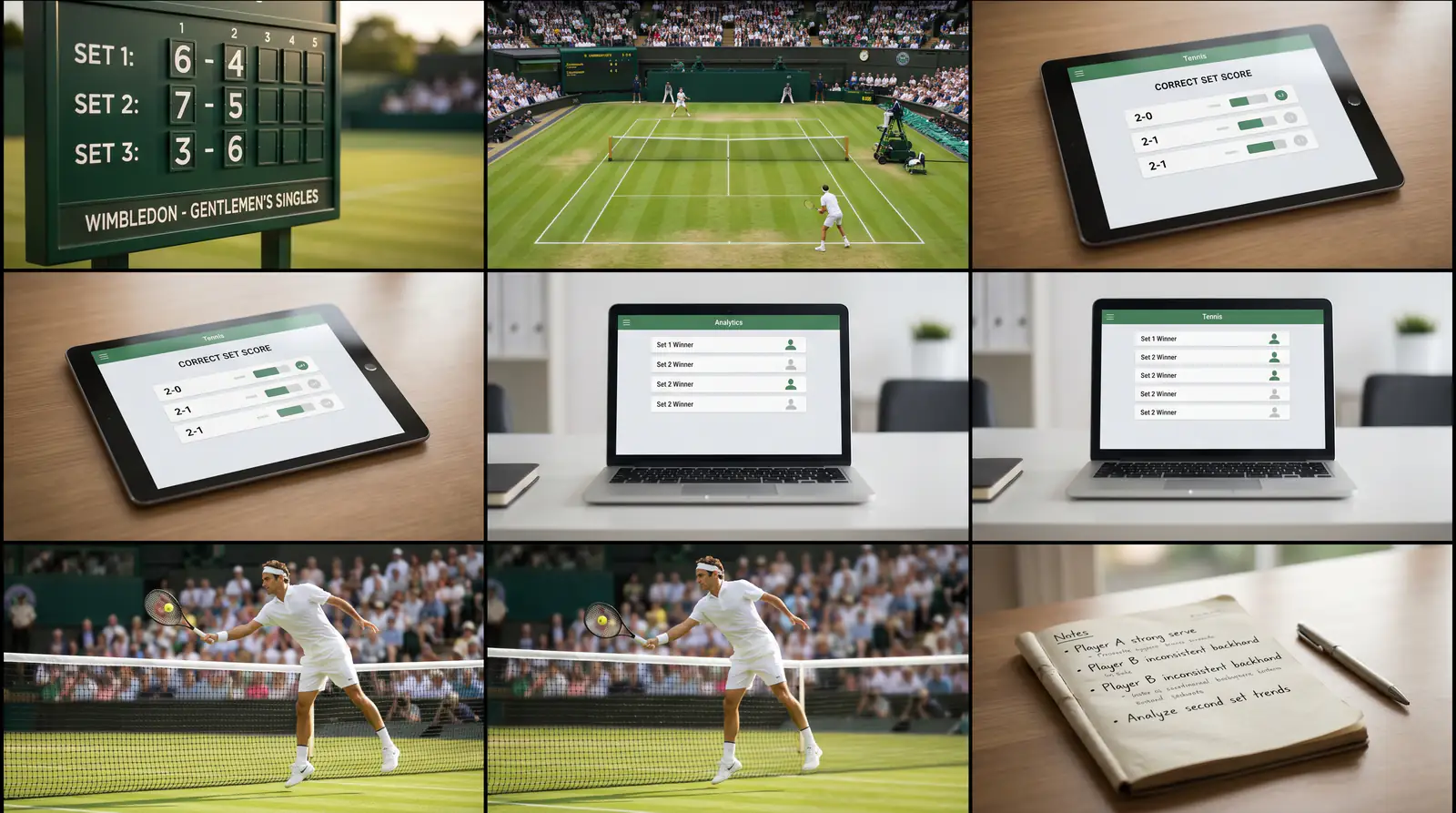
What set betting does badly is volatile, unpredictable matches. If you cannot read the likely shape — two streaky players, a returning injury, a windy day on an outside court — the precision works against you, and you are better off on the plain match-winner. Use set betting when you have a clear read on how the match flows, not as a way to juice the odds on a match you do not understand. The mistake I see most often is bettors reaching for set betting purely because the price is bigger than the match-winner, treating the extra return as free money rather than as compensation for genuinely harder prediction. That is backwards. The price is bigger because you are more likely to be wrong, and only a real read on the match’s shape earns you the difference. For the next step in precision, where you predict the games and not just the sets, see my guide to Wimbledon correct score betting.
What is the difference between set betting and correct score?
Set betting predicts only the final tally of sets, such as 3-1, regardless of the games within them. Correct score, in the games sense, asks you to nail the exact game scoreline of sets. Set betting is the broader, more forgiving market, since a 3-0 win pays the same whether it is tight or a whitewash.
Is a 3-0 bet worth it on a big favourite?
Sometimes, but grass makes a clean sweep harder than it looks because even outmatched players hold serve well on a fast surface. Against a genuine mismatch a straight-sets bet can add value to a short match price. Against a competent server, the more likely result is the favourite dropping a set, so a 3-1 is often the smarter call.
