
 Available in US
Content
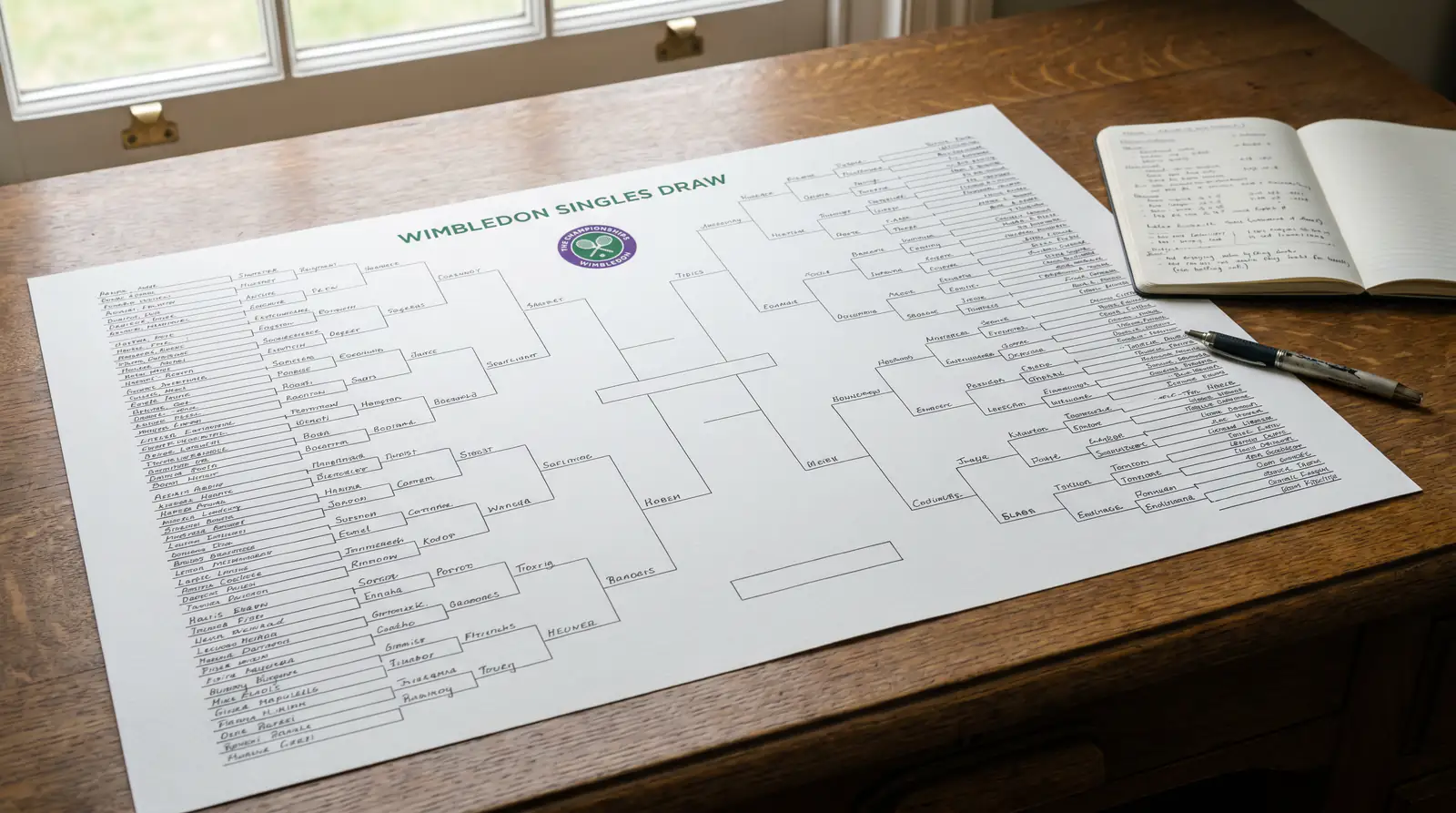
Why the draw is a betting tool
The morning the Wimbledon draw is released is, for me, the single most valuable hour of the fortnight. While most people are scanning it to see which big names might meet in the final, I am quietly hunting for the seed who has just been handed a nightmare section and the outsider who has been gifted a motorway to the second week. The draw is not a formality. It is a list of mispriced bets waiting to be read.
Draw analysis means evaluating a player’s likely path through the bracket rather than judging them in isolation. Two players of equal ability can have wildly different real chances depending on who sits in their quarter, and the market does not always adjust quickly enough on the day the draw lands. That lag is the edge.
Get good at reading the bracket and you stop betting on players and start betting on paths — which is a far more profitable way to think about a knockout tournament.
How the bracket is structured
The Wimbledon singles draw is a knockout bracket of 128 players, split into four quarters, with the seeds distributed so that the highest-ranked players cannot meet until the later rounds. The top two seeds are kept in opposite halves, the top four in separate quarters, and so on down the line. The unseeded players and qualifiers are then slotted in around them.
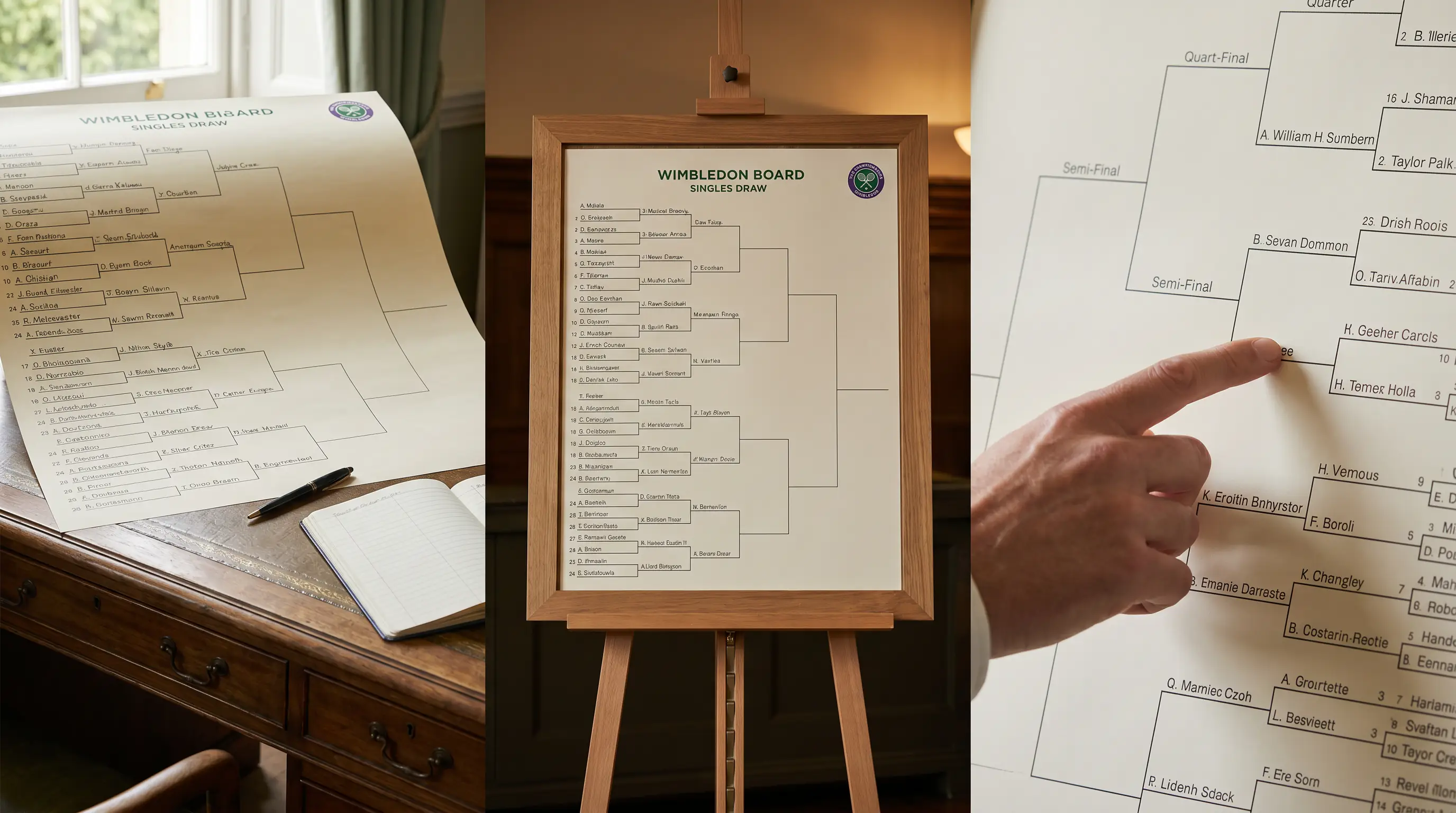
That structure is what creates exploitable imbalance. Because seeds are spread by ranking, not by surface suitability, one quarter can end up stuffed with grass specialists while another is full of clay-courters who will struggle on the lawn. The seeding system aims for fairness in ranking terms, but ranking is a poor proxy for grass-court ability, so a quarter that looks balanced on paper can be wildly lopsided once you weight it for the surface. Reading the bracket means looking past the seed numbers to the actual matchups they will produce.
It is worth remembering that Wimbledon for many years used a grass-specific tweak to its seeding, adjusting the order to reflect recent grass-court form rather than relying purely on the world ranking. That history matters because it underlines the core point: ranking and grass-court ability are not the same thing, and the organisers themselves once acknowledged as much. Whether or not a surface adjustment is in force in any given year, the bettor’s job is identical — to re-seed the draw in their own head according to who actually thrives on a lawn, then compare that private ranking with the prices the market has set.
Scoring a player’s path
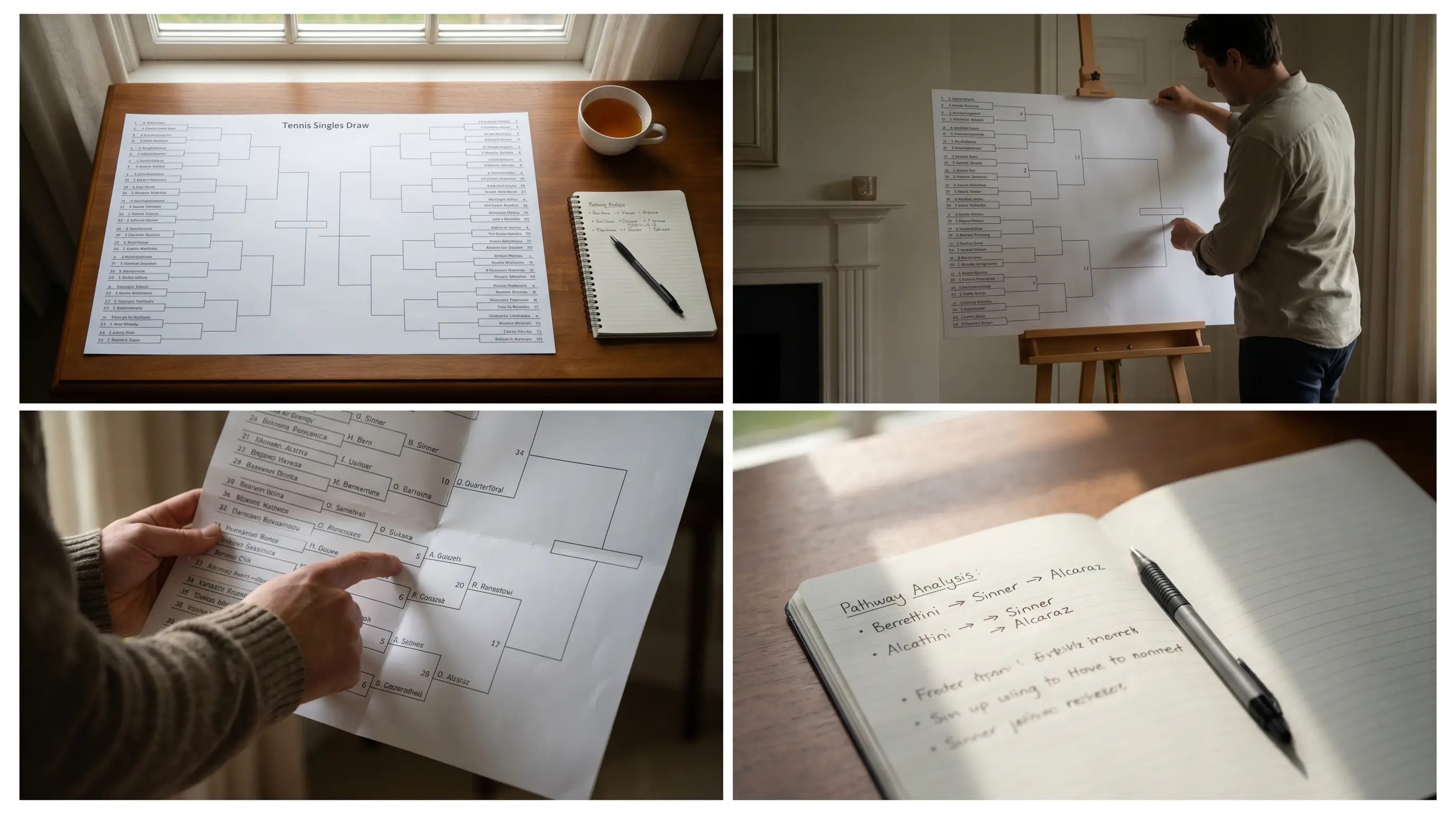
My method is mechanical, and that is the point — it keeps me honest. I take a player and write out their projected opponents round by round, assuming the seeds hold, then I grade each likely opponent purely on grass-court threat rather than overall ranking. A clay specialist seeded above my player counts as a soft obstacle on this surface; an unseeded big server counts as a hard one.
The serve is the variable I weight most heavily, because on grass it is the great equaliser. The career ace gap between an extreme grass server near 18 percent and a clay-court baseliner around 7 percent shows how much the surface can shrink or inflate a player’s effective threat. A path that runs through three low-ace clay-courters is genuinely easier than the rankings imply, and a path that runs through two grass-court bombers is harder, no matter how those opponents are seeded.
It is worth keeping a sense of proportion while doing this, though. A draw read is a probability map, not a prophecy, and plenty of things move prices that have nothing to do with the bracket. The sport’s integrity body makes the point well in a different context, noting that unusual betting movements “can arise for many reasons beyond match-fixing, such as mispriced odds, informed betting, and player form and fatigue.” Form and fatigue in particular will reshape a player’s real path as the tournament wears on, so I treat my pre-tournament path score as a starting hypothesis and revise it hard as results and fitness news come in.
Turning draw reads into bets
A good draw read expresses itself in three markets. The first is the outright or stage market: a contender with a kind path is better value to reach the second week or the final than their price suggests, because the bracket has done some of the work for them. The title is worth a record £3 million to each 2025 singles champion, which keeps the outright market crowded and the early-round path advantages underpriced.
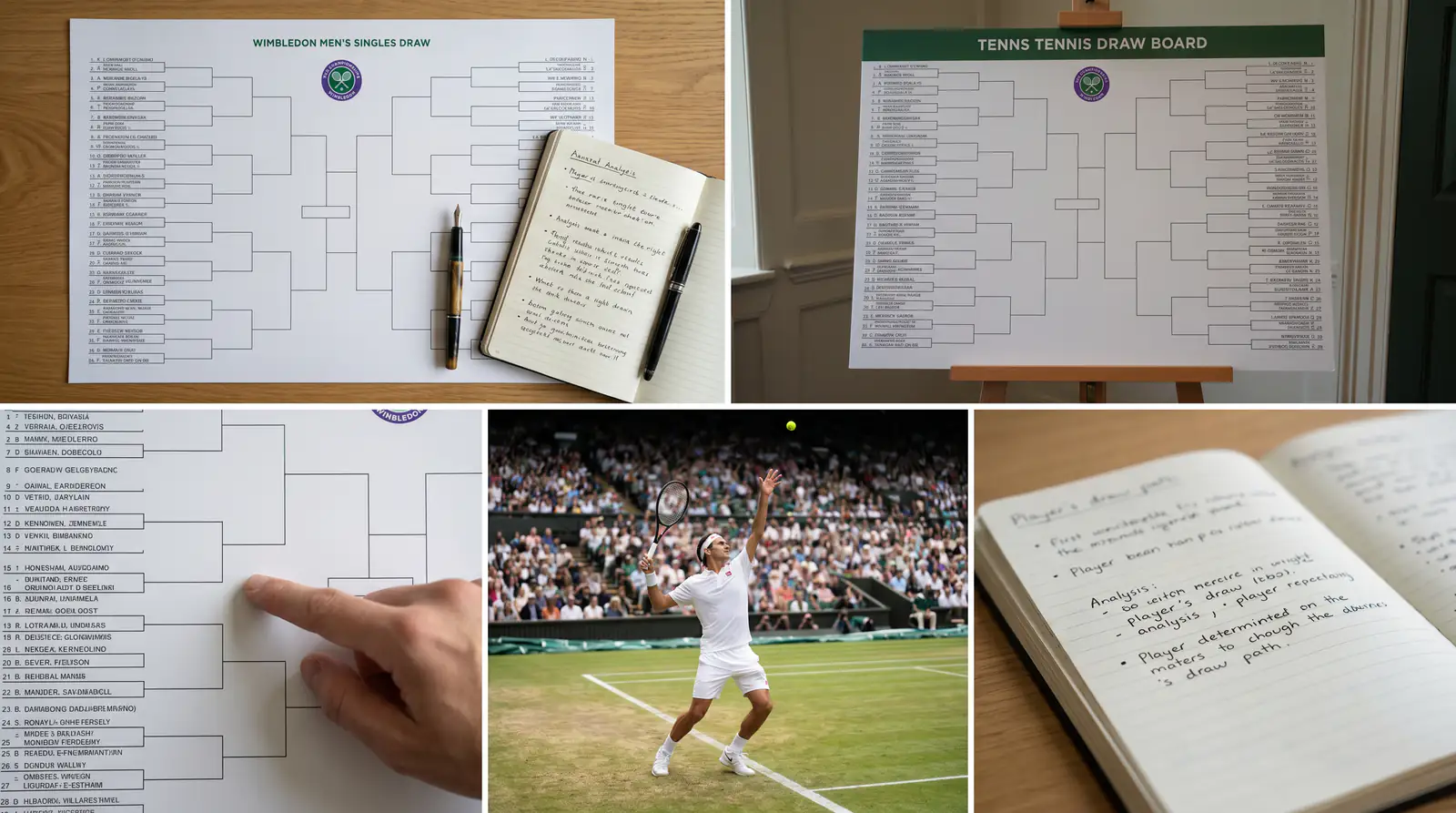
The second is the early-round upset. When I spot a seed dropped into a brutal opening section — a tricky first-round server, then a dangerous floater — I look at fading them on the handicap or backing the live underdog who will trouble them. The third is the patient anti-favourite play: a top seed with a punishing quarter is a candidate to underperform their outright price, and laying that expectation, or simply avoiding their short price, is often as profitable as backing a winner.
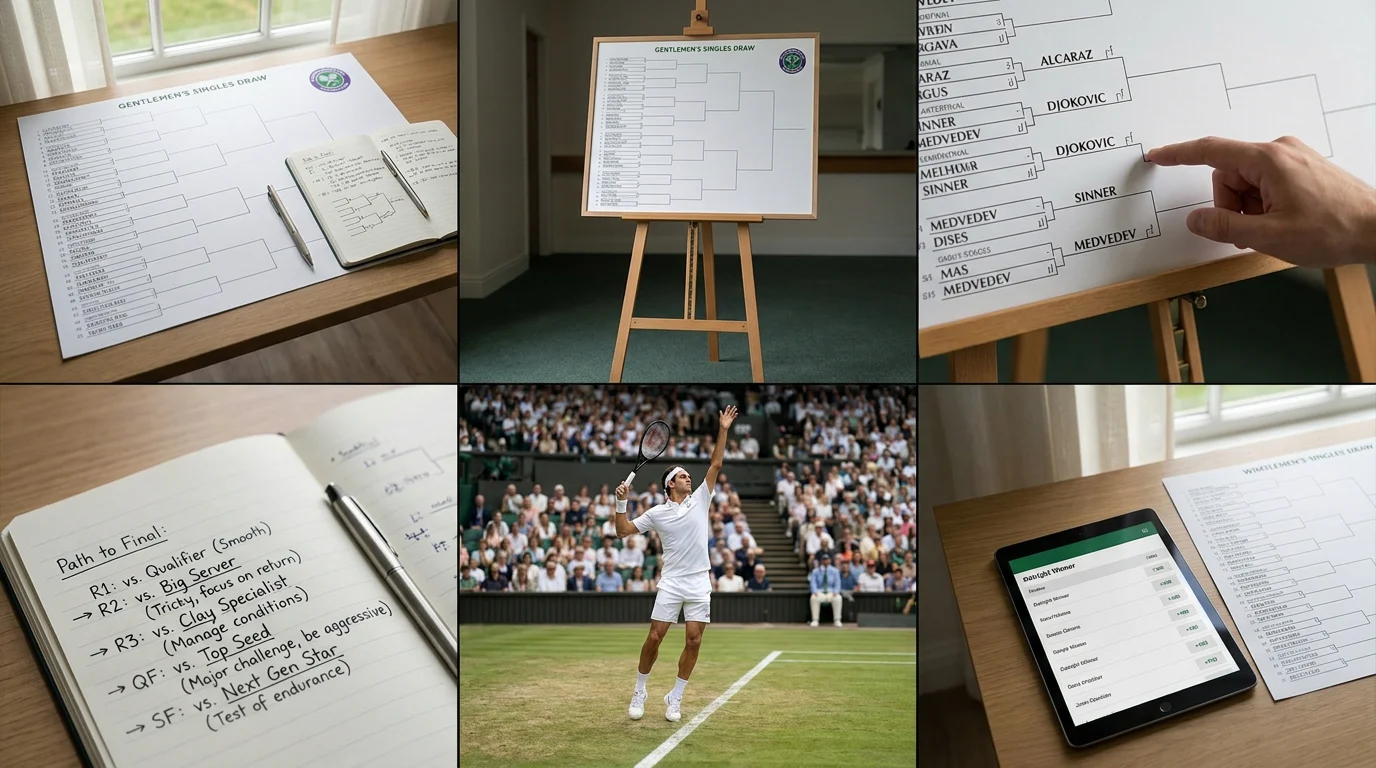
One habit I would press on anyone serious about this: keep your own notes from year to year. The draw throws up the same patterns repeatedly — certain sections of the bracket that tend to be tougher, particular seeds who consistently get unfriendly grass-court draws, the way the market reliably overreacts to a big name landing a soft opener. A simple record of what you saw and how the prices moved becomes a genuine asset by your third or fourth Wimbledon, because the bracket’s quirks rhyme even when the names change. Whichever way you play it, the principle is the same: the draw reprices the field the moment it is released, and the bettor who reads it fastest gets the best of the line. Once you have your path read, the natural next market to attack is the stage bet, which I cover in my guide to Wimbledon to-reach-the-final betting.
How early is the Wimbledon draw released?
The main singles draws are made a couple of days before play begins, typically on the Friday before the tournament starts on Monday. That short window is when the market reprices the field around the new paths, so studying the bracket the moment it lands is when draw-reading edges are at their sharpest.
Does a kind draw justify a shorter price?
It can. A player with several grass-unfriendly opponents on their projected path has a genuinely easier route than their ranking implies, which warrants a shorter price to reach a given stage. The market often adjusts for this, but not always fast enough on draw day, which is where reading the bracket pays.
