
 Available in US
Content
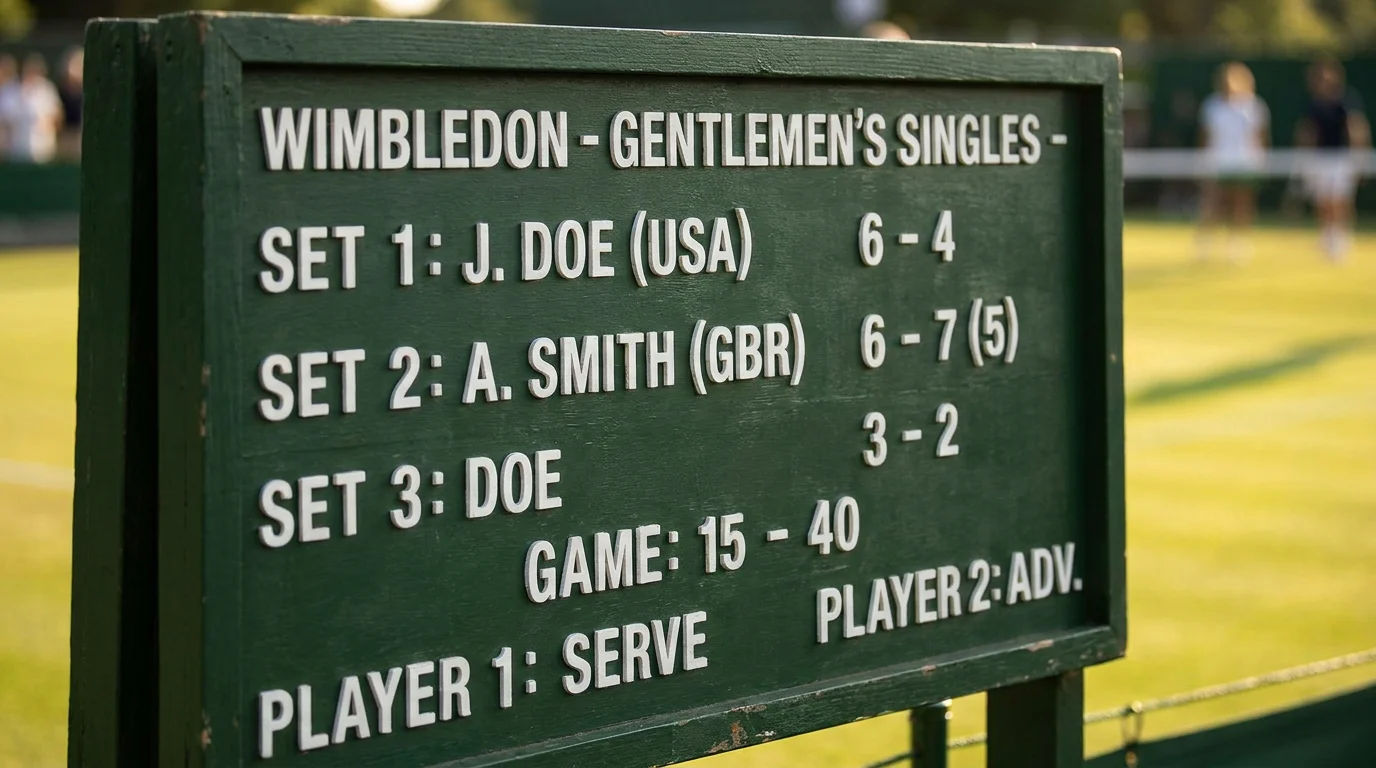
The most precise tennis bet
I have a soft spot for correct score betting, and I will be honest about why: it is the closest thing tennis offers to calling the future. When it lands, the payout feels absurd. When it misses — and it misses far more than it lands — it teaches you a hard lesson about the difference between confidence and certainty.
Correct score betting at its most precise asks you to predict the exact set-by-set or even game-by-game outcome of a match. Not just who wins, not just the set tally, but the specific shape of the contest. It is the highest-variance bet on the tennis board, and that variance is the entire point: precision is rewarded with prices you will not find anywhere else in the market.
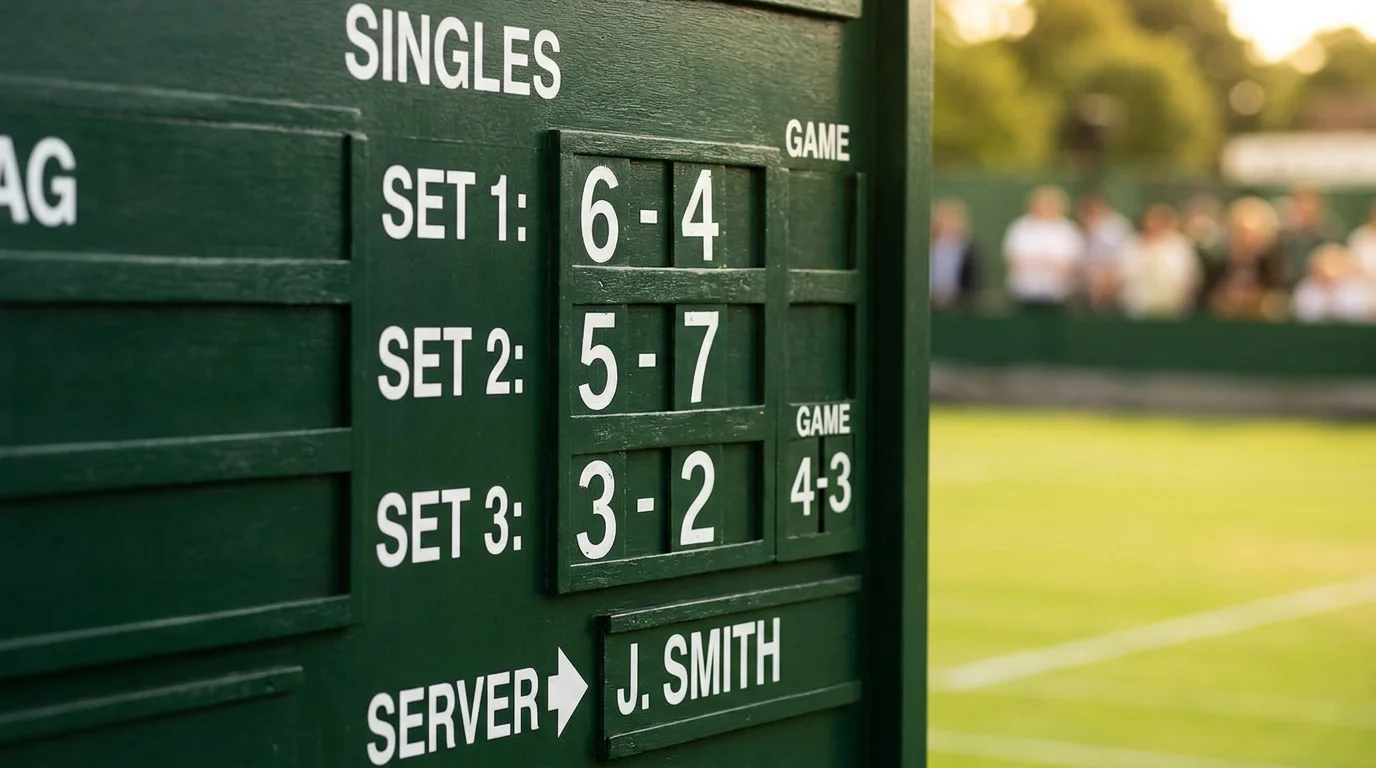
This is not a bet for your core staking. It is a small-stake speculation that, used with discipline, can deliver outsized returns on the rare occasions your read on a match is good enough to call the shape, not just the winner.
How the scoreline grid is priced
Imagine a grid with every possible final score in its cells, each carrying a price. That grid is exactly how a bookmaker thinks about correct score. Each cell is assigned an implied probability, the whole grid is loaded with margin, and the longest prices sit in the cells the bookmaker considers least likely.
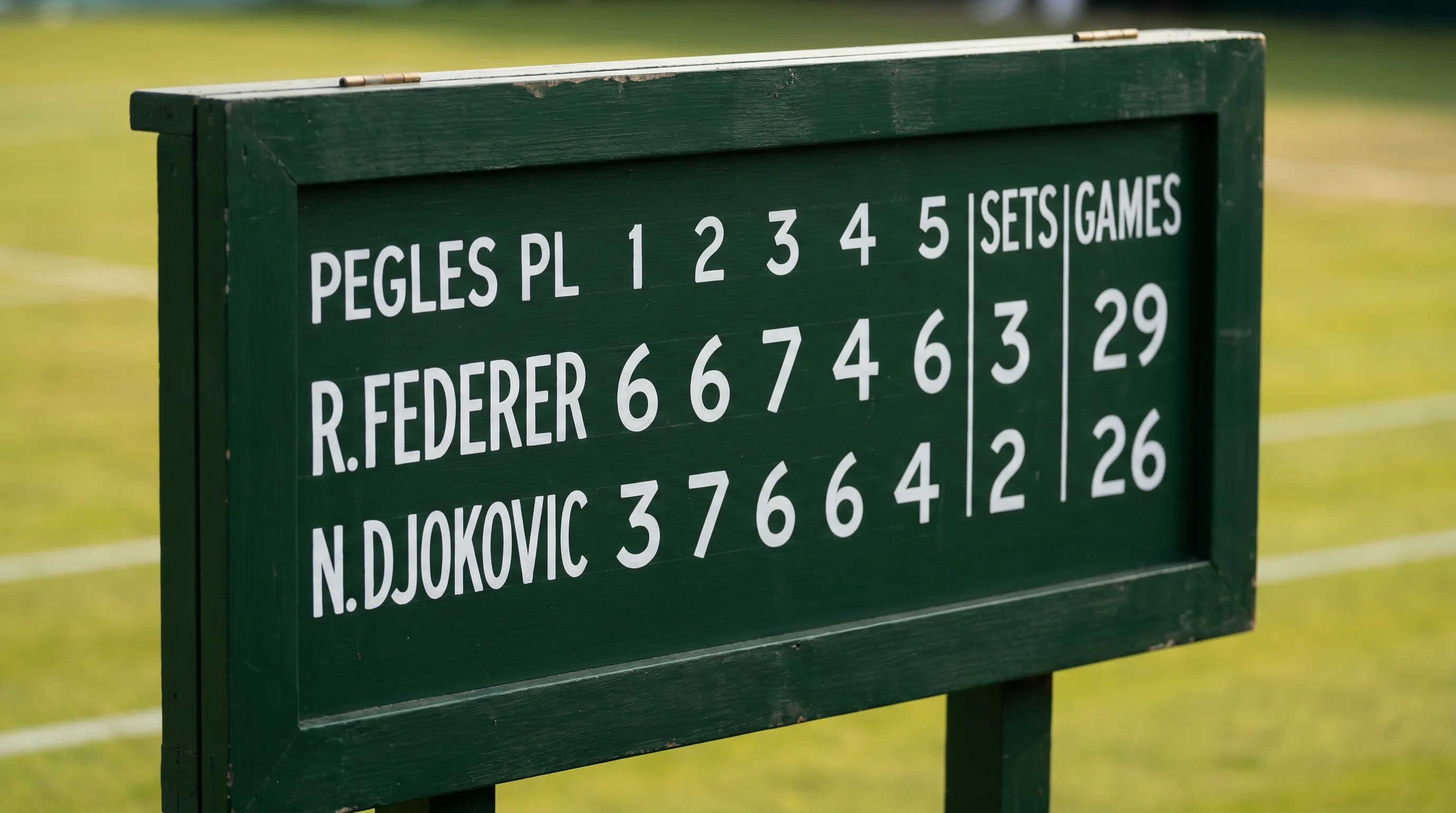
What drives those probabilities on grass is serve. With top players holding around 86 percent of their service games on a fast lawn, the model expects a lot of holds and relatively few breaks, which concentrates probability in a handful of “expected” scorelines and thins it out everywhere else. A tight, serve-dominated grass match will have its probability bunched around the close scorelines, while the blowout results — the cells where the favourite drops barely a game — get pushed out to big prices precisely because the surface makes a one-sided rout unusual when both players can serve.
The margin matters more here than almost anywhere else. Because there are so many outcomes to price, the bookmaker’s overround is spread across a wide grid, and the effective margin on any single correct-score cell can be punishing. That is the tax you pay for the long prices, and it is why correct score has to be approached as a speculative market, not a value-grinding one.
Mapping likely scorelines
My process for correct score is the same every time: I work out the most probable result first, then I bet around it, never on it. The single likeliest scoreline is usually too short to be worth taking, so the money is in the adjacent cells — one step more competitive or one step more dominant than the obvious result.
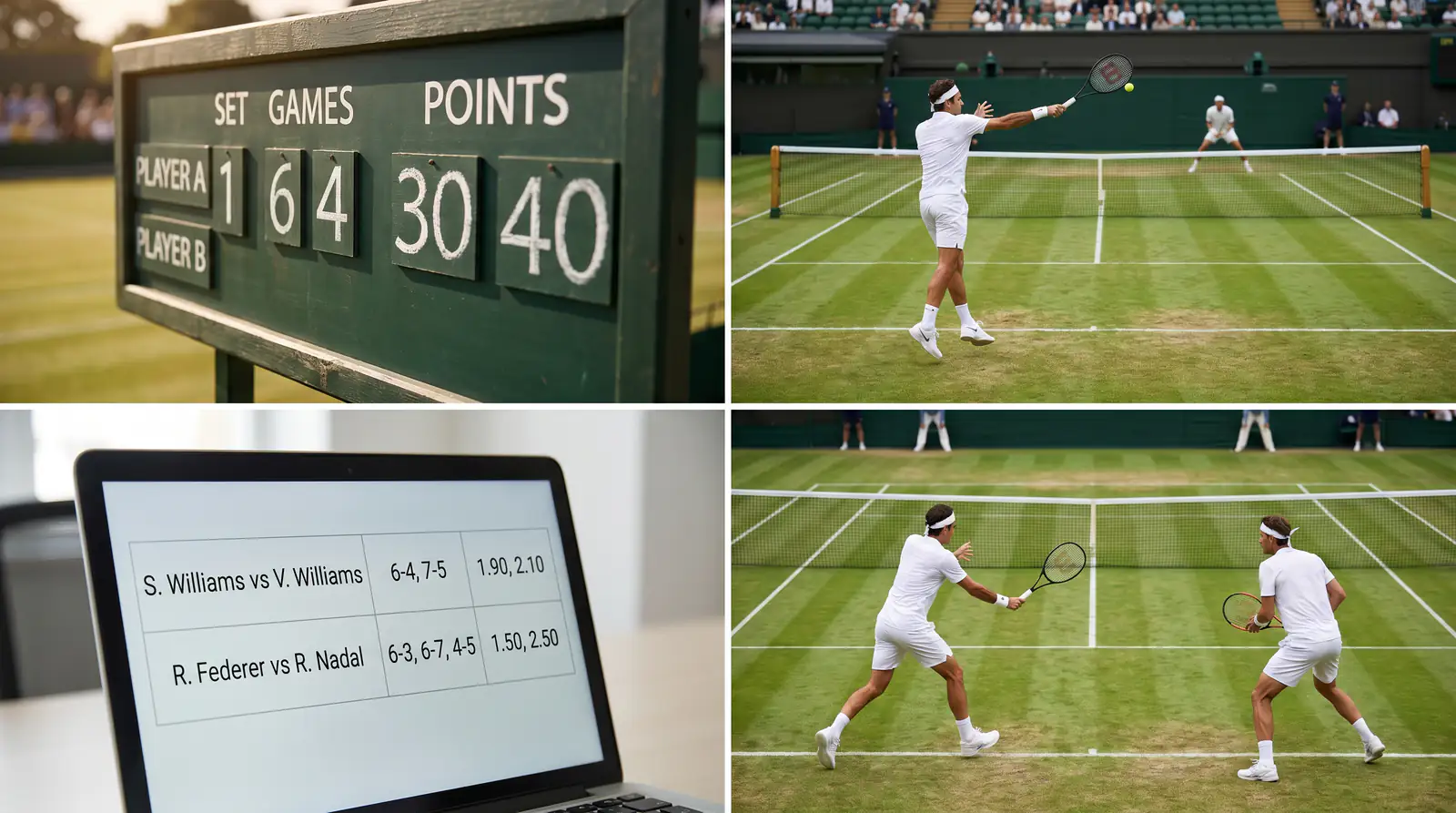
On grass, the mapping is shaped by two things: how big the serving gap is, and how likely a break or a tie-break is. When a strong server faces a weaker one, I expect the favourite to win comfortably but probably to concede a set on his opponent’s serve-led resistance — pointing me towards a “win but drop a set” cell rather than a clean sweep. When two big servers meet, tie-breaks proliferate, and the scorelines cluster tightly, so I look for the cell that captures a single decisive break deciding an otherwise level match. The career ace gap between an extreme grass server, around 18 percent, and a clay-court baseliner nearer 7 percent is the kind of detail that tells me whether to expect a serve-dominated grid or a more open one, and I let that read steer which cells I back.
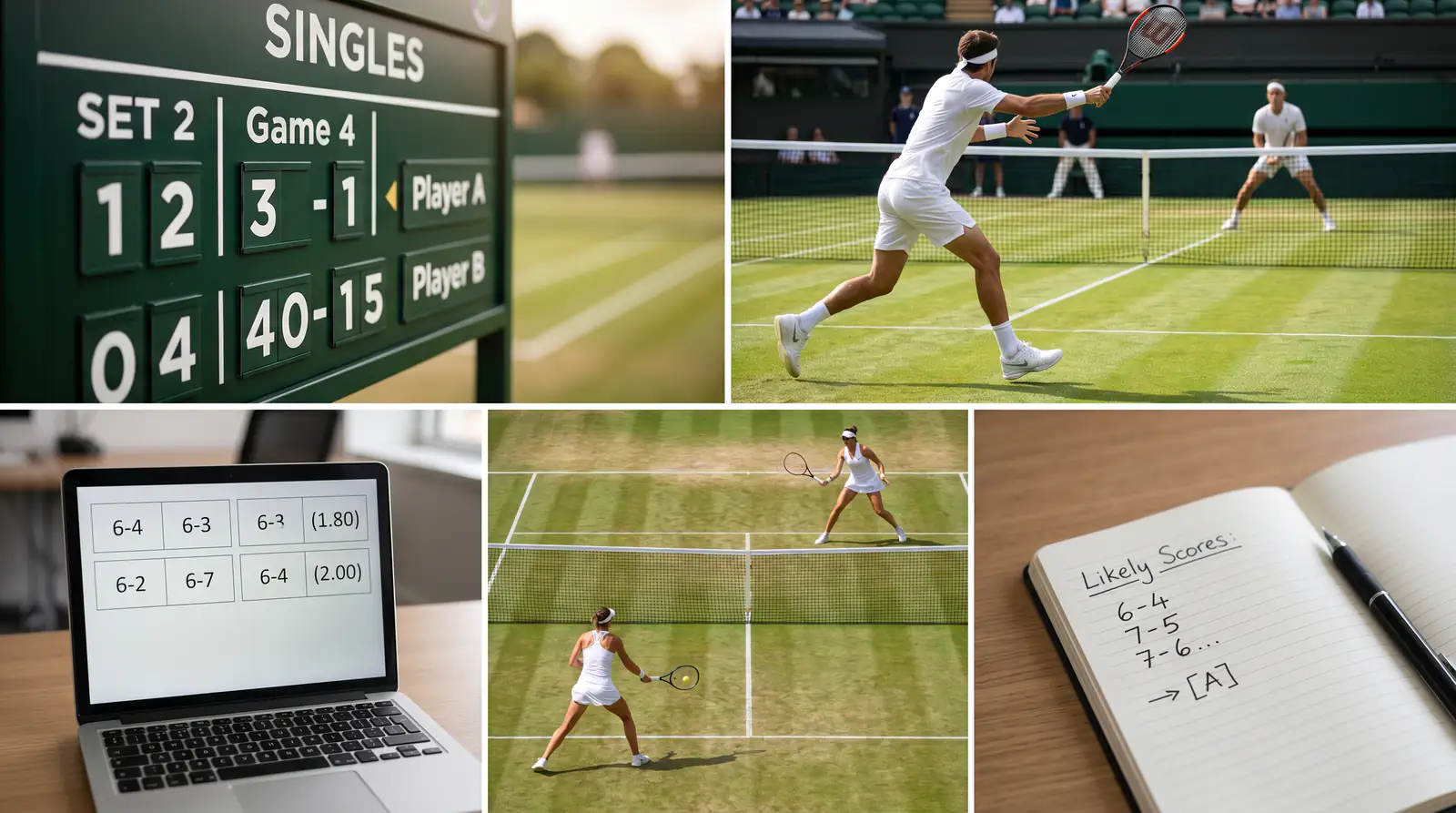
I also pay attention to which cells the crowd is piling into, because correct score is a market driven heavily by sentiment. Casual money floods the obvious result — the famous favourite to win in straight sets — which shortens that cell and, by the mechanics of the grid, lengthens the neighbouring ones. When I genuinely expect the favourite to drop a set, I am often being paid a premium for that read simply because the public has overloaded the sweep. Reading the grid is as much about spotting where the recreational money has distorted the prices as it is about predicting the tennis.
Managing the variance
The brutal truth about correct score is that being right about the match and wrong about the score still loses your stake. I have backed the correct winner in the correct number of sets and lost because a single break landed in the wrong set. You have to make peace with that before you place a penny.
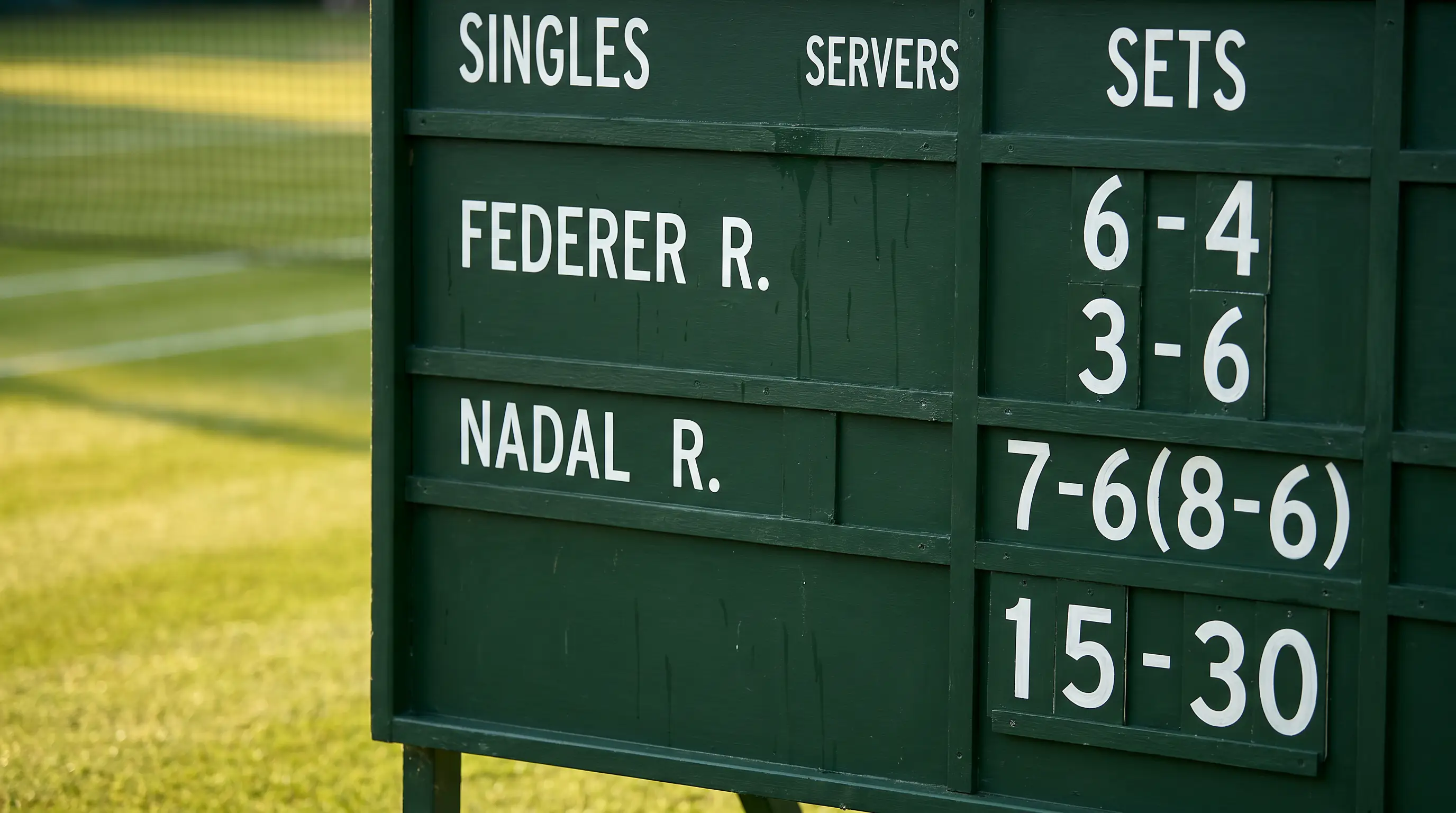
Because the hit rate is low, correct score has to be the smallest line on your betslip and never a position you lean on. I cap it tightly and treat a winning correct-score bet as a windfall, not an expectation. The one tool that genuinely helps is in-running flexibility: once a match is under way and the first set has settled, the live correct-score market reprices, and you can sometimes hedge a pre-match correct-score position or top up a now-likely scoreline at a better number.
The discipline that separates a profitable correct-score bettor from a doomed one is record-keeping. Because the wins are rare and the prices are long, your results will swing wildly from week to week, and it is genuinely hard to tell whether you are betting well or simply running hot or cold. Only a proper log of every correct-score bet, across a full season or two, reveals whether your reads on match shape are actually beating the heavy margins this market carries. Without that record, you are flying blind, mistaking the inevitable variance for skill or for failure. That said, the cleanest way to use correct score is as an occasional, well-researched dart at a match whose shape you genuinely understand. If the precision feels like too much exposure, the gentler cousin is set betting, which I cover in my guide to backing the exact set score at Wimbledon.
Why does correct score pay so much more than moneyline?
Because there are far more outcomes to get right. A match-winner bet has two possibilities, while a correct-score grid has many, so each individual scoreline is much less likely and therefore priced much longer. You are paid for the precision, but the low hit rate means it should only ever be a small speculative stake.
Can I hedge a correct-score bet in-play?
Yes. Once the match is under way the live correct-score market reprices around what has actually happened, so you can sometimes lay off a pre-match position or top up a now-likely scoreline. In-running flexibility is one of the few genuine tools for managing the high variance that correct score carries.
