
 Available in US
Content
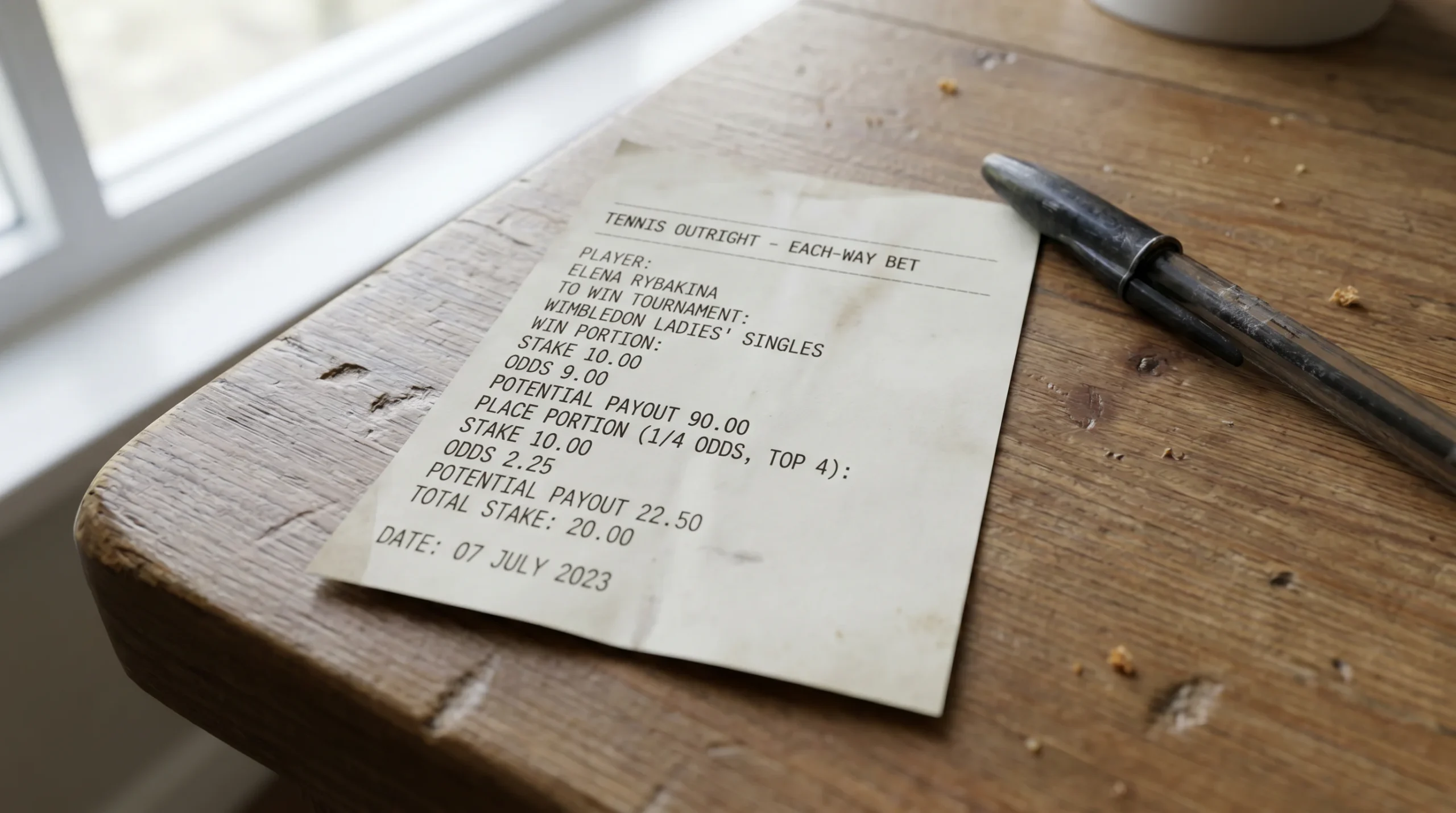
Win and place in one bet
Each-way betting is borrowed from the horse racing tradition, and the first time I explained it to a tennis-only bettor, his eyes lit up — because it solves a problem every outright punter knows well: you fancy a player to have a deep run, but backing him to win the whole thing outright feels like too much to ask. Each-way lets you back the run without needing the trophy.
An each-way bet is really two bets in one: half your stake goes on your player to win the tournament outright, and half goes on him to “place” — to finish among the top few, usually reaching the final or the semi-finals depending on the bookmaker’s terms. If he wins, both halves pay. If he merely reaches the stage the place terms specify, the win half loses but the place half pays out at a fraction of the odds. With the title worth a record £3 million to each 2025 singles champion, the outright market is fiercely competitive, and each-way offers a way into it that softens the all-or-nothing nature of backing a champion.
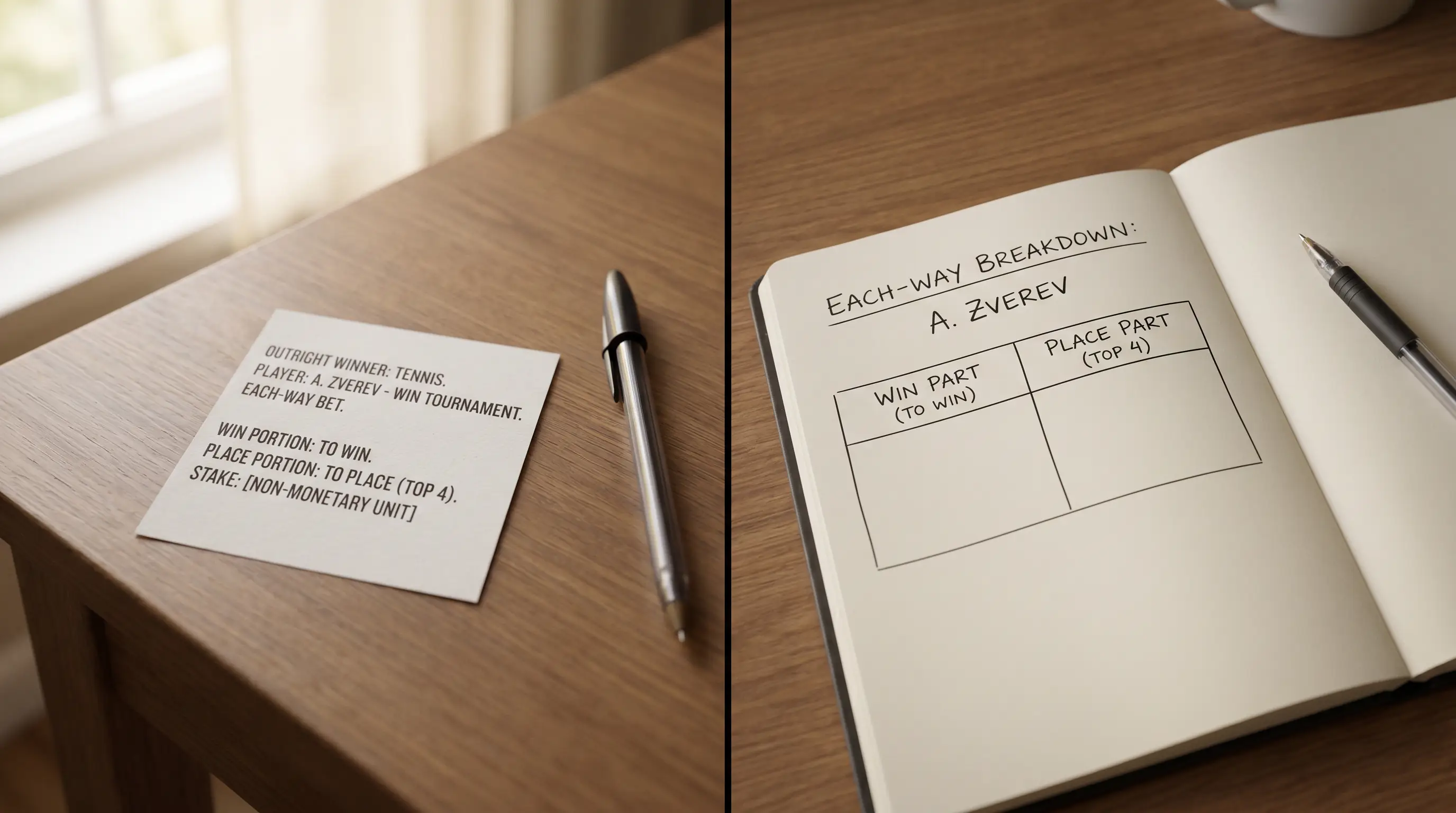
It is a market made for the outsider with a realistic shot at a deep run, and understanding how the terms work is what lets you judge whether the bet is worth taking.
How each-way terms are set
The mechanics rest on two numbers the bookmaker sets: how many places pay out, and at what fraction of the win odds. Get those two numbers clear and the whole bet falls into place.
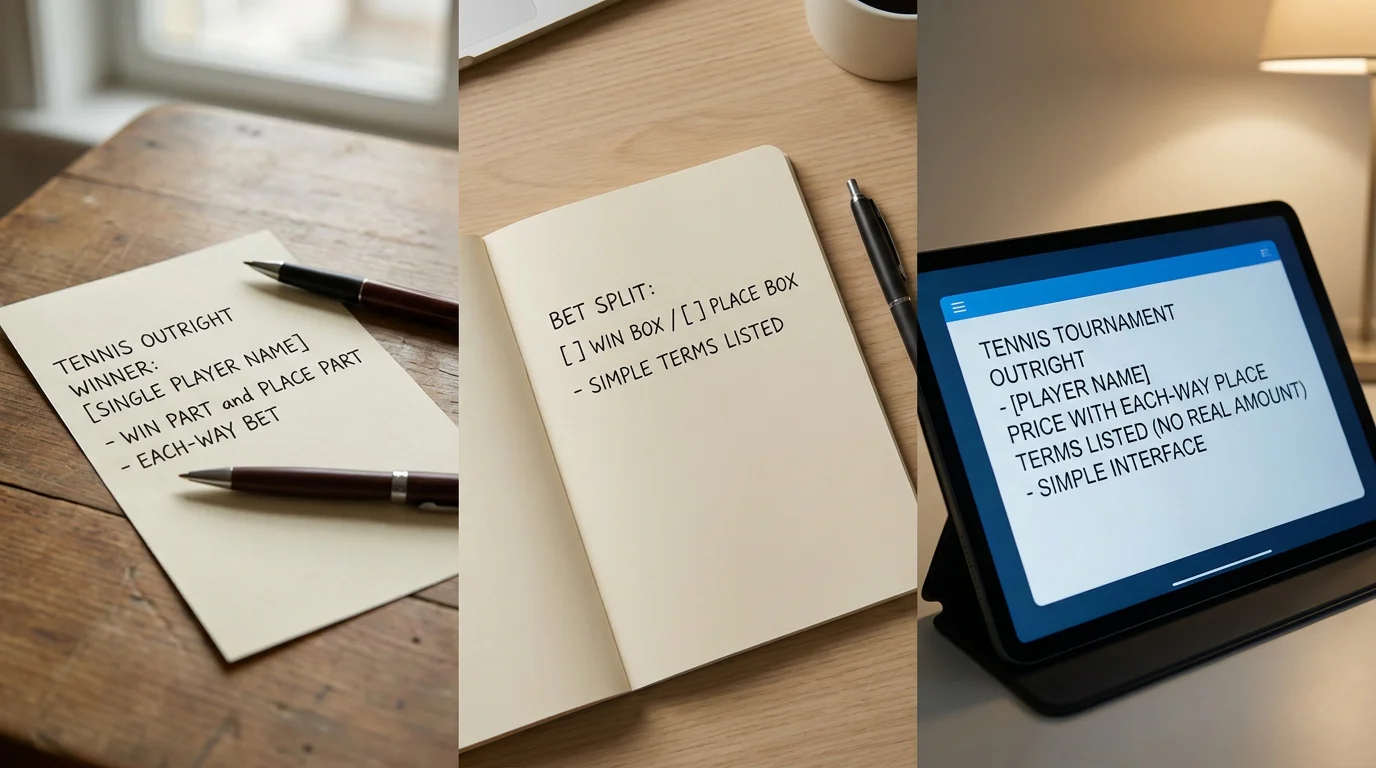
The place portion of an each-way bet pays out if your player finishes within the specified number of places, at a set fraction of the win odds — commonly something like a third or a quarter of the price, for reaching the final or the semi-finals. So if you back a player each-way at 26.00 with place terms paying a quarter of the odds for reaching the final, the place half is effectively a bet at 7.25 on him making the showpiece. Your total stake is doubled, because you are funding both the win and the place bets, and that is the cost of the insurance the place portion provides. The exact terms vary by bookmaker and can differ between the men’s and women’s events, so the first thing I always do is read precisely how many places pay and at what fraction, because those terms determine whether the bet offers value or quietly short-changes you.
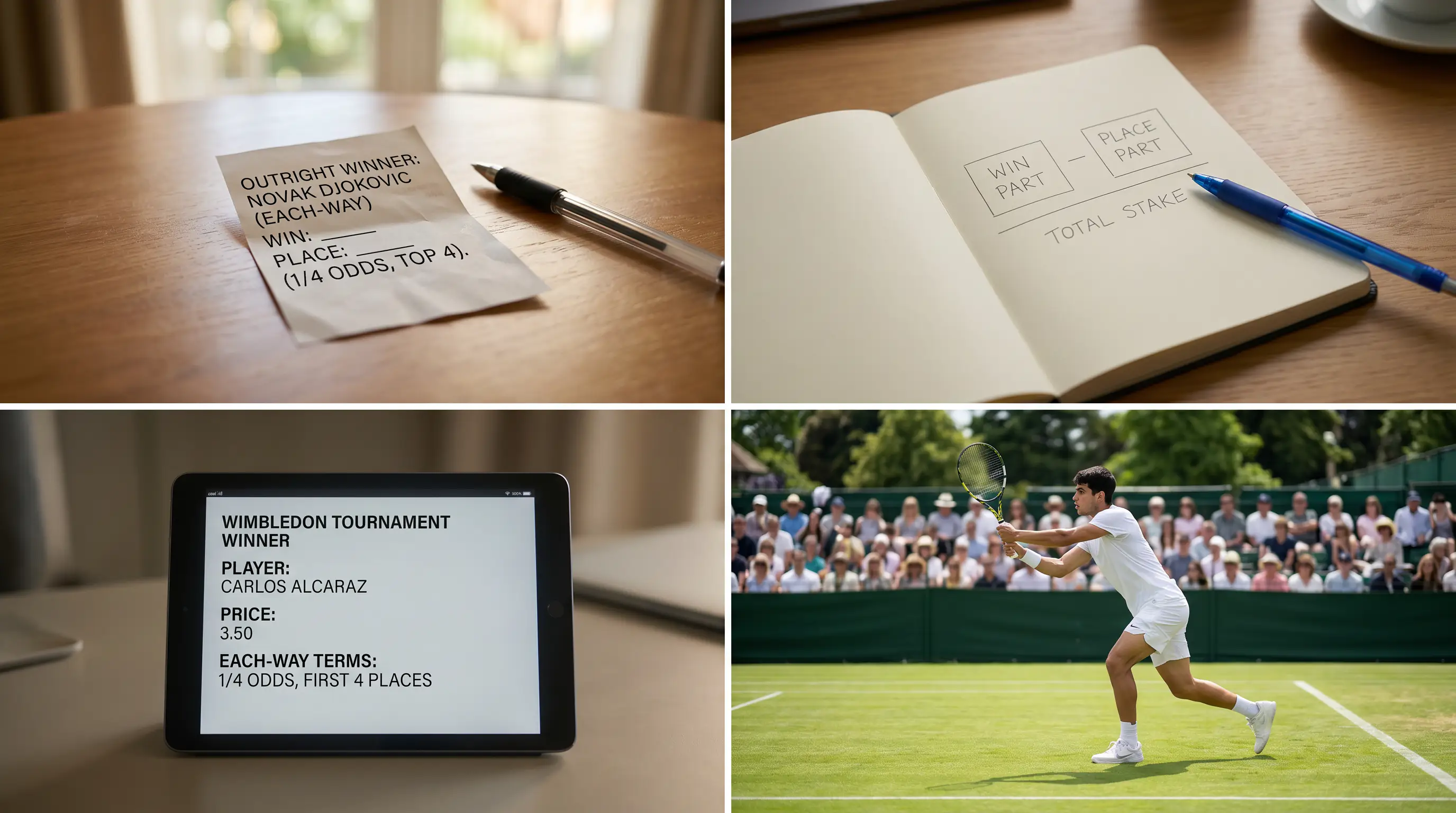
A worked example makes the doubling clear. Stake 20 pounds each-way and you are actually risking 40 pounds: 20 on the win and 20 on the place. If your player wins at 26.00, both halves land — the win half returns 520 pounds and the place half returns at the reduced odds, for a substantial combined payout. If he only reaches the final under quarter-odds terms, the win half is gone but the place half pays out at 7.25, returning 145 pounds on that 20-pound portion, comfortably more than your 40-pound total outlay. That is the whole appeal: the bet rewards the realistic outcome as well as the dream one, and the arithmetic of the place fraction is what determines how generous that consolation actually is.
Reading the place terms
The place terms are where each-way bets are won and lost before the tennis even starts, and bettors who ignore them are betting blind. Two bookmakers offering the same win price on a player can offer wildly different value once the place terms are factored in.
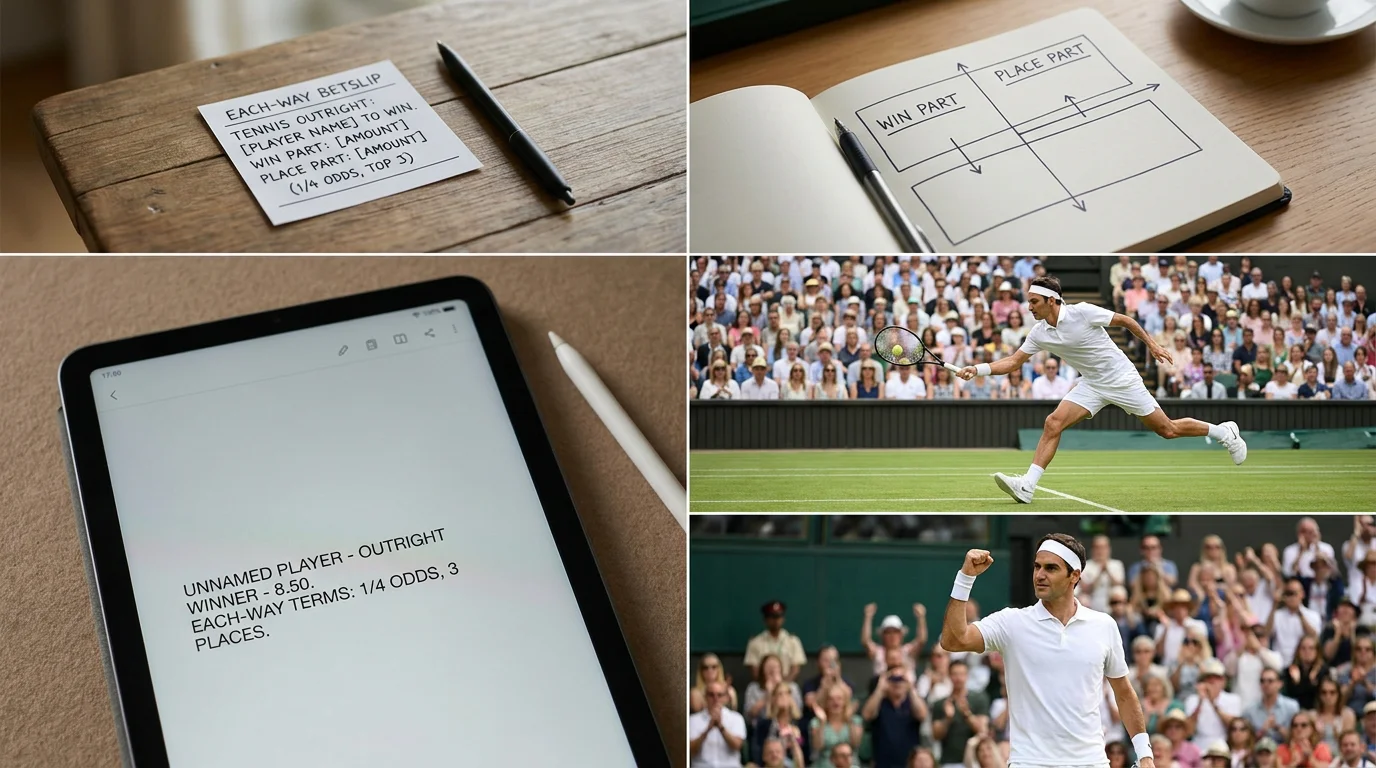
What I scrutinise is the combination of place fraction and number of places. A book paying a quarter of the odds for reaching the final is offering far less on the place portion than one paying a third for reaching the semi-finals, even if the headline win price is identical. The more generous the place terms — a larger fraction, or more places paid — the more the place portion contributes, and on a longshot that place insurance is often the real value in the bet. The finalist’s reward underlines how much a deep run is worth in its own right; the beaten finalist banked £1.52 million in 2025, so reaching the final is a genuine achievement the place terms are pricing. I compare place terms across books the way I compare win prices, because on an each-way bet the place leg frequently matters more than the win leg, especially on the longer-priced players each-way is designed for.
When each-way beats a straight outright
Each-way earns its place in your toolkit in a specific situation: when you fancy a longshot to run deep but doubt he will win. For a short-priced favourite, each-way makes little sense — the place terms offer meagre returns and you are better off on the straight win or a stage market. The bet comes into its own on outsiders.

Picture a grass specialist priced at 34.00 to win the title. Backing him to win outright is a thrilling long shot, but the realistic outcome you actually expect — a run to the final or semis on a surface that suits him — earns you nothing if he falls at the last hurdle. Each-way captures that realistic outcome: even if he loses the final, the place portion pays, often turning what would have been a losing outright into a profitable bet. This is precisely the scenario each-way was built for, and it is why I reach for it on credible outsiders rather than favourites. The decision often comes down to a choice between each-way and a dedicated stage market, and the two reward slightly different reads — backing a player simply to reach a given stage can be cleaner than the doubled stake of an each-way bet, a comparison I work through in my guide to Wimbledon to-reach-the-final betting.
What place terms do bookies offer on Wimbledon outrights?
Place terms vary by bookmaker but typically pay a fraction of the win odds, often a quarter or a third, for a player reaching a specified stage such as the final or semi-finals. The exact number of places and the fraction differ between operators and can vary between the men’s and women’s draws, so always check the terms before betting.
Is each-way better than backing to reach the final?
It depends on your view and the terms. Each-way gives you both a win and a place payout for a doubled stake, which suits an outsider you expect to run deep but not necessarily win. A straight to-reach-the-final bet is cleaner and cheaper if you only care about the run, since you are not funding a win portion you doubt will land.
