
 Available in US
Content
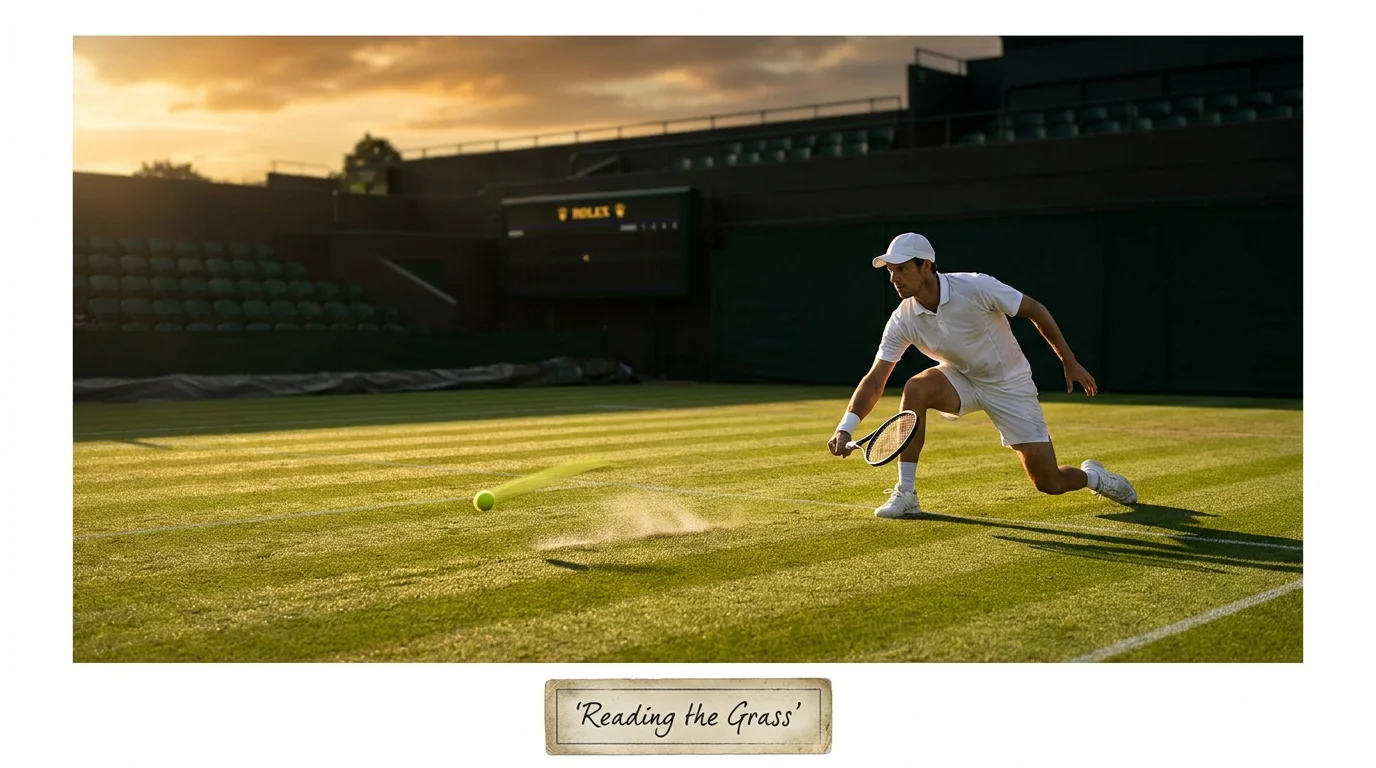
Why grass rewards a different bet
The single most useful number I’ve ever carried into a Wimbledon fortnight is this: on grass, the top servers hold their serve around 86% of the time, where on clay that same hold rate for the average player can sink toward 51.7%. Read that twice. The surface alone can nearly double how reliably a player keeps their own service games. That is not a footnote. That is the entire reason grass-court betting is a different discipline from everything else on the calendar.
Most betting guides will tell you “grass favours big servers” and leave it there, as if that were a strategy rather than a slogan. It isn’t. The slogan is true, but it’s useless until you know how much, in which markets, and against which players, the surface actually shifts the maths. A vague respect for serving doesn’t win you anything. A precise grasp of hold rates, return weakness and the profiles that travel to grass is what turns the surface from background scenery into a betting edge.
That’s what this guide does. We build a grass-court approach from the metrics up, not from received wisdom down. By the end you’ll understand why the favourite-underdog gap narrows on grass, why a clay grinder can still go deep, and how to read serve data so that “big server” stops being a cliché and starts being a number you can bet on.
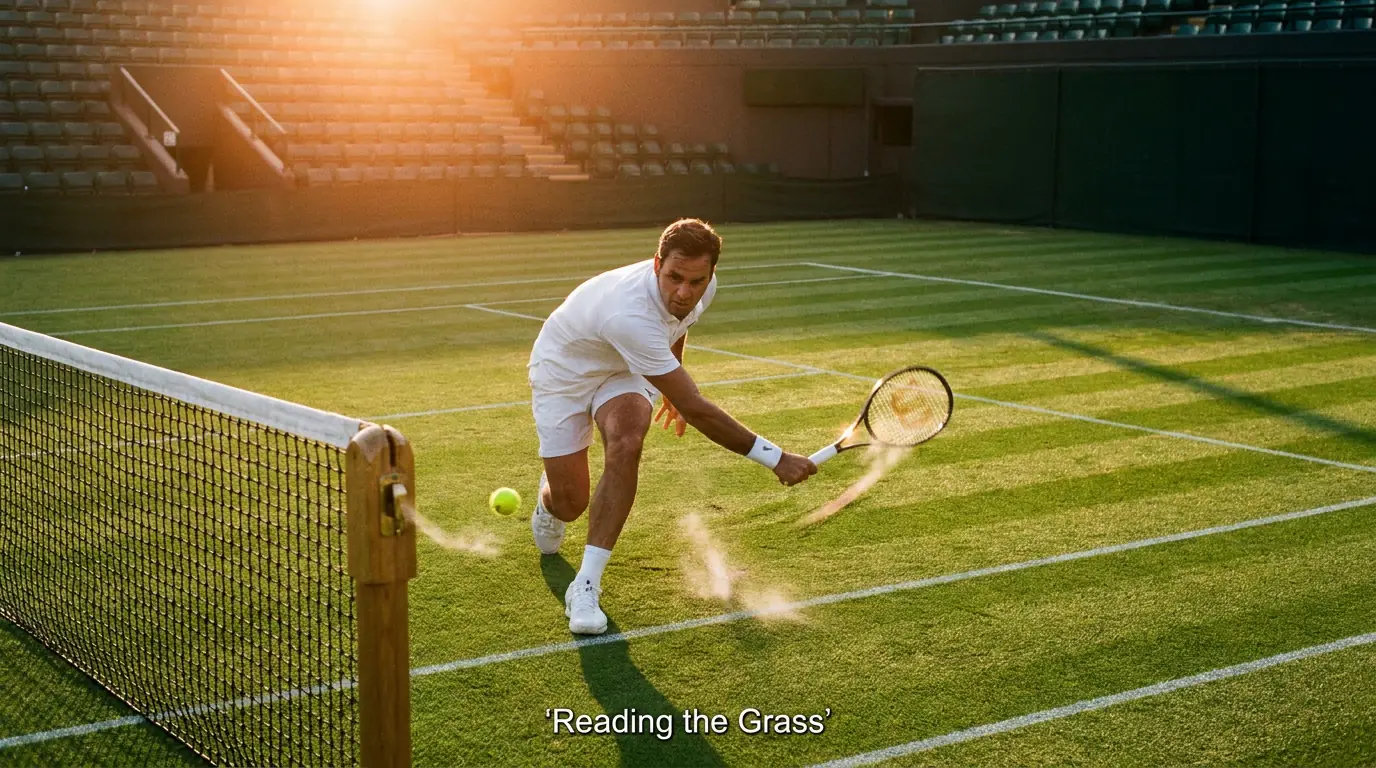
Serve dominance and hold rates on grass
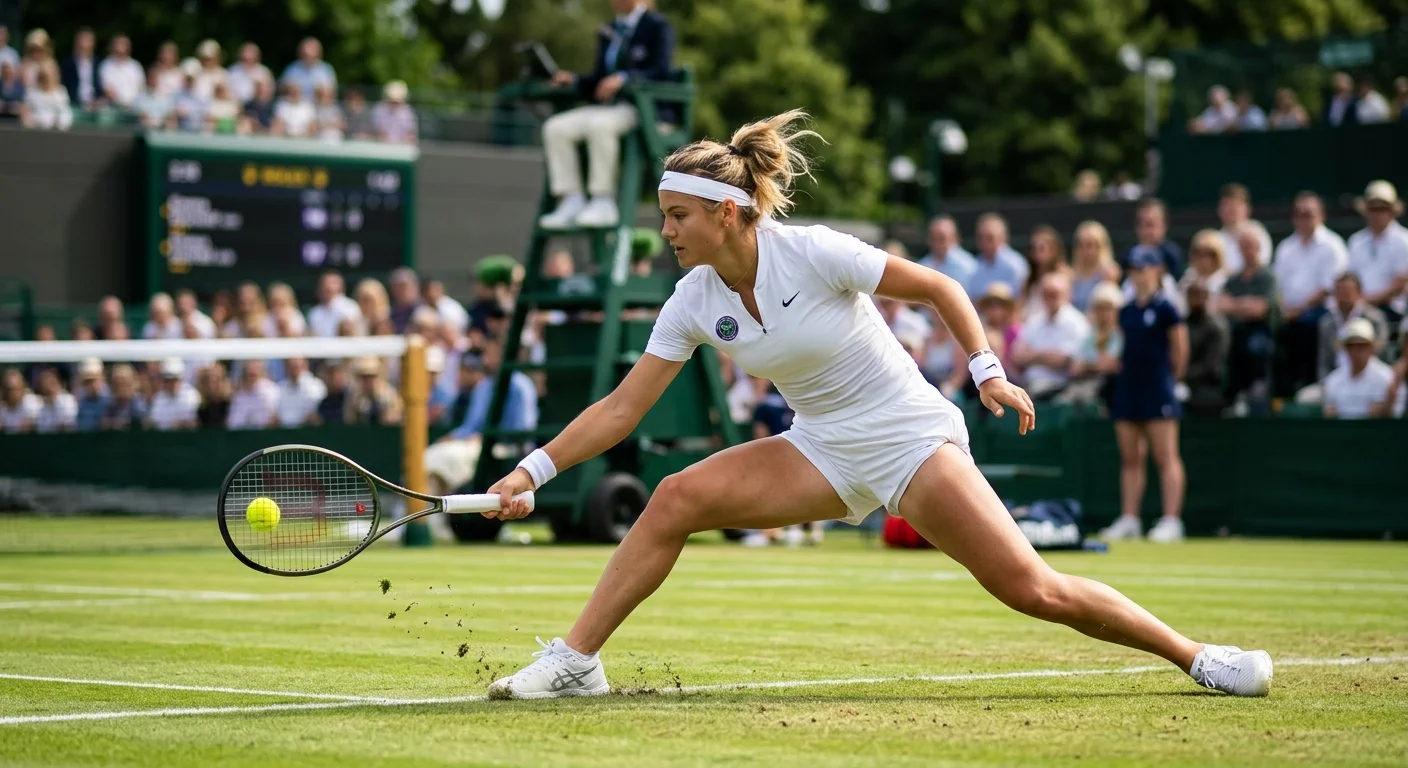
Picture two players of identical ability, one match on clay and one on grass. On clay, points are long, the ball sits up, and the returner gets a second and third chance to claw into the rally. On grass, the ball skids low and fast, the server’s first strike often ends the point before the returner has set their feet, and that returner spends the whole match a step behind. Same players, utterly different contest, and it all flows from the surface.
The numbers make the abstract concrete. On grass, elite servers hold serve roughly 86% of the time. On clay, the average hold rate slides toward 51.7%, barely better than a coin flip on your own delivery. That gap, from near-certainty to near-toss-up, is the widest surface effect in tennis, and it reshapes every market built on top of it. When holding serve becomes the default rather than the achievement, breaks of serve become rare, precious events, and a single break often decides a set.
On the faster surfaces specifically, the percentage of points won on serve by top players routinely climbs above 70%. Think about what that means for a set. If both players are winning seven of every ten points on their own serve, neither is getting many looks at a break, and sets drift inevitably toward tight finishes and tie-breaks. The whole rhythm of a grass match is dictated by this one fact: serve wins points, return struggles, and the margins compress.
For a bettor, the strategic consequence is direct. The match-winner market on grass rewards the player who can protect their serve, even if that player would be merely ordinary on a slower court. A reliable hold isn’t glamorous, but it’s the foundation of grass-court success, and the market doesn’t always price it fully. The player whose ranking was built on clay results may be overrated on grass, while the big server with a modest ranking may be underrated. That mismatch between ranking and surface suitability is the first place I look for value, every single Wimbledon.
One refinement that separates a good grass read from a lazy one. Holding serve is necessary but not sufficient. If both players hold comfortably, the match is decided in the tie-breaks and the rare break points, which means nerve and clutch play matter enormously. A player who serves beautifully but folds in tie-breaks is a worse bet than the raw hold numbers suggest. Serve dominance opens the door; what happens at the few decisive moments walks through it.
Let me put a number on why this matters with a quick worked thought. Imagine a set where both players hold serve through to six games all, which on grass is the likeliest outcome of a tight contest. The set goes to a tie-break, a sudden cluster of pressure points where the surface advantage evaporates and pure nerve takes over. A player who has dominated the set on serve can lose it in twelve points if their tie-break temperament wobbles. So the grass-court hold rate, for all its importance, doesn’t decide tight sets on its own. It gets you to the tie-break in good shape; it doesn’t win the tie-break for you. When I weigh a grass match, I treat the serve as the entry ticket and the tie-break record as the thing that actually settles the close ones.
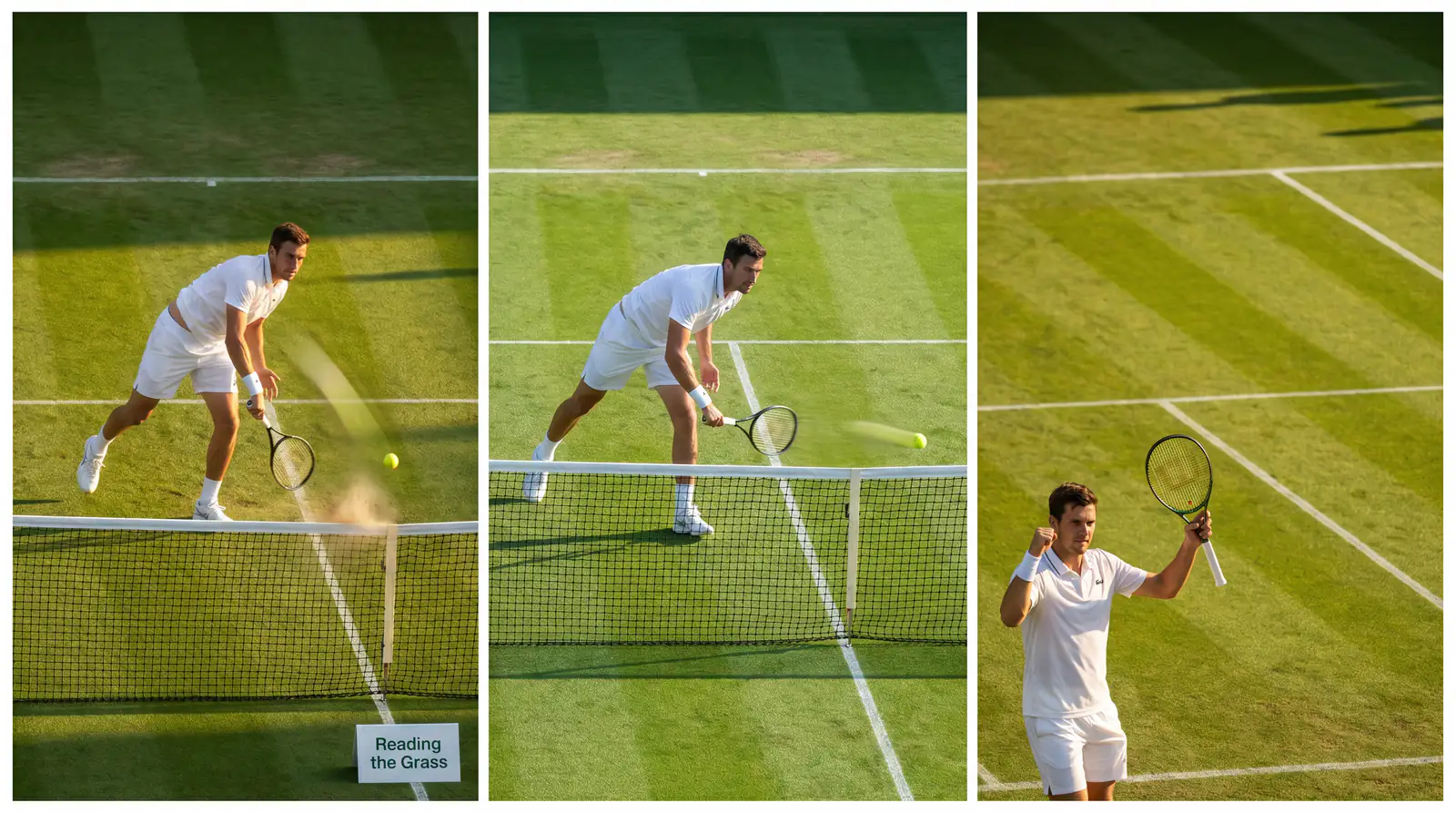
Grass versus clay and hard: the numbers
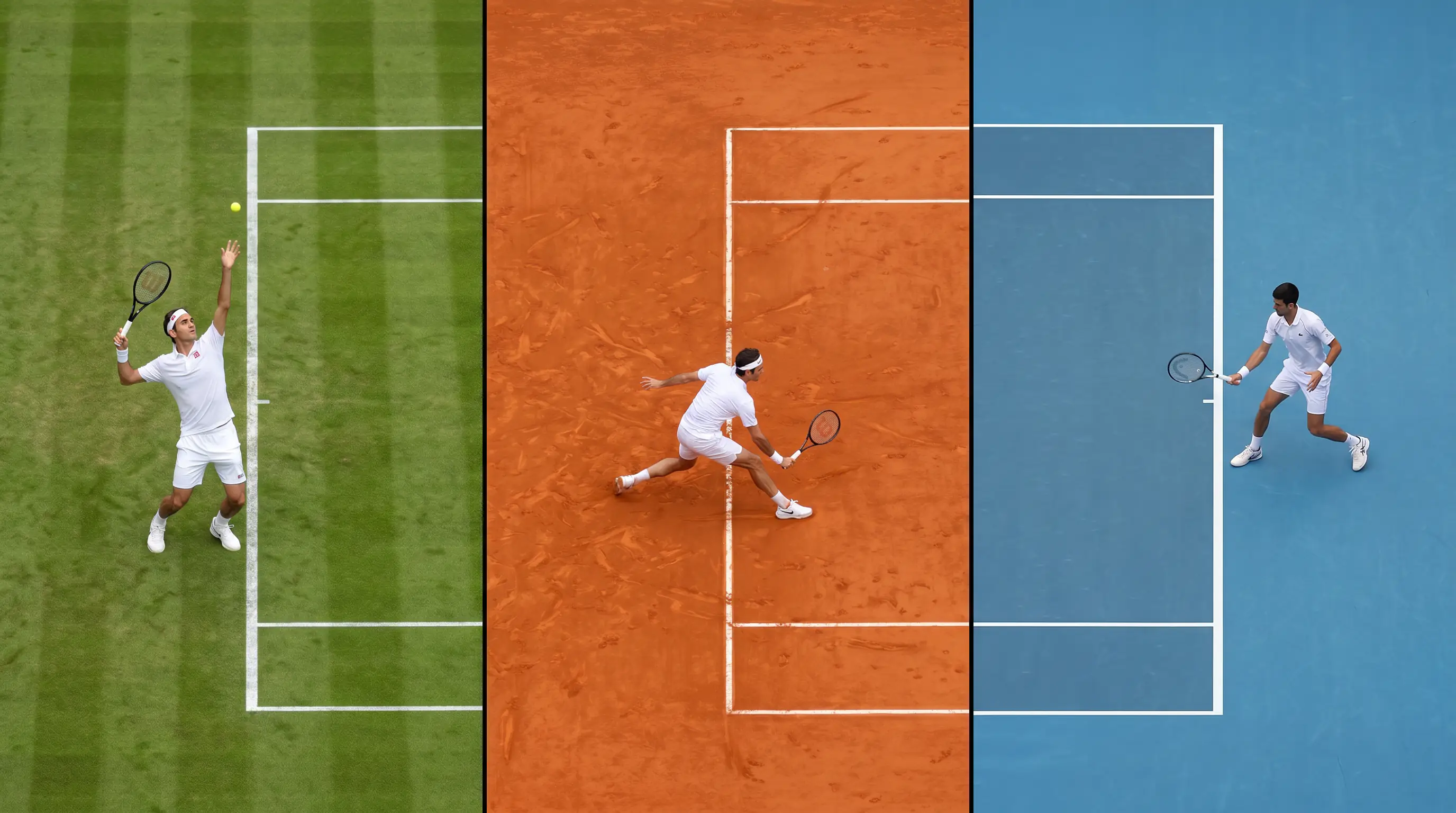
I keep a mental table of how the three main surfaces behave, and it’s saved me from more bad bets than any tip ever has. The headline is simple: grass is the extreme, clay is the opposite extreme, and hard courts sit in between, leaning one way or the other depending on the specific court. Bet the same way on all three and you’ll be wrong two-thirds of the time.
Start with the spread between them. On grass, the 86% hold rate for top servers represents the surface working maximally in the server’s favour. On clay, that average hold rate drops toward 51.7%, the surface working hardest against them. Hard courts fall between, fast enough to reward serving but slow enough to give the returner a fighting chance. The same player, with the same game, is a different betting proposition on each, and the books know it, which is why a clay-season favourite often drifts in price as the grass swing begins.
What does this do to the favourite-underdog gap? On clay, where breaks are common, the better player gets repeated opportunities to assert superiority over three or five sets, so the gap between favourite and underdog tends to be wide and reliable. On grass, where breaks are scarce and a single hot serving spell can steal a set, the underdog needs fewer moments of magic to cause an upset. The surface compresses the gap. A favourite who’d be a near-lock on clay becomes merely a strong bet on grass, because the underdog only has to nick one break or win a couple of tie-breaks to flip a set, and over a best-of-three that’s a genuine threat.
This is the insight that should change how you stake. Short-priced favourites on grass are riskier than their prices suggest relative to clay, because the surface hands the underdog a cheaper route to a shock. Conversely, underdogs with a serve to lean on are better grass bets than their clay-built prices imply. The numbers don’t tell you to fade every favourite, that would be reckless, but they tell you to demand more from a favourite’s price on grass than you would on clay, and to give a serving underdog a longer look than you otherwise might.
The practical translation: when I see a price set on clay-season form being applied to a grass match, I treat it with suspicion. The surface has changed the underlying maths, and any price that hasn’t fully adjusted for that is a price worth examining. Grass rewriting the favourite-underdog gap is the single biggest reason a clay-form line can be a grass-court mistake.
Which player profiles travel to grass
Ivo Karlovic and Rafael Nadal tell you almost everything you need about grass-court profiles in two numbers. Karlovic’s career ace rate on grass sat around 18%. Nadal’s was around 7%. Two extraordinary players, but on grass the towering server who lived off free points behind his delivery had a structural advantage the relentless baseline grinder simply couldn’t replicate, because grass amplifies the serve and dampens the long rally that Nadal built a career on dominating.
That contrast is the template for reading who travels to grass. The profile that thrives has some combination of a heavy, accurate serve, a willingness to come forward and finish points early, a low, sliced backhand that stays beneath the returner’s strike zone, and quick, balanced movement on a surface that punishes the unsure footed. The profile that struggles is the pure clay-court grinder whose entire game is built on extended exchanges, heavy topspin that the grass deadens, and grinding an opponent down over long rallies that the surface refuses to allow.
But here’s the nuance that stops this from being a simple “back the server” rule. A monster serve with no return game is exposed in exactly the matches that matter most, the latter rounds against other big servers, where holding isn’t enough and you need to manufacture a break somewhere. The complete grass-court player isn’t just a cannon. They serve well, yes, but they also return well enough to apply scoreboard pressure, and they have the nerve to win the handful of tight games a grass match boils down to. The ace count is a signpost, not the whole map.
For betting, this means profiling players against the surface, not just reading their ranking. I ask a short list of questions of any grass match: Who serves bigger and more reliably? Whose backhand stays low? Who moves better on grass specifically, which is a distinct skill from moving well on hard courts? Who has the temperament for tie-breaks? A player who answers those questions well is worth backing at a price that reflects only their ranking, because the ranking was built across all surfaces and the grass match is being played on this one.
The clay specialist who goes deep at Wimbledon, and a few do every year, almost always has a hidden grass-compatible trait: an underrated serve, exceptional movement, or a flat ball that the grass doesn’t deaden as much as it does pure topspin. When you spot one of those, you’ve often spotted value, because the market has written them off on reputation while their actual game travels better than the label suggests.
There’s a second, subtler profile worth knowing: the player who adapts. Some athletes have games that aren’t naturally suited to grass but who have learned, through years of trial, to shorten their backswing, flatten their shots and shorten the points on the surface. These adapters often outperform their reputation precisely because the adjustment doesn’t show up in a ranking built across all surfaces. I pay close attention to a player’s recent grass results rather than their career grass record, because the adaptation can be a recent development that the historical numbers haven’t caught up with. A player who was hopeless on grass three years ago and has quietly rebuilt their game for it is a profile the market routinely underrates.
The opposite warning applies to the young server with no grass miles. A booming serve looks tailor-made for the surface, and on paper it is, but grass demands a specific kind of movement, the low, balanced, sliding footwork that only comes from court time on the surface. A powerful player who’s never learned to move on grass will slip, mistime the low bounce and find that their weapon doesn’t compensate for their discomfort. Raw serving power is a promise grass keeps only for players who can also stand up on it.
Using tracking and serve data
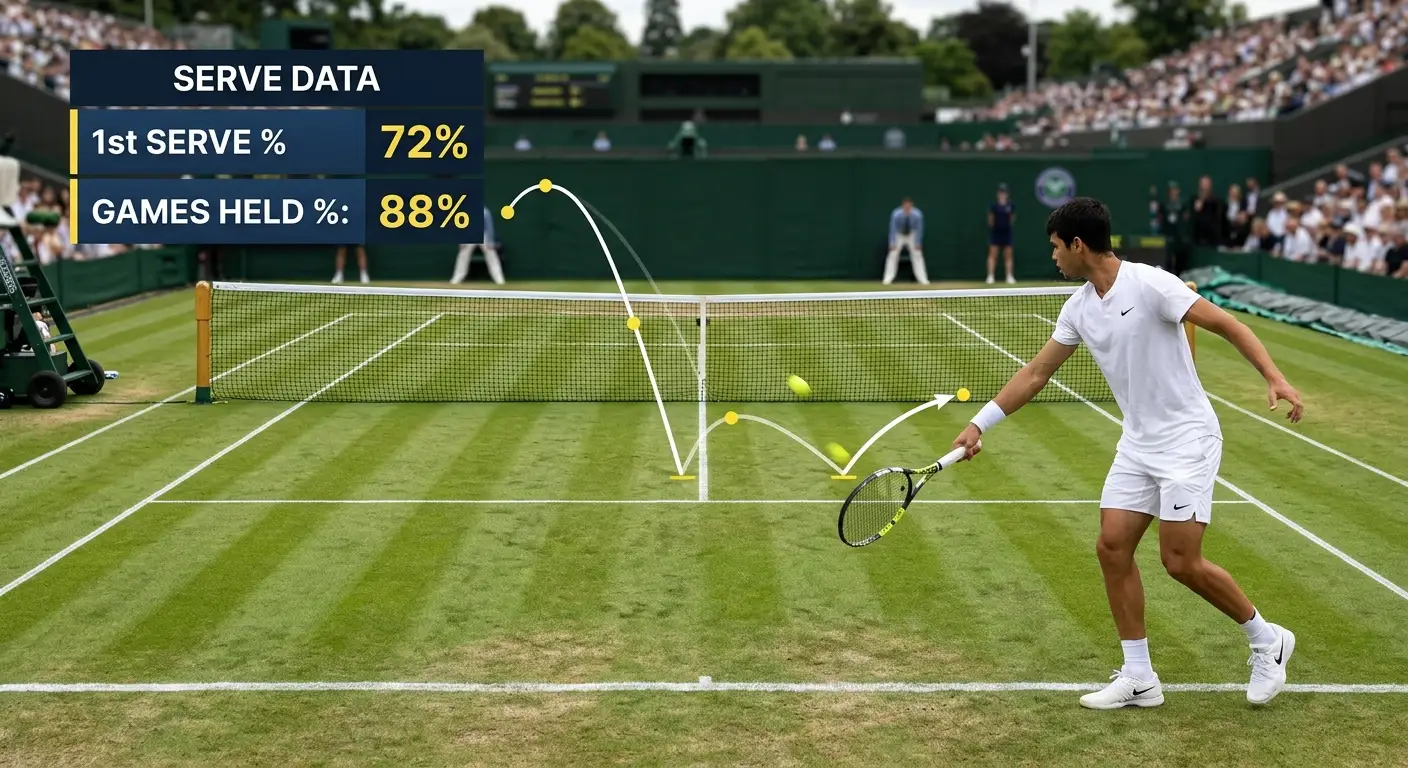
The data available to an ordinary bettor today would have looked like science fiction when I started. In 2025, the men’s tour completed full rollout of electronic line-calling across all its events, and with it came a flood of standardised ball-tracking data, point by point, match by match, surface by surface. The era of relying on a commentator’s impression of who was serving well is over. You can check.
The metrics that actually matter on grass are narrower than the firehose of available stats suggests, so let me point you at the ones worth your time. First-serve percentage tells you how often a player is landing their primary weapon, and on grass, where the first serve is so decisive, a player landing a high percentage is winning the surface battle before the rally begins. Points won on first serve tells you how lethal that serve is once it lands. Break points faced and saved tells you how a player copes in the rare moments the surface allows pressure. And hold percentage, the headline number, summarises whether they’re winning the war for their own service games.
The trap with tracking data is drowning in it. A player’s clay-season serve stats are nearly worthless for predicting their grass performance, because the surface changes the numbers so drastically. What you want is grass-specific data, ideally from recent grass matches, because that’s the only sample that reflects how the player’s game interacts with this surface. A glittering hard-court serving record means little if the player has never learned to slide-step on grass. Always ask what surface the data was generated on before you trust it.
Where the standardised feeds genuinely help is in catching what the eye misses. A player might look dominant on television while quietly winning a lower percentage of second-serve points than usual, a crack the data exposes and the broadcast hides. That’s the edge: using the tracking data to see the match the commentators aren’t describing. The data infrastructure now standardises this point-by-point information across the tour, which means the same granular picture is available to you and to the bookmakers, so the edge isn’t in having the data, it’s in reading it better than the lazy line.
A practical example of reading better. Suppose the broadcast keeps praising a favourite’s serving, and the surface-level stats agree, their first-serve percentage is high and they’re holding comfortably. But you dig into the second-serve numbers and find they’re winning barely half their second-serve points. On grass, where a returner who gets a look at a soft second serve can punish it, that’s a structural vulnerability waiting to be exposed by a better returner in a later round. The favourite is winning now because their opponent isn’t testing the weakness, but the price for their next match, against a sharper returner, hasn’t accounted for the crack. That’s the kind of read the data makes possible and the eye, lulled by a comfortable scoreline, tends to miss.
The standardised electronic systems also tightened up something that used to muddy the data: officiating noise. With electronic line-calling now running across the men’s tour, the ball-tracking numbers are cleaner and more consistent from event to event, which makes cross-tournament comparison far more reliable than it was when human line calls introduced small inconsistencies. For a bettor building a surface-specific picture, cleaner data means more trustworthy reads, and more trustworthy reads mean fewer bets placed on a statistical mirage.
Building a grass-court bet
So how do I actually assemble a grass-court bet, start to finish? Let me walk you through the process I run, because all the metrics in the world are useless until they fuse into a decision. It’s a sequence, and I do it the same way every time, which is itself part of the discipline.
I start with the surface read, not the players. Is this a fast, low-bouncing grass court that will amplify serving to the extreme, or a slower, more worn court later in the tournament that gives returners a sliver more time? Wimbledon’s courts change character across the fortnight, drying and slowing as play wears the grass, and that drift matters. An early-round serving festival can become a more balanced contest by the second week on the same patch of lawn.
Then I profile both players against that surface, using the questions from earlier: serve, backhand, movement, temperament. I’m building a picture of who the grass favours, which is frequently not who the ranking favours. Then, and only then, I look at the price. The order matters enormously. If you look at the price first, you anchor on the market’s opinion and spend your analysis justifying it. Form your own read, then check it against the number, and the gaps between your view and the market’s become visible.

The discipline that keeps this honest is humility about what you don’t know. A price that looks wrong is, far more often than not, wrong for a reason you haven’t spotted. As the integrity world phrases it, unusual betting patterns “can arise for many reasons besides match-fixing, such as mistaken odds-setting, informed betting, and a player’s form and fatigue.” The same principle applies to a price that looks like value: before you congratulate yourself on finding an error, ask whether the market knows something you don’t. Is there an injury whisper? Has the player just come through a brutal five-setter? Is the form figure you’re trusting from a different surface entirely? The grass-court bet you should make is the one that survives that interrogation.
My final filter is always the surface asymmetry we opened with. If my read depends on a favourite cruising, I remind myself that grass compresses the gap and hands the underdog a cheaper upset than clay would. If my read backs a serving underdog, I check that the serve is genuinely grass-grade and not a hard-court number in disguise. The surface is the lens through which every grass-court bet should be examined, and once it becomes second nature, you’ll wonder how you ever bet Wimbledon without it. From here, the natural next step is watching how these surface effects play out point by point, which is where live Wimbledon betting turns a pre-match read into an in-play edge.
Does a high first-serve percentage always make a player a good grass-court bet?
No. A high first-serve percentage is a strong signal on grass, but it has to be grass-specific data and it has to come with a serve that actually wins points, not just lands in. A player who lands plenty of first serves but can’t finish points, or who collapses in tie-breaks, is a worse bet than the raw percentage suggests. Treat it as one input, not the whole verdict.
How much does the surface narrow the gap between favourite and underdog?
Considerably. Because top servers hold serve around 86% of the time on grass against roughly 51.7% on clay, breaks of serve become scarce, and an underdog needs only a single break or a couple of tight tie-breaks to steal a set. That cheaper route to a shock compresses the favourite-underdog gap, so a favourite who’d be near-certain on clay is merely strong on grass.
Why do some clay specialists still go deep at Wimbledon?
Because they usually have a hidden grass-compatible trait that the clay-court label disguises: an underrated serve, exceptional movement, or a flatter ball that the grass deadens less than heavy topspin. When the market writes a clay player off on reputation while their actual game travels better than expected, that mismatch between perception and surface suitability is often where value hides.
