
 Available in US
Content
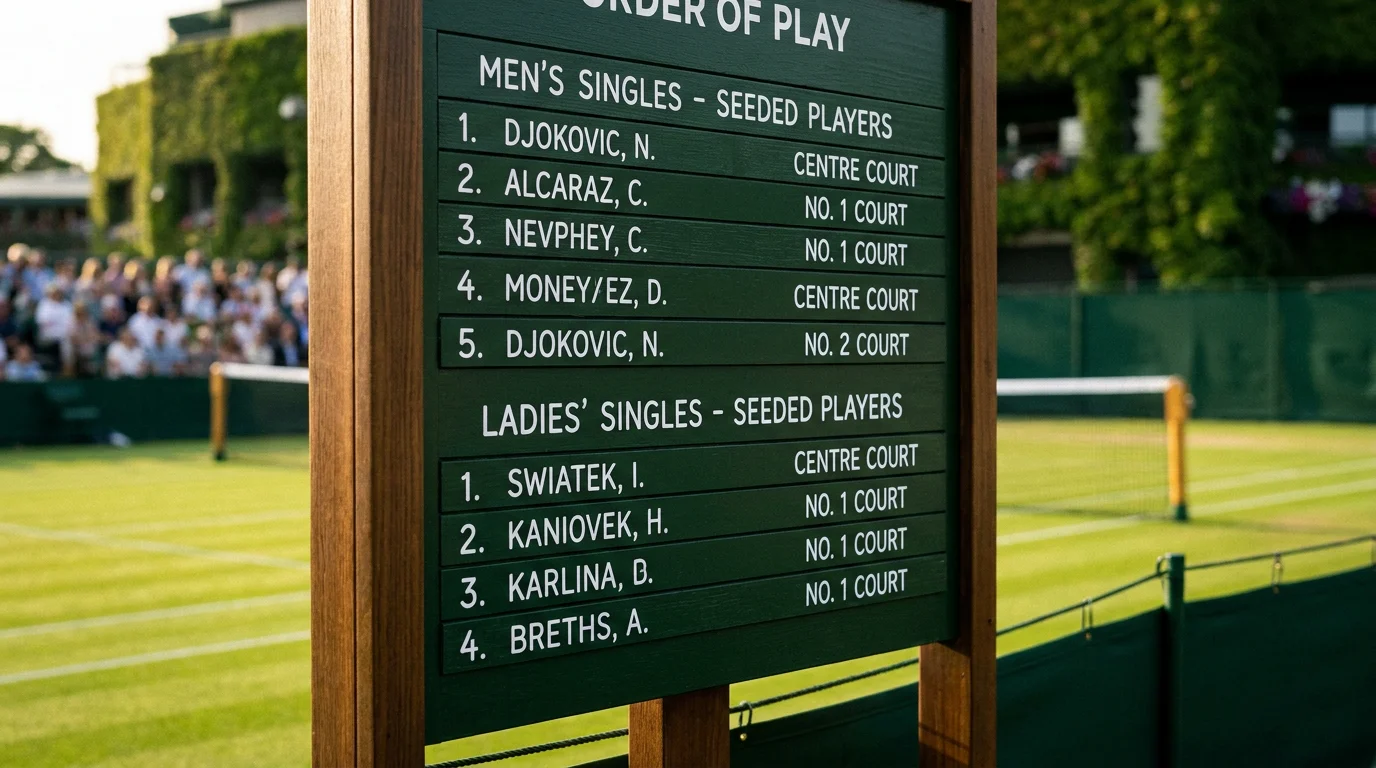
What seeding does to prices
Every July I get the same question from people new to tennis betting: “He’s the number one seed, so he’s the favourite, right?” The honest answer is yes, mostly, but the gap between those two facts is where I have made a good deal of money over the years. A seed number is a label the tournament hands out. A price is a judgement the market makes. They usually agree, and the times they disagree are the times worth betting.
A seed is simply a ranking the tournament assigns to keep the strongest players apart in the early rounds. It shapes the draw, and because it shapes the draw, it shapes the prices on everything from match-winner to outright. But seeding is a blunt instrument — it is built from a player’s results across every surface, and Wimbledon is played on the one surface where that all-surface record can be most misleading.
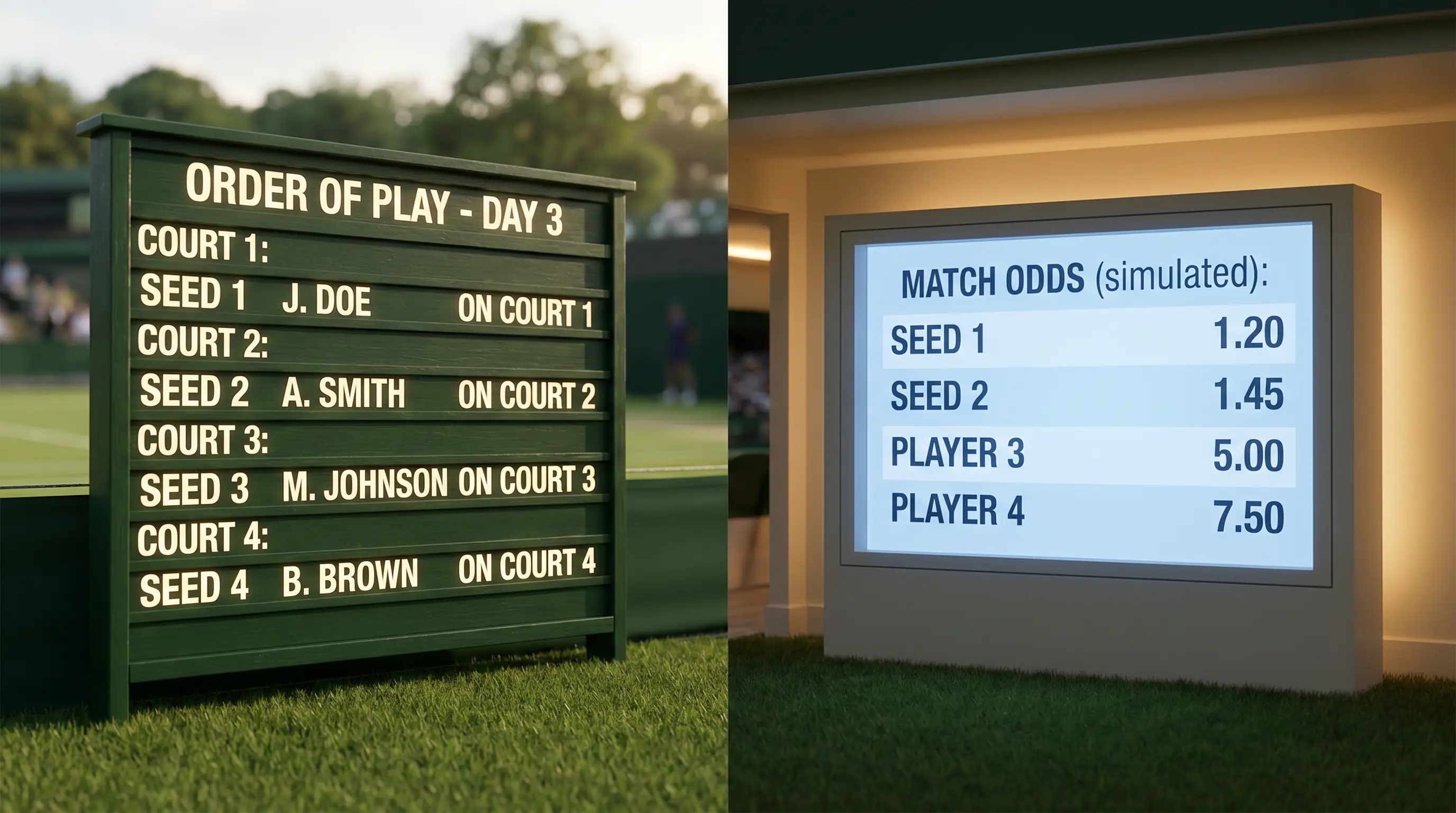
That mismatch is the whole point of this piece. Once you understand how seeds are set and where they drift away from a player’s true grass-court chance, you stop taking the seed number at face value and start reading what the market is really telling you.
How Wimbledon seeds players
The simplest way to think about seeding is as a sorting mechanism, not a power ranking. Its first job is to spread the best players across the draw so the top two cannot meet before the final, the top four are kept in separate quarters, and so on down the order.
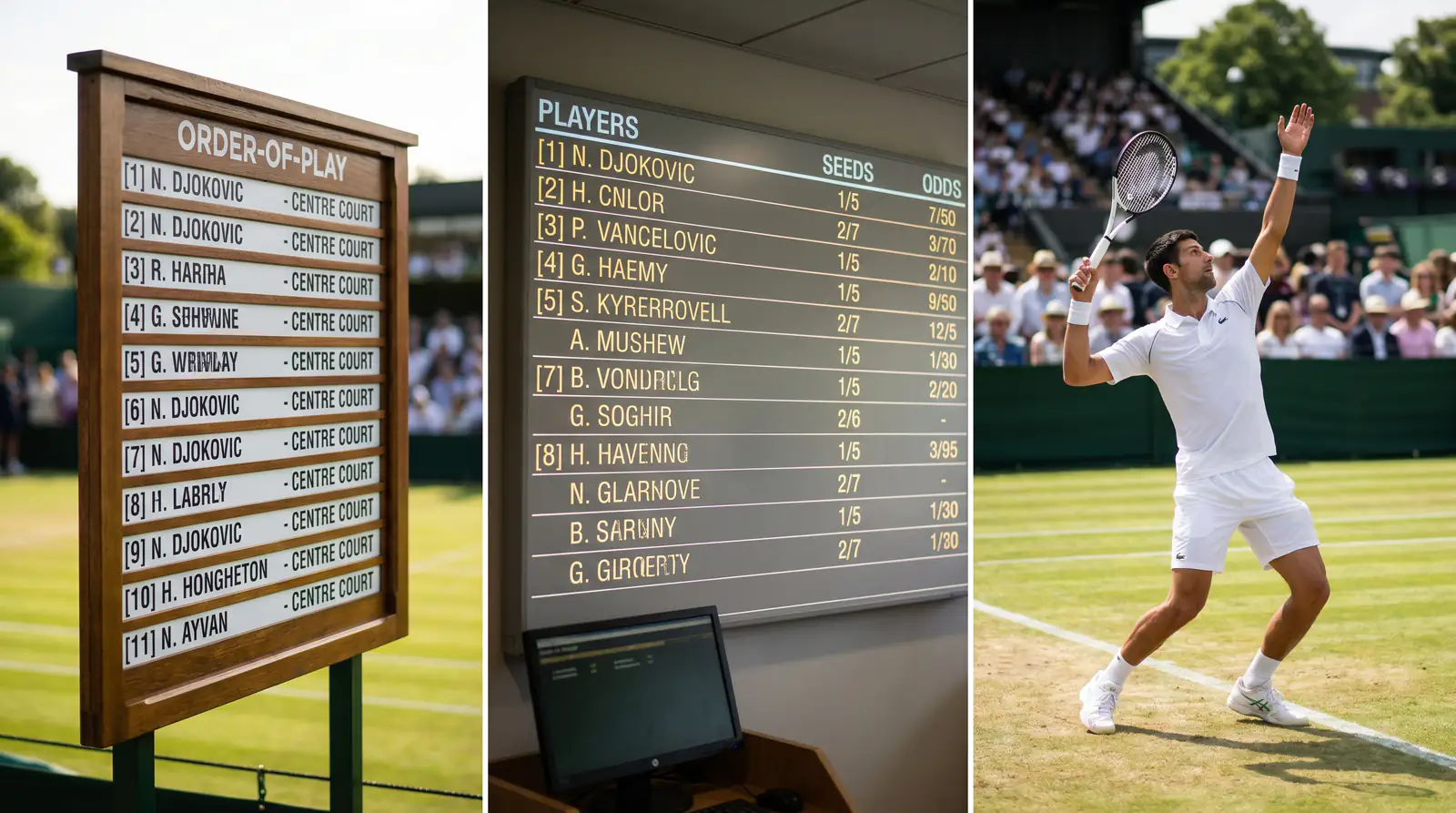
Wimbledon assigns its thirty-two seeds in each singles draw largely from the world rankings, and for many years it applied a grass-specific adjustment that nudged the order to reward recent grass-court form rather than relying purely on the global ranking. That history tells you something important: the organisers themselves once acknowledged that a player’s ranking, built mostly on hard courts and clay, does not perfectly predict who is dangerous on a lawn. Whether or not a surface tweak is in force in a given year, the underlying truth holds — the seed list is anchored to a season’s worth of results across surfaces that play nothing like SW19.
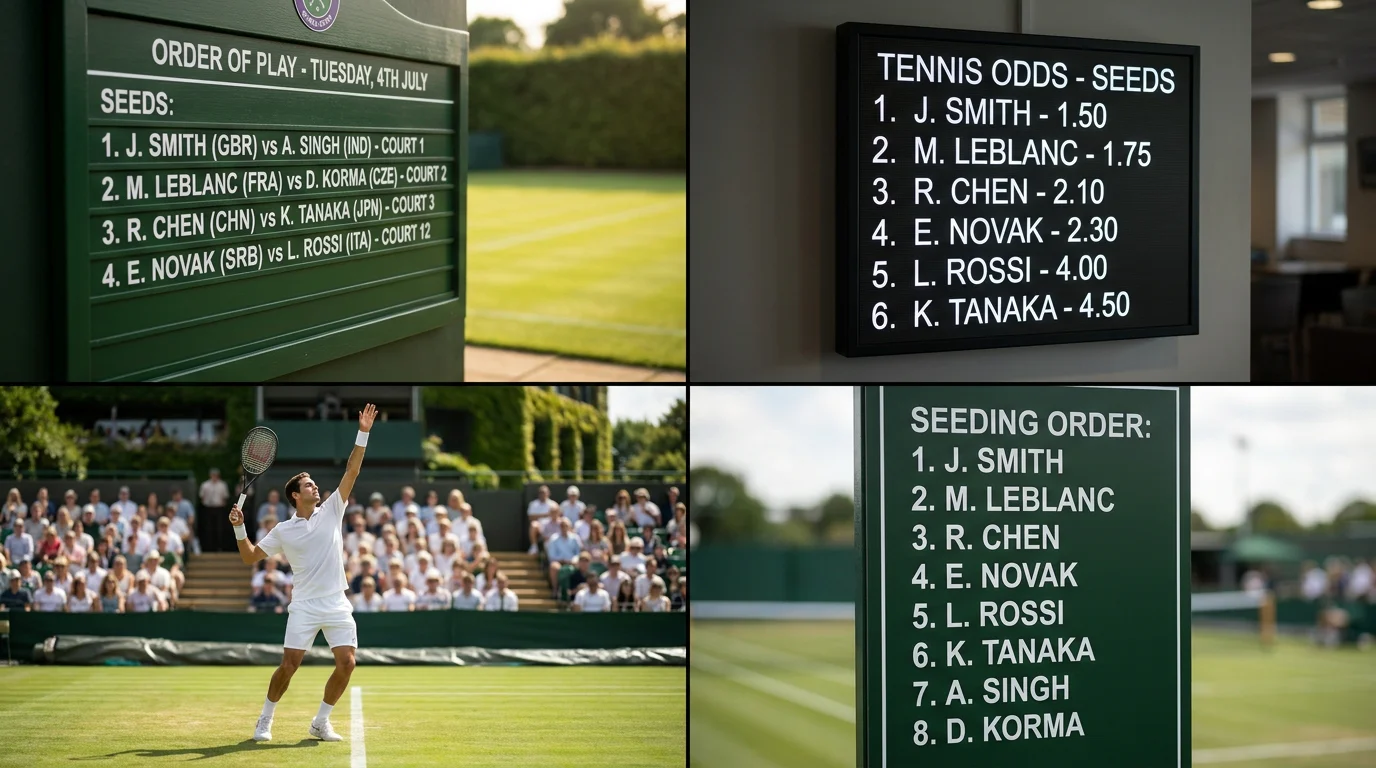
The practical consequence is that the seedings create the scaffolding of the draw, and the bookmakers then price each match within that scaffolding. A high seed earns an easier projected path, which shortens their outright and stage prices; a low seed or an unseeded player faces a tougher route on paper, which lengthens theirs. The seed, in other words, is baked into the price before a single ball is struck.
It is worth pausing on how much weight the seed carries even beyond the draw itself. Bettors and the betting public alike use the seed number as a mental shortcut for quality, so a high seed attracts money and confidence regardless of how his game suits the surface. That herd effect compounds the pricing distortion: not only does the seed shape the draw, it shapes how the crowd bets, which pushes the favourite’s price even shorter than the draw alone would justify. The seed becomes a self-reinforcing signal of strength, and self-reinforcing signals are exactly the kind of thing a contrarian, surface-led read can exploit.
Where seeding and odds diverge
The interesting bets live in the gap between what a seed implies and what a price says. When the two diverge, the market is quietly telling you that a player’s seeding does not reflect their real chance on grass — and that is precisely the information a sharp bettor wants.
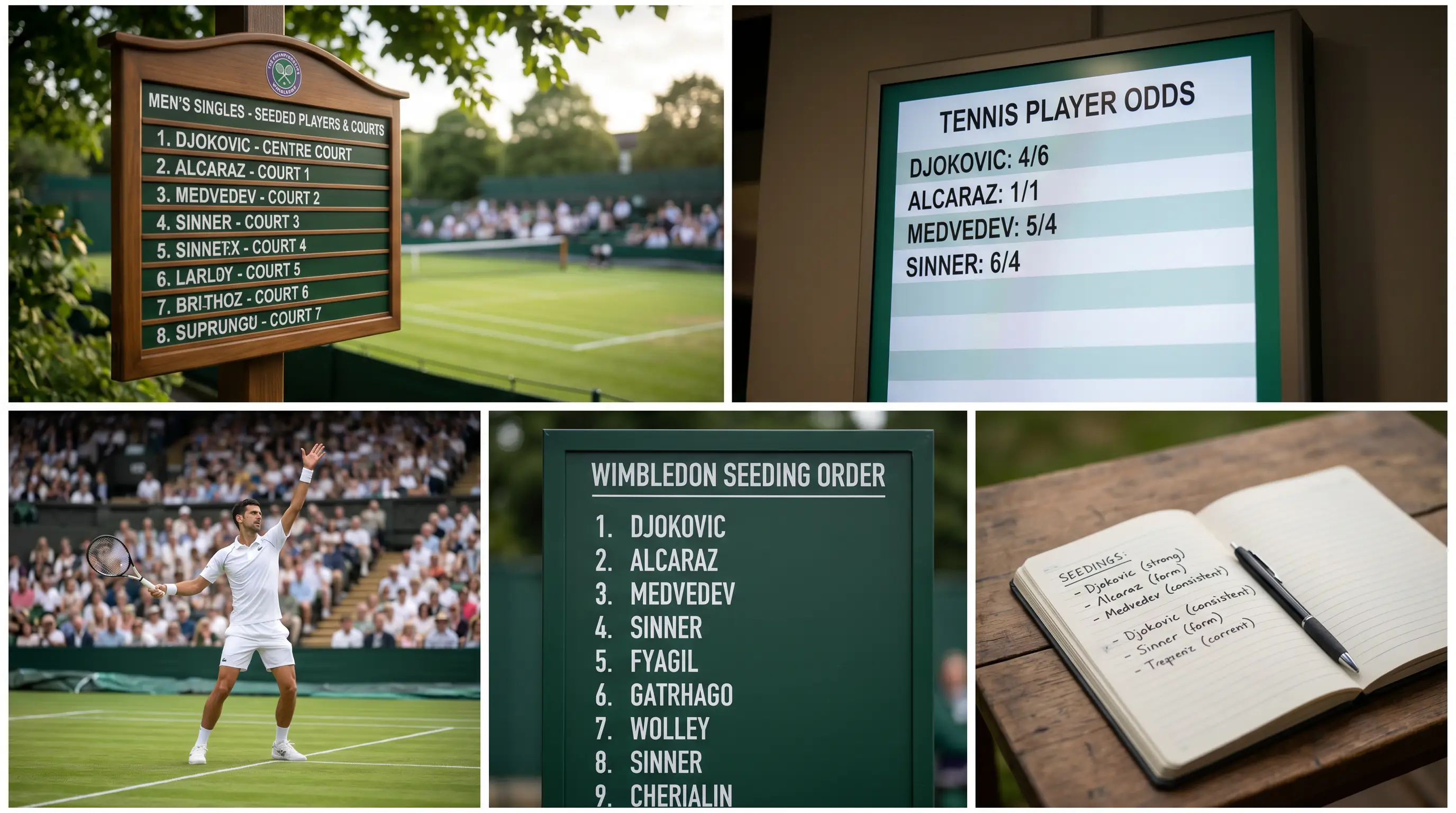
The most common divergence is the grass specialist seeded too low. A big server whose ranking is dragged down by poor clay results gets an unflattering seed, a tougher draw, and longer prices, even though his game is tailor-made for the lawn. The serve is the giveaway: the career ace gap between an extreme grass server, around 18 percent, and a clay-court baseliner nearer 7 percent shows how dramatically the surface can flatter one profile over another. When I see a seed in the teens or twenties who holds serve like a top-tenner on grass, the market’s price often lags his true chance, and that lag is the bet.
The opposite divergence is just as profitable to spot and avoid: the high seed who is a fish out of water on grass. A clay-court grinder seeded in the top eight carries a price that reflects his seed, not his discomfort on a fast, low-bouncing surface. The market sometimes overpays his pedigree, and fading that price — or simply refusing to back him at short odds — is as valuable as finding the underpriced specialist.
Finding edges around seeds
My method is to build my own grass-court seed list before I look at a single price. I re-rank the field by how well each player’s game travels to a lawn — serve weight, comfort with a low bounce, recent grass results — and then I compare my private list with the official seeding and the prices that flow from it. The biggest gaps between my ranking and the market’s are my shortlist.
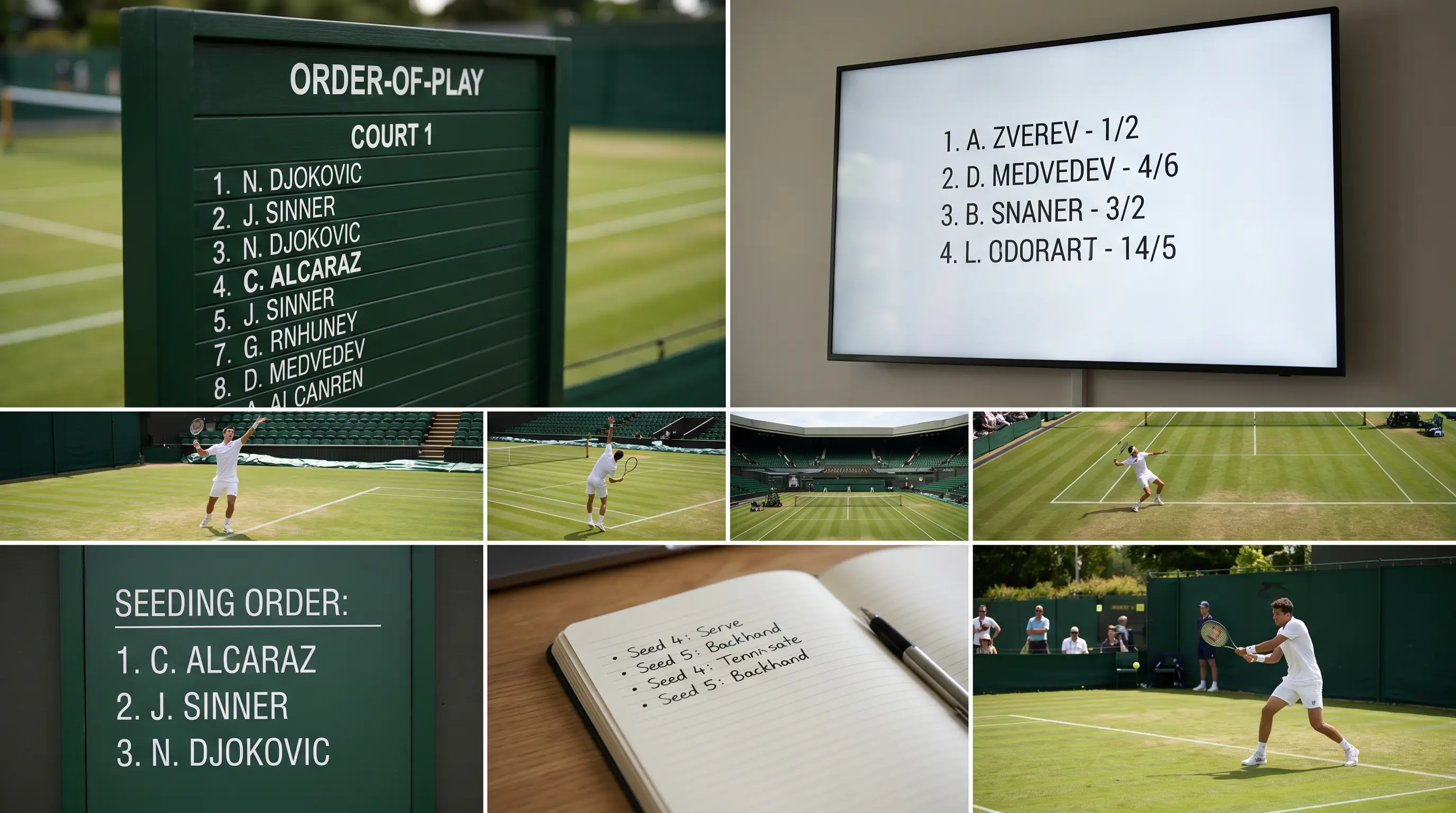
There is a second, subtler edge in how seeds interact with the draw. A high seed dropped into a brutal section is overpriced on the outright relative to a kinder-drawn rival, because their seed promised an easy path the draw did not deliver. And an unseeded player handed a soft opening run can be live at a long price, with the title worth a record £3 million to each 2025 singles champion keeping the outright market crowded and these path-driven mispricings underexamined. The discipline is always the same: never let the seed number do your thinking for you. Read the surface, read the draw, then read the price — in that order. If you want to take the next step and hunt the longest-priced of these mispriced players, I have written a full guide to finding value in Wimbledon dark horse bets.
Does Wimbledon still use a grass-specific seeding tweak?
Wimbledon historically applied a grass-court adjustment to its seeding, modifying the ranking order to reflect recent form on the surface. The exact method has changed over the years, so check the current year’s approach. The lasting lesson for bettors is that ranking and grass-court ability are not the same thing, however the seeds are set.
Are unseeded players ever underpriced?
Often, yes. An unseeded player with a big grass-court serve and a soft opening section of the draw can be genuinely better than their price implies, because the market anchors to their low ranking rather than their surface fit. Look specifically at recent grass holds and how the draw has fallen for them.
