
 Available in US
Content

Turning a futures ticket into a sure profit
One of the most satisfying feelings in betting is watching a longshot outright you backed at the start of the fortnight march into the final — and knowing that, whatever happens in that final, you have already guaranteed yourself a profit. That is hedging, and the first time I pulled it off, on an outsider I had backed at long odds who somehow reached the last two, I learned that the smartest bet is sometimes the one that removes risk rather than adds it.
Hedging means placing a second bet against your original position to lock in a profit or limit a loss regardless of the outcome. If you backed a player to win the title outright and he reaches the final, you can now bet on his opponent — or lay your player — so that you win money whichever of the two lifts the trophy. With the title worth a record £3 million to each 2025 singles champion, the players have everything to fight for, but the hedging bettor has already taken the drama out of his own result.

It is a tool, not a reflex. Used well, hedging converts a volatile outright into guaranteed money; used carelessly, it gives away the very edge that made the original bet worthwhile.
The mechanics of a hedge
A hedge works because the odds on your original selection shorten as they progress, while the odds on the field lengthen relative to where you got in. That movement is what creates the opportunity to cover both outcomes profitably.
Picture the simplest case. You backed a player at 21.00 to win the title with a 100 pound stake, so a win returns 2,100 pounds. He reaches the final, where he is now priced at 2.50 against an opponent at 1.55. To hedge, you back the opponent: stake enough on the opponent that your return covers your position whoever wins. Bet, say, 800 pounds on the opponent at 1.55 and you stand to collect 1,240 pounds if the opponent wins — against your total outlay of 900 pounds across both bets — while still collecting 2,100 pounds if your original player wins. Either way you finish in profit, and you have converted a coin-flip final into a guaranteed return. The exact stake on the hedge determines how you split the profit between the two outcomes, from locking equal profit each way to leaning your guaranteed money towards the result you think more likely.

The principle generalises to any stage and any market. The further your selection has progressed and the longer your original price, the more room you have to hedge into a comfortable guaranteed profit.

It is worth being clear about what hedging is not, because the maths can seduce people into hedging everything. A hedge does not improve your expected value — it reduces variance at a small cost. Every time you hedge, you are choosing to give up a slice of your potential winnings in exchange for the certainty of a smaller, guaranteed sum. That is a rational trade when the certainty is worth more to you than the slice you sacrifice, and a poor one when it is not. The skill is not in the arithmetic, which is simple, but in judging honestly when removing risk is worth paying for.
Hedging a Wimbledon outright
Wimbledon outrights are especially well suited to hedging because of how the grass-court draw behaves. The surface produces upsets and unexpected runs, so a longshot you backed early can reach the latter stages at a price that has shortened dramatically — and a large gap between your entry price and the current price is exactly what makes a profitable hedge possible. The rewards on offer keep the players honest and the runs genuine, too: even the beaten finalist banked £1.52 million in 2025, so nobody is dead-rubbering their way to the showpiece, and a deep run by your selection is a real sporting effort rather than a fluke you should rush to cash.
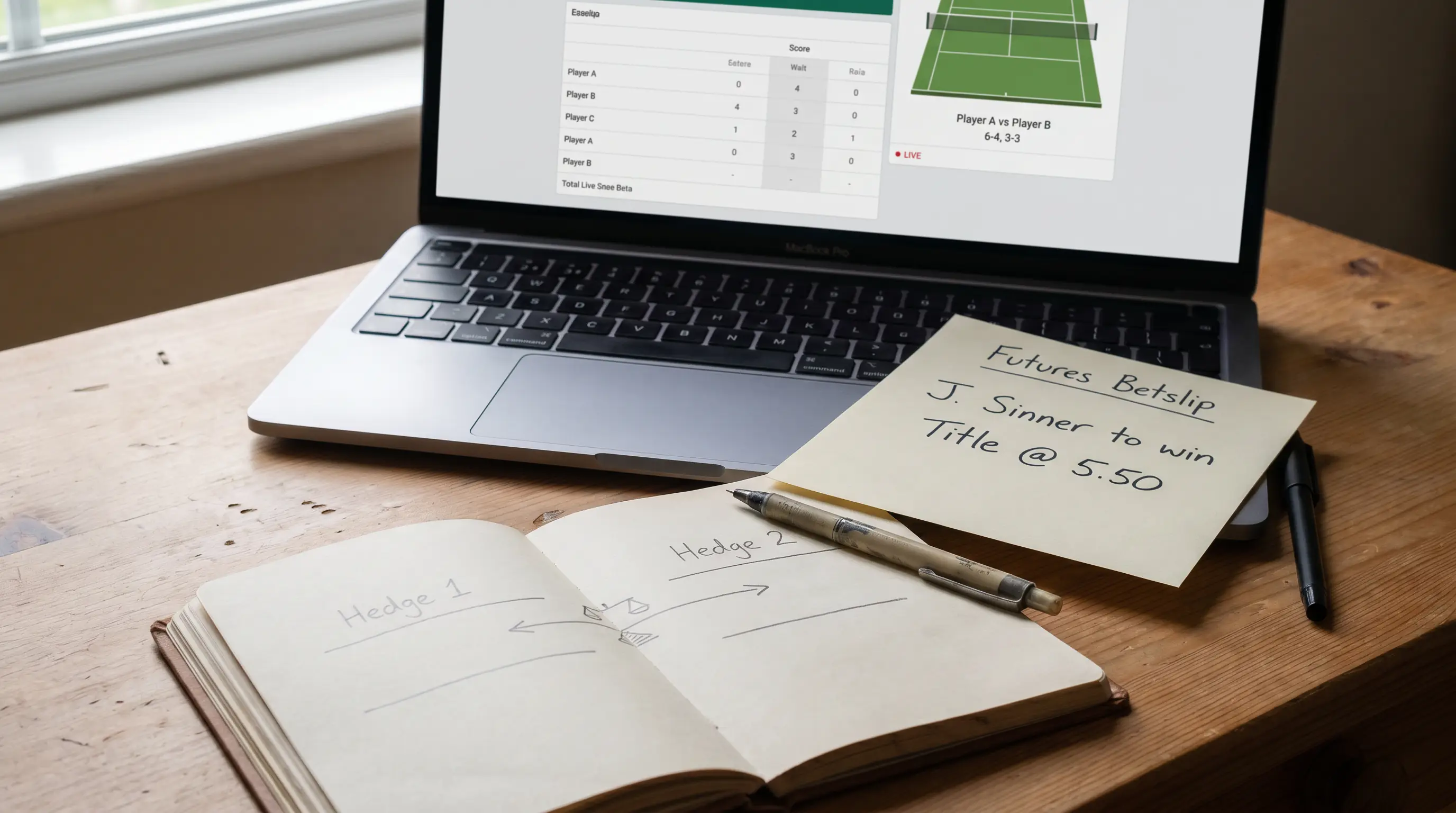
The decision of when to hedge a Wimbledon outright comes down to your read on the market versus your read on the player. It helps to remember who you are pricing against. As the integrity body that monitors these markets notes, higher betting volumes in mature markets “often indicate stronger detection capability rather than higher inherent risk” — and that maturity means the deep, heavily traded outright market on a Grand Slam tends to price a semi-finalist or finalist sharply. You are unlikely to find a soft number to hedge into late in a major, so the hedge is rarely about beating the market on the second bet; it is about deciding how much certainty you are willing to buy with the guaranteed-profit trade. The cleaner your view that the final is a genuine toss-up, the more attractive locking in profit becomes.
When hedging is worth it
Hedging is not always the right move, and understanding when to leave a position alone is as important as knowing how to cover it. The core tension is that every hedge sacrifices some of your potential upside in exchange for certainty, and that trade only makes sense in specific situations.
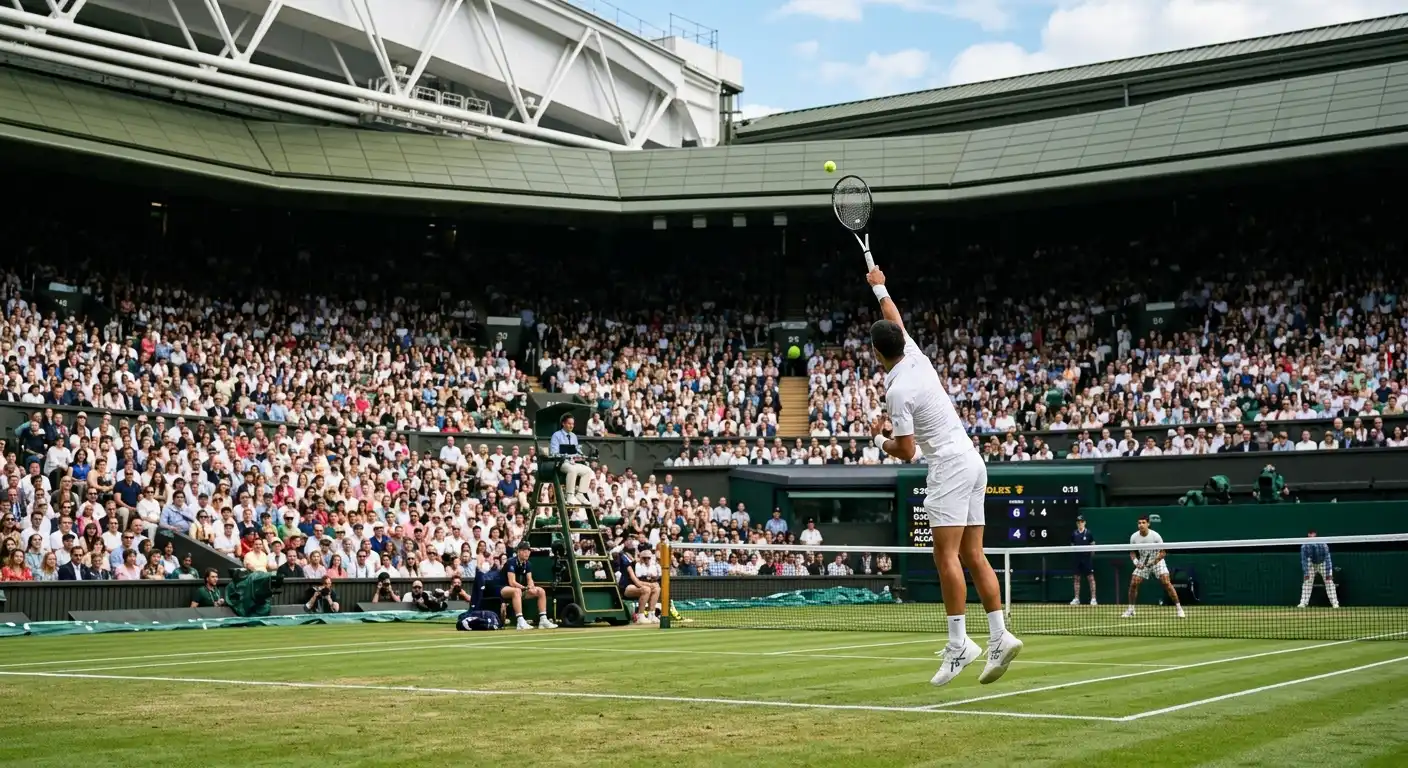
Hedge when the guaranteed profit is meaningful relative to your bankroll and the outcome is genuinely uncertain — a 50-50 final between two evenly matched players is the textbook case, because you are giving up little expected value to remove real risk. Do not hedge when your original selection is a strong favourite to win the remaining match, because covering a likely winner just to feel safe is a poor trade that bleeds expected value over time. And do not confuse hedging with cashing out: a manual hedge gives you control over the exact split and avoids the margin a book builds into its cash-out price. That distinction matters enough that I have written a separate guide to the costs and timing of the Wimbledon cash out button, which is the automated cousin of the hedge.
Is hedging the same as cashing out?
No. Cashing out is an automated offer from the bookmaker to settle your bet early at a price that includes their margin, so you take whatever they give you. A manual hedge means placing your own counter-bet, which gives you full control over how you split the profit between outcomes and avoids the extra margin baked into a cash-out price.
Should I hedge a futures bet before the final?
It depends on the gap between your entry price and the current price, and on how uncertain the remaining match is. If your selection is a longshot who has reached the final and that final looks like a genuine toss-up, hedging locks in a profit for little sacrifice. If your player is a strong favourite to win the final, leaving the bet unhedged usually has higher expected value.
